![[3-(2,6-Dichlorophenyl)-5-isopropyl-1,2-oxazol-4-yl]methanol structure](https://static.chemtradehub.com/structs/278/278597-30-1-5c79.webp "[3-(2,6-Dichlorophenyl)-5-isopropyl-1,2-oxazol-4-yl]methanol structure")
[3-(2,6-Dichlorophenyl)-5-isopropyl-1,2-oxazol-4-yl]methanol
CAS Number:
278597-30-1
Molecular Formula:
C13H13Cl2NO2
Cheng Cheng, Xilin Zhang, Mingyang Wang, Shiyan Wang
The geometric stability, electronic structure and catalytic properties of a single Pd atom deposited on a pristine Mo2CO2 monolayer and a defective Mo2CO2 monolayer with an oxygen vacancy (denoted as Pd/OV–Mo2CO2) are systematically investigated through density functional theory. We find that the oxygen vacancy (OV) can stabilize the single Pd atom and make the Pd/OV–Mo2CO2 system an excellent mono-dispersed atomic catalyst. The Pd dopant serves as an active center which makes the intermediates react productively around it. Three reaction mechanisms are considered for CO oxidation to test the catalytic activity of Pd/OV–Mo2CO2, which exhibits high activity for CO oxidation via a tri-molecular Eley–Rideal (TER) mechanism with a rate-limiting energy barrier of 0.49 eV. The pre-adsorbed CO molecules on the Pd dopant could transfer electrons to the O2-2π* orbitals, which would promote O2 molecule activation and induce O–O bond scission. This work demonstrates that the defective monolayer MXene may serve as a promising sort of support to fabricate single atomic catalysts (SACs) for CO oxidation or other reactions, agreeing well with the experimental reports, which opens up a new avenue for the design and fabrication of SACs of MXene-based materials.

Chemical Communications

Journal of Saudi Chemical Society

Organic Process Research & Development

Russian Journal of General Chemistry

Current Opinion in Colloid & Interface Science

Chemistry Education Research and Practice

Nature Medicine

Journal of Peptide Science

Russian Chemical Bulletin

Russian Journal of Organic Chemistry
Christopher Jones, Stuart H. Taylor, Andrew Burrows, Mandy J. Crudace, Christopher J. Kiely, Graham J. Hutchings
DOI: 10.1039/B800052M
Iris Haas, Aharon Gedanken
DOI: 10.1039/B717670H
Meiyan Fu, Yi Xiao, Xuhong Qian, Defeng Zhao, Yufang Xu
DOI: 10.1039/B718544H
Marites A. Guino-o, Charles F. Campana, Karin Ruhlandt-Senge
DOI: 10.1039/B715701K
Preston A. Chase, Titel Jurca, Douglas W. Stephan
DOI: 10.1039/B718598G
Adam J. Lowe, Frederick M. Pfeffer
DOI: 10.1039/B801798K
Nicolas Bouquin, Vladimir L. Malinovskii, Robert Häner
DOI: 10.1039/B802193G
Junwon Kim, Hye-Young Park, Jaeseung Kim, Jiyoung Ryu, Do Yoon Kwon, Regis Grailhe, Rita Song
DOI: 10.1039/B719434J
DOI: 10.1039/B718628B
When handling 4-Methyl-6-(trifluoromethyl)quinoline (CAS: 40716-16-3), safety go...
4-(3,5-Difluorophenyl)aniline is an aromatic organic compound with the CAS numbe...
5-{[4-(Trifluoromethyl)phenyl]sulfanyl}-1,2,3-thiadiazole-4-carboxylic acid can ...
The market for 4-Benzylaniline hydrochloride (CAS: 6317-57-3) is steadily growin...
[3-(Diethylsulfamoyl)phenyl]boronic acid is generally considered safe when handl...
3-Bromo-2,5-dimethoxyaniline is mainly used in the pharmaceutical and chemical i...
N-Methyl-1-(5-methyl-1H-indol-3-yl)methanamine (CAS: 915922-67-7) is subject to ...
This compound is primarily used in the pharmaceutical industry for the synthesis...
2-Methyl-2-propanyl [(1S,3R)-3-aminocyclohexyl]carbamate (CAS: 1298101-47-9) sho...
Ethyl 2-bromo-4,4,4-trifluorobutanoate (CAS: 367-33-9) is utilized in the pharma...

Physical Chemistry Chemical Physics (PCCP) is an international journal co-owned by 19 physical chemistry and physics societies from around the world. This journal publishes original, cutting-edge research in physical chemistry, chemical physics and biophysical chemistry. To be suitable for publication in PCCP, articles must include significant innovation and/or insight into physical chemistry; this is the most important criterion that reviewers and Editors will judge against when evaluating submissions. The journal has a broad scope and welcomes contributions spanning experiment, theory, computation and data science. Topical coverage includes spectroscopy, dynamics, kinetics, statistical mechanics, thermodynamics, electrochemistry, catalysis, surface science, quantum mechanics, quantum computing and machine learning. Interdisciplinary research areas such as polymers and soft matter, materials, nanoscience, energy, surfaces/interfaces, and biophysical chemistry are welcomed if they demonstrate significant innovation and/or insight into physical chemistry. Joined experimental/theoretical studies are particularly appreciated when complementary and based on up-to-date approaches.
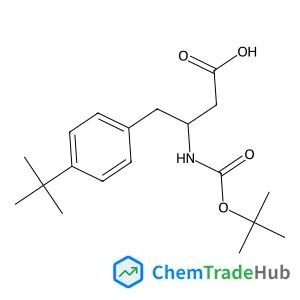
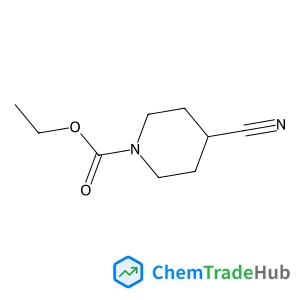
![2,4-Dichloro-6-isopropyl-5H-pyrrolo[3,4-d]pyrimidin-7(6H)-one structure](https://static.chemtradehub.com/structs/107/1079649-94-7-ad4a.webp "2,4-Dichloro-6-isopropyl-5H-pyrrolo[3,4-d]pyrimidin-7(6H)-one structure")