



Isomerization of methoxy radical in the troposphere: competition between acidic, neutral and basic catalysts
Literature Information
Publication Date
2017-10-02
DOI
10.1039/C7CP05475K
Impact Factor
3.676
Authors
Saptarshi Sarkar, Subhasish Mallick, Deepak, Pradeep Kumar, Biman Bandyopadhyay
View Original
Abstract
A comprehensive investigation of the roles of acidic, neutral and basic catalysts in isomerization of methoxy radical in the troposphere has been carried out by quantum chemical calculations at the MP2 and CCSD(T) levels of theory. The effect of basic catalysts, namely ammonia and an ammonia–water complex, on the isomerization process has been studied for the very first time. In terms of rate coefficients ammonia was found to be a better catalyst than a water monomer whereas the ammonia–water complex was found to be more efficient over a water dimer but marginally less efficient than formic acid. Based on the effective rate constants under various tropospheric conditions, it was found that at 0 km altitude water dimers and ammonia–water complexes could compete with acid catalysts but at higher altitudes the acid catalysts would dominate their neutral and basic counterparts by a long distance.
Recommended Journals

Pharmaceutical Chemistry Journal

Progress in Materials Science

Annual Review of Public Health

Journal of Natural Products

Journal of Dispersion Science and Technology

Crystal Research and Technology

Studies in Conservation

European Journal of Medicinal Chemistry

Bulletin of Materials Science

Tetrahedron Letters
Related Literature
Assessing weight loss control strategies in pomegranate (Punica granatum L.) fruit: plastic packaging and surface waxing
Alemayehu Ambaw
2023-09-30
Paper
DOI: 10.1039/D3FB00089C
Correction: Synthesis of green fluorescent carbon dots from Moringa oleifera for sensing of deltamethrin and fenvalerate in vegetables and rice
Foziya Yusuf Vadia, Jinet Susan Johny, Naved I. Malek, Suresh Kumar Kailasa
2023-10-19
Correction
DOI: 10.1039/D3FB90017G
Effect of temperature and packaging materials on the shelf-life stability and in vitro properties of microencapsulated and spray-dried synbiotic legume-based instant beverage powder
Smriti Chaturvedi, Snehasis Chakraborty
2023-10-27
Paper
DOI: 10.1039/D3FB00094J
A comprehensive review of food waste valorization for the sustainable management of global food waste
Aniruddha Sarker, Raju Ahmmed, S. M. Ahsan, Juwel Rana, Mithun Kumar Ghosh, Rakhi Nandi
2023-12-04
Review Article
DOI: 10.1039/D3FB00156C
Hexafluorophosphate ionic liquid-modified silica sorbent for selective separation and preconcentration of Pb2+, Cd2+, and Cr3+ in water samples
2023-11-10
Paper
DOI: 10.1039/D3SU00247K
Exploring sustenance: cereal legume combinations for vegan meat development
Kannan Vignesh, Dev Kumar Yadav, D. D. Wadikar, A. D. Semwal
2023-10-26
Review Article
DOI: 10.1039/D3FB00074E
Developing 3D computational models to capture the spatial, temporal and thermal behavior as laser beams propagate through photo-thermally responsive gels
Victor V. Yashin, Fariha Mahmood, Kalaichelvi Saravanamuttu, Anna C. Balazs
2023-11-16
Paper
DOI: 10.1039/D3LF00156C
You might also like
Compound Q&A
What industries use (1R,3S)-1,3-Cyclopentanediol (CAS: 16326-97-9)?
(1R,3S)-1,3-Cyclopentanediol finds applications in various industries. In the ph...
16326-97-9(1R,3S)-1,3-Cyclopen...
Compound Q&A
What precautions should be taken when handling N'-[4-(Dimethylamino)phenyl]-N,N-dimethyl-1,4-benzenediamine (CAS: 637-31-0)?
When handling N'-[4-(Dimethylamino)phenyl]-N,N-dimethyl-1,4-benzenediamine, it i...
637-31-0N'-[4-(Dimethylamino...
Compound Q&A
Are there alternatives to 5-(2,4-Difluorophenyl)-2-methoxypyrimidine (CAS: 1352318-16-1) in synthesis?
There are several alternatives to 5-(2,4-Difluorophenyl)-2-methoxypyrimidine in ...
1352318-16-15-(2,4-Difluoropheny...
Compound Q&A
What regulatory guidelines apply to 1-(3-Methoxyphenoxy)propan-2-ol (CAS: 382141-68-6)?
1-(3-Methoxyphenoxy)propan-2-ol (CAS: 382141-68-6) must comply with the Globally...
382141-68-61-(3-Methoxyphenoxy)...
Compound Q&A
Is Tetrodotoxin Citrate (CAS: 18660-81-6) safe?
Tetrodotoxin Citrate is extremely dangerous and should be handled with extreme c...
18660-81-6Tetrodotoxin Citrate
Compound Q&A
What are the main uses of 2-Methyl-2-propanyl [(1R,3S)-3-hydroxycyclopentyl]carbamate (CAS: 225641-84-9)?
2-Methyl-2-propanyl [(1R,3S)-3-hydroxycyclopentyl]carbamate (CAS: 225641-84-9) i...
225641-84-92-Methyl-2-propanyl ...
Compound Q&A
How should waste containing 4-(2-Hydroxyhexafluoroisopropyl)Benzoic Acid (CAS: 16261-80-6) be handled?
Waste containing 4-(2-Hydroxyhexafluoroisopropyl)Benzoic Acid (CAS: 16261-80-6) ...
16261-80-64-(2-Hydroxyhexafluo...
Compound Q&A
How is 2-Methyl-2-proanyl {(2S)-1-[(benzyloxy)amino]-3-hydroxy-3-methyl-1-oxo-2-butanyl}carbamate (CAS: 102507-19-7) typically synthesized?
2-Methyl-2-proanyl {(2S)-1-[(benzyloxy)amino]-3-hydroxy-3-methyl-1-oxo-2-butanyl...
102507-19-72-Methyl-2-propanyl ...
Compound Q&A
What is Benzeneethanamine, α-ethyl-, hydrochloride (1:1) (CAS: 20735-15-3)?
Benzeneethanamine, α-ethyl-, hydrochloride (1:1) is an organic compound with the...
20735-15-3Benzeneethanamine, α...
Compound Q&A
Are there alternatives to 3-{(E)-[4-(Dimethylamino)phenyl]diazenyl}benzoic acid (CAS: 20691-84-3) in synthesis?
In the synthesis of compounds similar to 3-{(E)-[4-(Dimethylamino)phenyl]diazeny...
20691-84-33-{(E)-[4-(Dimethyla...
Source Journal
Physical Chemistry Chemical Physics

CiteScore:
5.5
Self-citation Rate:
10.3%
Articles per Year:
3036
Physical Chemistry Chemical Physics (PCCP) is an international journal co-owned by 19 physical chemistry and physics societies from around the world. This journal publishes original, cutting-edge research in physical chemistry, chemical physics and biophysical chemistry. To be suitable for publication in PCCP, articles must include significant innovation and/or insight into physical chemistry; this is the most important criterion that reviewers and Editors will judge against when evaluating submissions. The journal has a broad scope and welcomes contributions spanning experiment, theory, computation and data science. Topical coverage includes spectroscopy, dynamics, kinetics, statistical mechanics, thermodynamics, electrochemistry, catalysis, surface science, quantum mechanics, quantum computing and machine learning. Interdisciplinary research areas such as polymers and soft matter, materials, nanoscience, energy, surfaces/interfaces, and biophysical chemistry are welcomed if they demonstrate significant innovation and/or insight into physical chemistry. Joined experimental/theoretical studies are particularly appreciated when complementary and based on up-to-date approaches.
Recommended Compounds


![N-[(5,6-Dichloro-1H-benzimidazol-2-yl)methyl]-9-(1-methyl-1H-pyrazol-4-yl)-2-(4-morpholinyl)-9H-purin-6-amine structure](https://static.chemtradehub.com/structs/238/2387704-62-1-25f4.webp "N-[(5,6-Dichloro-1H-benzimidazol-2-yl)methyl]-9-(1-methyl-1H-pyrazol-4-yl)-2-(4-morpholinyl)-9H-purin-6-amine structure")
N-[(5,6-Dichloro-1H-benzimidazol-2-yl)methyl]-9-(1-methyl-1H-pyrazol-4-yl)-2-(4-morpholinyl)-9H-purin-6-amine
CAS Number:
2387704-62-1
Molecular Formula:
C21H20Cl2N10O
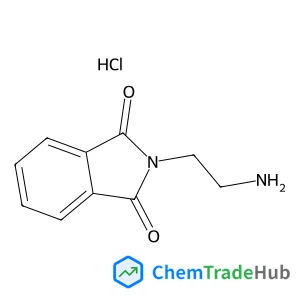
2-(2-Aminoethyl)-1H-isoindole-1,3(2H)-dione hydrochloride (1:1)
CAS Number:
30250-67-0
Molecular Formula:
C10H11ClN2O2
Recommended Suppliers




Disclaimer
This page provides academic journal information for reference and research purposes only. We are not affiliated with any journal publishers and do not handle publication submissions. For publication-related inquiries, please contact the respective journal publishers directly.
If you notice any inaccuracies in the information displayed, please contact us at support@chemtradehub.com. We will promptly review and address your concerns.