












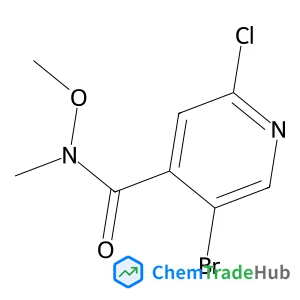
5-Bromo-2-chloro-N-methoxy-N-methylisonicotinamide
CAS Number:
1256790-08-5
Molecular Formula:
C8H8BrClN2O2
Sandeep Nigam, Chiranjib Majumder
While alumina-supported platinum particles are versatile for several oxidation reactions, their viability as ORR catalysts has not been explored to date. Therefore, to assess the prospects of alumina-supported platinum nanoclusters in ORRs, a systematic DFT study has been carried out to explore the oxidation behavior of a Ptn@Al2O3 (n = 1–7, 10) cluster. The results are compared with the oxidation behavior of the corresponding gas phase platinum cluster and that of an extended Pt(111) slab. Both supported and unsupported clusters activate adsorbed oxygen molecules and energetically favor dissociative chemisorption of oxygen, leading to stable oxide formation with Pt–O–Pt linkages. However, the influence of the alumina substrate downshifts the d-band centre of the platinum cluster, which not only reduces the reaction enthalpy of oxidation by 8–10%, but also elongates the Pt–O bond of the oxide product by 3–8%. These observations indicate that removal of oxide will be relatively easier for supported clusters than for unsupported clusters. Cluster binding is found to sustain during oxidation, as oxidation of the platinum host cluster results in reduction of the distance between the cluster and support surface. While the gas phase Pt10 cluster does not show any similarity to the oxidation behavior shown by THE Pt(111) slab, the Pt10@Al2O3 cluster reveals close resemblance. Both the Pt(111) slab and Pt10@Al2O3 cluster form similar oxide products, having tri-coordinated oxygen with comparable Pt–O bond distances. The observed resemblance has been attributed to the similarity in the electronic structure and d-band centre position of the platinum surface and alumina-supported Pt10 cluster. Whilst this similar oxidation behaviour of the Pt10@Al2O3 cluster endorses its viability as an ORR catalyst, further modulation of this catalyst is desirable to improve its potential.
Daniel R. Tackley, Geoffrey Dent, W. Ewen Smith
DOI: 10.1039/B007763L
M. Gabriela Lagorio, Enrique San Román, André Zeug, Jörg Zimmermann, Beate Röder
DOI: 10.1039/B100077M
Mauricia Schettino, Rosana M. Romano, Alexander Yu. Makarov, Andrey V. Zibarev
DOI: 10.1039/B009433L
DOI: 10.1039/A906184C
Jaroslaw Sadlo, Marek Danilczuk, Jacek Michalik
DOI: 10.1039/B008246P
S. Amira, G. Vanhaelewyn, F. Callens
DOI: 10.1039/B008249J
L. Zhang, A. J. C. Varandas
DOI: 10.1039/B010149O
Tomasz Goworek, Czesław Rybka, Jan Wawryszczuk
DOI: 10.1039/B008826I
A. C. Legon, J. M. A. Thumwood
DOI: 10.1039/B100414J
(3.beta.)-3-Hydroxy-N,N-dimethyl-chol-5-en-24-amide (CAS: 79066-03-8) is primari...
5-(Aminomethyl)-2-methoxyphenol (CAS: 89702-89-6) is classified under GHS as a s...
Thieno[2,3-c]pyridin-7(6H)-one (CAS: 28981-13-7) is a heterocyclic organic compo...
1-[(6-Methoxy-3-pyridinyl)methyl]-4-piperidinamine dihydrochloride is generally ...
[(2E)-3-Phenyl-2-propen-1-yl]phosphonic acid (CAS: 146404-58-2) is regulated und...
6-Bromo-7-methoxyquinoline (CAS: 1620515-86-7) falls under the scope of the Glob...
This compound is primarily used in the pharmaceutical industry for the developme...
1-Ethyl-7-[2-methyl-6-(4H-1,2,4-triazol-3-yl)-3-pyridinyl]-3,5-dihydropyrazino[2...
Alternative reagents such as 2-[(dimethylamino)methyl]phenylboronic acid or rela...
3-(Piperidin-4-yloxy)pyridine (CAS: 310881-48-2) is an organic compound with the...

Physical Chemistry Chemical Physics (PCCP) is an international journal co-owned by 19 physical chemistry and physics societies from around the world. This journal publishes original, cutting-edge research in physical chemistry, chemical physics and biophysical chemistry. To be suitable for publication in PCCP, articles must include significant innovation and/or insight into physical chemistry; this is the most important criterion that reviewers and Editors will judge against when evaluating submissions. The journal has a broad scope and welcomes contributions spanning experiment, theory, computation and data science. Topical coverage includes spectroscopy, dynamics, kinetics, statistical mechanics, thermodynamics, electrochemistry, catalysis, surface science, quantum mechanics, quantum computing and machine learning. Interdisciplinary research areas such as polymers and soft matter, materials, nanoscience, energy, surfaces/interfaces, and biophysical chemistry are welcomed if they demonstrate significant innovation and/or insight into physical chemistry. Joined experimental/theoretical studies are particularly appreciated when complementary and based on up-to-date approaches.
![4,4-Difluoro-2-methyl-1-{[(2-methyl-2-propanyl)oxy]carbonyl}-L-proline structure](https://static.chemtradehub.com/structs/119/1194032-23-9-f426.webp "4,4-Difluoro-2-methyl-1-{[(2-methyl-2-propanyl)oxy]carbonyl}-L-proline structure")
amine structure](https://static.chemtradehub.com/structs/629/62924-61-2-0728.webp "[(2-chlorophenyl)methyl](ethyl)amine structure")





