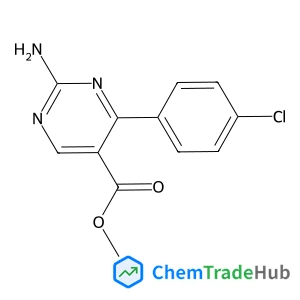
Methyl 2-amino-4-(4-chlorophenyl)-5-pyrimidinecarboxylate
CAS Number:
1133115-56-6
Molecular Formula:
C12H10ClN3O2
Zheng Gong, Yuxue Liu, Jian Yang, Duanting Yan, Hancheng Zhu, Chunguang Liu, Changshan Xu, Hong Zhang
Spinel-phase Zn2Ga2.98−xGe0.75O8:Cr0.020,Prx (ZGGO:Cr3+,Pr3+) near infrared (NIR) persistent luminescence nanoparticles (PLNPs) with different amounts of Pr3+ dopant were prepared by a hydrothermal method in combination with a subsequent annealing in a vacuum. For these nanoparticles, the averaged particle size decreases from 64 to 37 nm with increasing Pr3+ doping concentration from 0 to 0.025 and Cr3+ and Pr3+ ions are uniformly doped into the interior and surface of a single nanoparticle. It can be found that Pr3+ doping leads to the appearance of more anti-site pairs () around distorted octahedral Cr3+ ions and enhanced NIR emissions around 697 nm, which originate from the 2E(2G) → 4A2(4F) and 4T2(4F) → 4A2(4F) transitions of the interior and surface Cr3+ ions in the nanoparticles. In particular, for the interior Cr3+ ions in the Pr3+ doped nanoparticles, the enhanced NIR luminescence can be attributed to the suppressed energy transfer of the excited electrons from the 4T2(4F) level to the trap level related to anti-site pairs () around the distorted octahedral Cr3+ ions. Our results suggest that Pr3+ doped ZGGO:Cr3+ PLNPs have potential applications for bio-imaging.
Francesco De Riccardis, Marcello Di Filippo, Davide Garrisi, Irene Izzo, Fabrizio Mancin, Lucia Pasquato, Paolo Scrimin, Paolo Tecilla
DOI: 10.1039/B208943B
Seiya Kobatake, Kingo Uchida, Eriko Tsuchida, Masahiro Irie
DOI: 10.1039/B208419H
Derek R. Boyd, Narain D. Sharma, Pui L. Loke, John F. Malone, W. Colin McRoberts
DOI: 10.1039/B208978E
Ye-Zi You, Chun-Yan Hong, Cai-Yuan Pan
DOI: 10.1039/B208180F
Qing Cai, Zhixin Li, Liangzhen Xu, Bin Qiu, Cheng Li, Zhenyu Lin
DOI: 10.1039/D1AN00257K
Ravin Narain, Steven P. Armes
DOI: 10.1039/B208654A
Yali Wang, Yuan Zhang, Lijun Yang, Huiyuan Wu, Nathaniel Finney
DOI: 10.1039/D1AN00147G
Andreu Vaquer, Enrique Barón, Roberto de la Rica
DOI: 10.1039/D1AN00283J
Krishna Gopal Dongol, Kouki Matsubara, Shuntaro Mataka, Thies Thiemann
DOI: 10.1039/B209494K
2-Methylbenzene-1,4-diamine dihydrochloride (CAS: 615-45-2) should be stored in ...
(1S,4S)-2,5-Diazabicyclo[2.2.1]heptane dihydrobromide is generally considered sa...
(6-Chloropyridazin-3-YL)methanamine finds applications in the pharmaceutical ind...
2-Fluoro-3-methylphenol is primarily used in the synthesis of pharmaceuticals, p...
When handling 3-Methoxy-4-nitrobenzonitrile, it is important to wear appropriate...
When handling 1,3-Oxazolo[4,5-b]pyridine-2(3H)-thione (CAS: 211949-57-4), it is ...
4-Ethynylbenzamide (CAS: 90347-86-7) falls under various regulatory guidelines i...
3-(2-Ethylphenyl)-2-thioxo-4-imidazolidinone is primarily used as an intermediat...
(2-Fluoro-6-methoxyphenyl)acetic acid, also known as 4-fluoro-3-methoxybenzoic a...
Market trends for 2-[4-(Hydroxymethyl)phenoxy]ethanol (CAS: 102196-18-9) indicat...

Physical Chemistry Chemical Physics (PCCP) is an international journal co-owned by 19 physical chemistry and physics societies from around the world. This journal publishes original, cutting-edge research in physical chemistry, chemical physics and biophysical chemistry. To be suitable for publication in PCCP, articles must include significant innovation and/or insight into physical chemistry; this is the most important criterion that reviewers and Editors will judge against when evaluating submissions. The journal has a broad scope and welcomes contributions spanning experiment, theory, computation and data science. Topical coverage includes spectroscopy, dynamics, kinetics, statistical mechanics, thermodynamics, electrochemistry, catalysis, surface science, quantum mechanics, quantum computing and machine learning. Interdisciplinary research areas such as polymers and soft matter, materials, nanoscience, energy, surfaces/interfaces, and biophysical chemistry are welcomed if they demonstrate significant innovation and/or insight into physical chemistry. Joined experimental/theoretical studies are particularly appreciated when complementary and based on up-to-date approaches.
![1H-Imidazo[4,5-c]pyridine-7-carboxylic acid structure](https://static.chemtradehub.com/structs/123/1234616-39-7-1344.webp "1H-Imidazo[4,5-c]pyridine-7-carboxylic acid structure")
![5-Bromo-3-isopropyl-1H-pyrrolo[2,3-b]pyridine structure](https://static.chemtradehub.com/structs/125/1256819-54-1-8620.webp "5-Bromo-3-isopropyl-1H-pyrrolo[2,3-b]pyridine structure")