












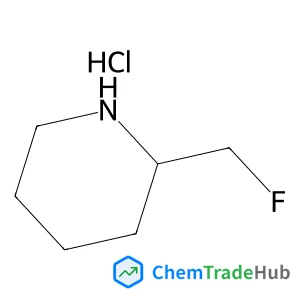
(2S)-2-(Fluoromethyl)piperidine hydrochloride (1:1)
CAS Number:
886216-73-5
Molecular Formula:
C6H13ClFN
Xudan Song, Jiarui Lu, Wenzhen Lai
Herein, we use in-protein quantum mechanical/molecular mechanical (QM/MM) calculations to elucidate the mechanism of dioxygen activation, oxygen atom exchange and substrate epoxidation processes by AsqJ, an FeII/α-ketoglutarate-dependent dioxygenase (α-KGD) using a 2-His-1-Asp facial triad. Our results demonstrated that the whole reaction proceeds through a quintet surface. The dioxygen activation by AsqJ leads to a quintet penta-coordinated FeIV–oxo species, which has a square pyramidal geometry with the oxo group trans to His134. This penta-coordinated FeIV–oxo species is not the reactive one in the substrate epoxidation reaction since its oxo group is pointing away from the target CC bond. Instead, it can undergo the oxo group isomerization followed by water binding or the water binding followed by oxygen atom exchange to form the reactive hexa-coordinated FeIV–oxo species with the oxo group trans to His211. The calculated parameters of Mössbauer spectra for this hexa-coordinated FeIV–oxo intermediate are in excellent agreement with the experimental values, suggesting that it is most likely the experimentally trapped species. The calculated energetics indicated that the rate-limiting step is the substrate CC bond activation. This work improves our understanding of the dioxygen activation by α-KGD and provides important structural information about the reactive FeIV–oxo species.
Dalibor Hršak, Lotte Holmegaard, Anton S. Poulsen, Nanna H. List, Jacob Kongsted, M. Paula Denofrio, Rosa Erra-Balsells, Franco M. Cabrerizo, Ove Christiansen, Peter R. Ogilby
DOI: 10.1039/C5CP00773A
DOI: 10.1039/C5CP01136A
Akansha Singh, Prasenjit Sen
DOI: 10.1039/C5CP01016K
A. D. Godbeer, J. S. Al-Khalili, P. D. Stevenson
DOI: 10.1039/C5CP00472A
Matthias Heger, Jonas Altnöder, Anja Poblotzki, Martin A. Suhm
DOI: 10.1039/C5CP01545F
Xiaoliang Zhang, Jianhua Liu, Jindan Zhang, Erik M. J. Johansson
DOI: 10.1039/C4CP06068G
Tatiana Kuznetsova, Bjørnar Jensen, Bjørn Kvamme, Sara Sjøblom
DOI: 10.1039/C5CP00660K
Jing Zhang, Nan Chen, Zheng Tang, Yang Yu, Qili Hu, Chuanping Feng
DOI: 10.1039/C5CP00817D
Qing-Yun Xiang, Yu Wang, Shi-Yu Li, Lan-Hua Wang, Li-Bin Mo, Wen-Qing Yao, Li Zhang
DOI: 10.1039/C5CP00878F
Mohamed Mohamed Rashad, Abd El-Hakim Taha Kandil, Mikhael Bechelany
DOI: 10.1039/C5CP00319A
Waste containing N-Methoxy-N-methyl-1,3-thiazole-5-carboxamide (CAS: 898825-89-3...
N-(4-Biphenylyl)dibenzo[b,d]furan-4-amine should be stored in a tightly sealed c...
The market for 3-Acetamido-5-amino-2,4,6-triiodobenzoic acid (CAS: 1713-07-1) is...
Benzyl 2-O-acetyl-3,4,6-tri-O-benzyl-beta-D-galactopyranoside (CAS: 61820-03-9) ...
2-Ethylpiperazine dihydrochloride (CAS: 438050-52-3) is regulated under the Glob...
1,1'-[1,3-Phenylenebis(methylene)]bis(3-methyl-1H-pyrrole-2,5-dione) (CAS: 11946...
Several alternatives can be used in the synthesis of 5-Fluoro-2-(1-pyrrolidinyl)...
Proper personal protective equipment (PPE) must be worn when handling this compo...
When handling 6-Bromoimidazo[1,2-a]pyridin-8-amine, it is important to wear appr...
Alternatives to (2S,4R)-4-(4-Nitrobenzyl)pyrrolidine-2-carboxylic acid hydrochlo...

Physical Chemistry Chemical Physics (PCCP) is an international journal co-owned by 19 physical chemistry and physics societies from around the world. This journal publishes original, cutting-edge research in physical chemistry, chemical physics and biophysical chemistry. To be suitable for publication in PCCP, articles must include significant innovation and/or insight into physical chemistry; this is the most important criterion that reviewers and Editors will judge against when evaluating submissions. The journal has a broad scope and welcomes contributions spanning experiment, theory, computation and data science. Topical coverage includes spectroscopy, dynamics, kinetics, statistical mechanics, thermodynamics, electrochemistry, catalysis, surface science, quantum mechanics, quantum computing and machine learning. Interdisciplinary research areas such as polymers and soft matter, materials, nanoscience, energy, surfaces/interfaces, and biophysical chemistry are welcomed if they demonstrate significant innovation and/or insight into physical chemistry. Joined experimental/theoretical studies are particularly appreciated when complementary and based on up-to-date approaches.
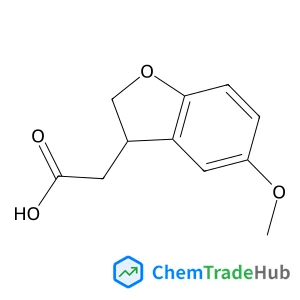

![2-Methyl-2-propanyl {3-[4-(4,4,5,5-tetramethyl-1,3,2-dioxaborolan-2-yl)phenyl]-3-oxetanyl}carbamate structure](https://static.chemtradehub.com/structs/127/1279090-25-3-1b84.webp "2-Methyl-2-propanyl {3-[4-(4,4,5,5-tetramethyl-1,3,2-dioxaborolan-2-yl)phenyl]-3-oxetanyl}carbamate structure")





