


Effects of CO2 adsorption on proton migration on a hydrated ZrO2 surface: an ab initio molecular dynamics study
Literature Information
Publication Date
2017-07-03
DOI
10.1039/C7CP01650F
Impact Factor
3.676
Authors
Ryuhei Sato, Yasushi Shibuta, Fuyuki Shimojo, Shu Yamaguchi
View Original
Abstract
Hydration reactions on a carbonate-terminated cubic ZrO2(110) surface were analyzed using ab initio molecular dynamics (AIMD) simulations. After hydration reactions, carbonates were still present on the surface at 500 K. However, these carbonates are very weak conjugate bases and only act as steric hindrance in proton hopping processes between acidic chemisorbed H2O molecules (Zr–OH2) and monodentate hydroxyl groups (Zr–OH−). Similar to a carbonate-free hydrated surface, Zr–OH2, Zr–OH−, and polydentate hydroxyl groups (OH+) were observed, while the ratio of acidic Zr–OH2 was significantly larger than that on the carbonate-free hydrated surface. A thermodynamic discussion and bond property analysis reveal that CO2 adsorption significantly decreases the basicity of surface oxide ions (O), whereas the acidity of Zr–OH2 is not affected. As a result, protons released from OH+ react with Zr–OH− to form Zr–OH2, leading to a deficiency of proton acceptor sites, which decreases the proton conductivity by the hopping mechanism.
Recommended Journals

Medicinal Chemistry Research

Polycyclic Aromatic Compounds

Critical Reviews in Solid State and Materials Sciences

Heteroatom Chemistry

Bioorganic & Medicinal Chemistry Letters

Main Group Chemistry

Bioorganic & Medicinal Chemistry

Acta Metallurgica Sinica-English Letters

Atomization and Sprays

Journal of Asian Natural Products Research
Related Literature
Dynamics of aqueous binary glass-formers confined in MCM-41
Khalid Elamin, Helén Jansson, Jan Swenson
2015-04-20
Paper
DOI: 10.1039/C5CP00751H
Observations of probe dependence of the solvation dynamics in ionic liquids
Jens Breffke, Nikolaus P. Ernsting, Mark Maroncelli
2015-04-10
Paper
DOI: 10.1039/C5CP00814J
Collision-induced dissociation products of the protonated dipeptide carnosine: structural elucidation, fragmentation pathways and potential energy surface analysis
Eslam M. Moustafa, Ida Ritacco, Emilia Sicilia
2015-04-09
Paper
DOI: 10.1039/C5CP00958H
ZnO@Ag2S core–shell nanowire arrays for environmentally friendly solid-state quantum dot-sensitized solar cells with panchromatic light capture and enhanced electron collection
Xiaoliang Zhang, Jianhua Liu, Jindan Zhang, Erik M. J. Johansson
2015-04-17
Paper
DOI: 10.1039/C4CP06068G
Giant conductivity enhancement of ferrite insulators induced by atomic hydrogen
Qing-Yun Xiang, Yu Wang, Shi-Yu Li, Lan-Hua Wang, Li-Bin Mo, Wen-Qing Yao, Li Zhang
2015-04-17
Paper
DOI: 10.1039/C5CP00878F
Coherent resonance of quantum plasmons in the graphene–gold cluster hybrid system
Chikang Li
2015-04-15
Paper
DOI: 10.1039/C4CP05049E
Alternative mechanisms for O2 release and O–O bond formation in the oxygen evolving complex of photosystem II
Per E. M. Siegbahn
2015-04-10
Paper
DOI: 10.1039/C5CP00138B
Infrared spectra of small anionic water clusters from density functional theory and wavefunction theory calculations
Sai Duan, Guangjun Tian, Jun Jiang, Xin Xu
2015-04-13
Paper
DOI: 10.1039/C5CP01378J
In situ FTIR and Raman spectroelectrochemical characterization of graphene oxide upon electrochemical reduction in organic solvents
Antti Viinikanoja, Pia Damlin, Milla Suominen, Carita Kvarnström
2015-04-10
Paper
DOI: 10.1039/C5CP00942A
Ketocyanine dyes: impact of conjugation length on optical absorption and third-order polarizabilities
Kada Yesudas, Eluvathingal D. Jemmis, Kotamarthi Bhanuprakash
2015-04-14
Paper
DOI: 10.1039/C5CP01410G
You might also like
Compound Q&A
How should waste containing N-Methoxy-N-methyl-1,3-thiazole-5-carboxamide (CAS: 898825-89-3) be handled?
Waste containing N-Methoxy-N-methyl-1,3-thiazole-5-carboxamide (CAS: 898825-89-3...
898825-89-3N-Methoxy-N-methyl-1...
Compound Q&A
How should N-(4-Biphenylyl)dibenzo[b,d]furan-4-amine (CAS: 1318338-47-4) be stored?
N-(4-Biphenylyl)dibenzo[b,d]furan-4-amine should be stored in a tightly sealed c...
1318338-47-4N-(4-Biphenylyl)dibe...
Compound Q&A
What is the market or research trend for 3-Acetamido-5-amino-2,4,6-triiodobenzoic acid (CAS: 1713-07-1)?
The market for 3-Acetamido-5-amino-2,4,6-triiodobenzoic acid (CAS: 1713-07-1) is...
1713-07-13-Acetamido-5-amino-...
Compound Q&A
How should Benzyl 2-O-acetyl-3,4,6-tri-O-benzyl-beta-D-galactopyranoside (CAS: 61820-03-9) be stored?
Benzyl 2-O-acetyl-3,4,6-tri-O-benzyl-beta-D-galactopyranoside (CAS: 61820-03-9) ...
61820-03-9Benzyl 2-O-acetyl-3,...
Compound Q&A
What regulatory guidelines apply to 2-Ethylpiperazine dihydrochloride (CAS: 438050-52-3)?
2-Ethylpiperazine dihydrochloride (CAS: 438050-52-3) is regulated under the Glob...
438050-52-32-Ethylpiperazine di...
Compound Q&A
What regulatory guidelines apply to 1,1'-[1,3-Phenylenebis(methylene)]bis(3-methyl-1H-pyrrole-2,5-dione) (CAS: 119462-56-5)?
1,1'-[1,3-Phenylenebis(methylene)]bis(3-methyl-1H-pyrrole-2,5-dione) (CAS: 11946...
119462-56-51,1'-[1,3-Phenyleneb...
Compound Q&A
Are there alternatives to 5-Fluoro-2-(1-pyrrolidinyl)pyridine (CAS: 1287217-79-1) in synthesis?
Several alternatives can be used in the synthesis of 5-Fluoro-2-(1-pyrrolidinyl)...
1287217-79-15-Fluoro-2-(1-pyrrol...
Compound Q&A
What precautions should be taken when handling 1-((2R,3R,4R,5R)-5-((bis(4-methoxyphenyl)(phenyl)methoxy)methyl)-4-hydroxy-3-methoxytetrahydrofuran-2-yl)-5-methylpyrimidine-2,4(1H,3H)-dione (CAS: 153631-19-7)?
Proper personal protective equipment (PPE) must be worn when handling this compo...
153631-19-71-((2R,3R,4R,5R)-5-(...
Compound Q&A
What precautions should be taken when handling 6-Bromoimidazo[1,2-a]pyridin-8-amine (CAS: 676371-00-9)?
When handling 6-Bromoimidazo[1,2-a]pyridin-8-amine, it is important to wear appr...
676371-00-96-Bromoimidazo[1,2-a...
Compound Q&A
Are there alternatives to (2S,4R)-4-(4-Nitrobenzyl)pyrrolidine-2-carboxylic acid hydrochloride (CAS: 1049740-22-8) in synthesis?
Alternatives to (2S,4R)-4-(4-Nitrobenzyl)pyrrolidine-2-carboxylic acid hydrochlo...
1049740-22-8(2S,4R)-4-(4-Nitrobe...
Source Journal
Physical Chemistry Chemical Physics

CiteScore:
5.5
Self-citation Rate:
10.3%
Articles per Year:
3036
Physical Chemistry Chemical Physics (PCCP) is an international journal co-owned by 19 physical chemistry and physics societies from around the world. This journal publishes original, cutting-edge research in physical chemistry, chemical physics and biophysical chemistry. To be suitable for publication in PCCP, articles must include significant innovation and/or insight into physical chemistry; this is the most important criterion that reviewers and Editors will judge against when evaluating submissions. The journal has a broad scope and welcomes contributions spanning experiment, theory, computation and data science. Topical coverage includes spectroscopy, dynamics, kinetics, statistical mechanics, thermodynamics, electrochemistry, catalysis, surface science, quantum mechanics, quantum computing and machine learning. Interdisciplinary research areas such as polymers and soft matter, materials, nanoscience, energy, surfaces/interfaces, and biophysical chemistry are welcomed if they demonstrate significant innovation and/or insight into physical chemistry. Joined experimental/theoretical studies are particularly appreciated when complementary and based on up-to-date approaches.
Recommended Compounds
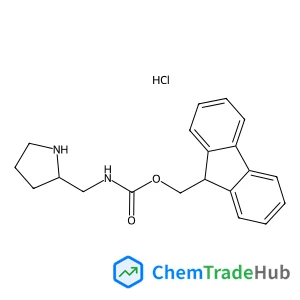
(S)-(9H-Fluoren-9-yl)methyl (pyrrolidin-2-ylmethyl)carbamate hydrochloride
CAS Number:
1217813-15-4
Molecular Formula:
C20H23ClN2O2
![4-Chloro-2-{[(2-chlorophenoxy)acetyl]amino}benzoic acid structure](https://static.chemtradehub.com/structs/351/351424-20-9-9467.webp "4-Chloro-2-{[(2-chlorophenoxy)acetyl]amino}benzoic acid structure")
4-Chloro-2-{[(2-chlorophenoxy)acetyl]amino}benzoic acid
CAS Number:
351424-20-9
Molecular Formula:
C15H11Cl2NO4
Recommended Suppliers





Disclaimer
This page provides academic journal information for reference and research purposes only. We are not affiliated with any journal publishers and do not handle publication submissions. For publication-related inquiries, please contact the respective journal publishers directly.
If you notice any inaccuracies in the information displayed, please contact us at support@chemtradehub.com. We will promptly review and address your concerns.