












Controlling the spin and valley degeneracy splitting in monolayer MnPSe3 by atom doping
Literature Information
Publication Date
2017-05-15
DOI
10.1039/C7CP00964J
Impact Factor
3.676
Authors
Liangshuai Zhong, Xiaofang Chen, Jingshan Qi
View Original
Abstract
Monolayer manganese chalcogenophosphates MnPSe3 possess a pair of non-degenerate energy valleys in the vicinities of the vertices of the hexagonal Brillouin zone, which exhibit fascinating optical valley polarization. However, the spin is still degenerate due to antiferromagnetic coupling between Mn ions. In this paper we propose a strategy to realize simultaneously the spin and valley degeneracy splitting by the doping-induced Zeeman effect in monolayer MnPSe3. Using first-principles calculations we demonstrate that in Zn-doped monolayer MnPSe3 a valley splitting of larger than 20 meV and a spin splitting of larger than 100 meV can be achieved simultaneously. The doping-induced spin and valley splitting is attractive for spintronics and valleytronics as it creates differences in various energy scales between valleys and between spins, which will facilitate the access and manipulation of the valley and spin degrees of freedom by electrical gating in addition to optical pumping.
Related Literature
Agnanostructures assembled on magnetic particles for ready SERS-based detection of dissolved chemical species
Kwan Kim, Hee Jin Jang, Kuan Soo Shin
2008-10-21
Paper
DOI: 10.1039/B811425K
Discrimination between drug-resistant and non-resistant human melanoma cell lines by FTIR spectroscopy
A. Zwielly, G. Brkic, S. Mordechai
2008-10-24
Paper
DOI: 10.1039/B805223A
Detection of pathological aortic tissues by infrared multispectral imaging and chemometrics
F. Bonnier, D. Bertrand, L. Ventéo, M. Pluot, B. Baehrel, M. Manfait, G. D. Sockalingum
2008-03-13
Paper
DOI: 10.1039/B717164A
Sequence-specific electrochemical detection of Alicyclobacillus acidoterrestrisDNA using electroconductive polymer-modified fluorine tin oxide electrodes
Katlin Ivon Barrios Eguiluz, Giancarlo Richard Salazar-Banda, Maribel Elizabeth Funes-Huacca, Juliana Vieira Alberice, Emanuel Carrilho, Sergio Antonio Spinola Machado, Luis Alberto Avaca
2008-10-29
Paper
DOI: 10.1039/B809080G
Organofluoro-silica xerogels as high-performance optical oxygen sensors
Rosaria Ciriminna, Mario Pagliaro
2009-06-09
Tutorial Review
DOI: 10.1039/B819417C
Multi-analyte sensing: a chemometrics approach to understanding the merits of electrode arrays versus single electrodes
Diako Ebrahimi, Edith Chow, Justin J. Gooding, David B. Hibbert
2008-06-19
Paper
DOI: 10.1039/B804811H
Rapid and quantitative detection of the microbial spoilage in milk using Fourier transform infrared spectroscopy and chemometrics
Nicoletta Nicolaou, Royston Goodacre
2008-07-11
Paper
DOI: 10.1039/B804439B
Direct measurements of xanthine in 2000-fold diluted xanthinuric urine with a nanoporous carbon fiber sensor
Mehjabin Kathiwala, Andrews Obeng Affum, Jason Perry, Anna Brajter-Toth
2008-03-12
Paper
DOI: 10.1039/B718125F
Sol–gel derived nano-structured zinc oxide film for sexually transmitted disease sensor
Anees A. Ansari, Renu Singh, G. Sumana, B. D. Malhotra
2009-03-06
Paper
DOI: 10.1039/B817562D
You might also like
Compound Q&A
Are there alternatives to 1-(4-Chlorophenyl)-N-hydroxymethanimine (CAS: 3848-36-0) in synthesis?
When considering alternatives to 1-(4-Chlorophenyl)-N-hydroxymethanimine (CAS: 3...
3848-36-01-(4-Chlorophenyl)-N...
Compound Q&A
How should (1R,9S,10S,12S,14E,16S,19R,20R,21S,22R)-3,9,21-Trihydroxy-5,10,12,14,16,20,22-heptamethyl-23,24-dioxatetracyclo[17.3.1.1~6,9~.0~2,7~]tetracosa-2,5,7,14-tetraen-4-one (CAS: 183202-73-5) be stored?
This compound should be stored in a cool, dry place away from direct sunlight. I...
183202-73-5(1R,9S,10S,12S,14E,1...
Compound Q&A
How is 3-(4-Bromophenyl)-5-(2-fluorophenyl)-1,2,4-oxadiazole (CAS: 419553-16-5) typically synthesized?
3-(4-Bromophenyl)-5-(2-fluorophenyl)-1,2,4-oxadiazole is synthesized through a m...
419553-16-53-(4-Bromophenyl)-5-...
Compound Q&A
How is 5-Chloro-2-(4-chlorophenyl)-4-methyl-6-[3-(1-piperidinyl)propoxy]pyrimidine (CAS: 1639220-19-1) typically synthesized?
5-Chloro-2-(4-chlorophenyl)-4-methyl-6-[3-(1-piperidinyl)propoxy]pyrimidine (CAS...
1639220-19-15-Chloro-2-(4-chloro...
Compound Q&A
What industries use 2-Chloro-4-(difluoromethoxy)pyridine (CAS: 1206978-15-5)?
2-Chloro-4-(difluoromethoxy)pyridine is used in the pharmaceutical industry for ...
1206978-15-52-Chloro-4-(difluoro...
Compound Q&A
What regulatory guidelines apply to 3-Chloro-6-methylpyridazine (CAS: 1121-79-5)?
3-Chloro-6-methylpyridazine (CAS: 1121-79-5) is classified under the Globally Ha...
1121-79-53-Chloro-6-methylpyr...
Compound Q&A
Are there alternatives to Methyl 4,5-dimethyl-2-nitrobenzoate in synthesis?
Several alternatives can be used in the synthesis of Methyl 4,5-dimethyl-2-nitro...
90922-74-0Methyl 4,5-dimethyl-...
Compound Q&A
Are there alternatives to (2E,2'E)-3,3'-(1,4-Phenylene)bisacrylaldehyde in synthesis?
Alternatives to (2E,2'E)-3,3'-(1,4-Phenylene)bisacrylaldehyde include other acry...
63405-68-5(2E,2'E)-3,3'-(1,4-P...
Compound Q&A
What is 3-Amino-5-chloropyridin-2-ol hydrochloride (CAS: 1261906-29-9)?
3-Amino-5-chloropyridin-2-ol hydrochloride is an organic compound with the CAS n...
1261906-29-93-Amino-5-chloropyri...
Compound Q&A
What precautions should be taken when handling 6,7-Difluoro-2,3-dihydro-4H-chromen-4-one (CAS: 1092349-93-3)?
When handling 6,7-Difluoro-2,3-dihydro-4H-chromen-4-one, it is essential to wear...
1092349-93-36,7-Difluoro-2,3-dih...
Source Journal
Physical Chemistry Chemical Physics

CiteScore:
5.5
Self-citation Rate:
10.3%
Articles per Year:
3036
Physical Chemistry Chemical Physics (PCCP) is an international journal co-owned by 19 physical chemistry and physics societies from around the world. This journal publishes original, cutting-edge research in physical chemistry, chemical physics and biophysical chemistry. To be suitable for publication in PCCP, articles must include significant innovation and/or insight into physical chemistry; this is the most important criterion that reviewers and Editors will judge against when evaluating submissions. The journal has a broad scope and welcomes contributions spanning experiment, theory, computation and data science. Topical coverage includes spectroscopy, dynamics, kinetics, statistical mechanics, thermodynamics, electrochemistry, catalysis, surface science, quantum mechanics, quantum computing and machine learning. Interdisciplinary research areas such as polymers and soft matter, materials, nanoscience, energy, surfaces/interfaces, and biophysical chemistry are welcomed if they demonstrate significant innovation and/or insight into physical chemistry. Joined experimental/theoretical studies are particularly appreciated when complementary and based on up-to-date approaches.
Recommended Compounds
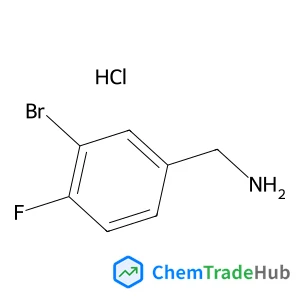
1-(3-Bromo-4-fluorophenyl)methanamine hydrochloride (1:1)
CAS Number:
202865-68-7
Molecular Formula:
C7H8BrClFN
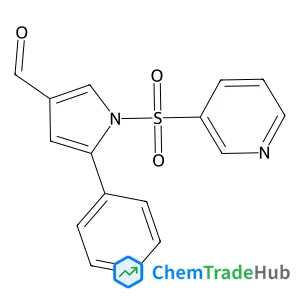
5-Phenyl-1-(pyridin-3-ylsulfonyl)-1H-pyrrole-3-carbaldehyde
CAS Number:
881676-90-0
Molecular Formula:
C16H12N2O3S
Recommended Suppliers



Disclaimer
This page provides academic journal information for reference and research purposes only. We are not affiliated with any journal publishers and do not handle publication submissions. For publication-related inquiries, please contact the respective journal publishers directly.
If you notice any inaccuracies in the information displayed, please contact us at support@chemtradehub.com. We will promptly review and address your concerns.