


Excited-state E → Z photoisomerization mechanism unveiled by ab initio nonadiabatic molecular dynamics simulation for hemithioindigo–hemistilbene
Literature Information
Publication Date
2017-04-12
DOI
10.1039/C7CP00102A
Impact Factor
3.676
Authors
Meihong Yang, Chunyan Huo, Anyang Li, Yibo Lei, Chaoyuan Zhu
View Original
Abstract
The Zhu–Nakamura formulas based on on-the-fly trajectory surface hopping dynamics simulations at the two-state-averaged CASSCF level were employed to investigate the E → Z photoisomerization mechanisms of hemithioindigo–hemistilbene (HTI) upon S1 excitation. Seven conical intersections were observed along the isomerization pathways, which were composed of double bond torsion, benzene ring torsion, inversion and pyramidalization motions, and only three of them were found to play a role in the dynamics simulations started at S1E-HTI. The dominant isomerization pathway proceeds via central double bond torsion together with pyramidal and tilt motions to some extent (hop via CI5) and accounts for all the reactive trajectories. On the other hand, the two pathways that involve the conical zones lie in the vicinity of the E-form Franck–Condon region (CI7) and proceed along the combined central double bond and benzene ring torsion route (CI3/CI4) with generation of the E products. Within the 332 simulated trajectories, 66 hop to the ground state and only 19 switch to the Z product. The estimated quantum yield of 0.057 (19 in 332) agrees well with the reported experimental value of 0.053 ± 0.016. The excited-state lifetimes span a wide region from hundreds of femtoseconds to several picoseconds, depending on the time for vibrational relaxation and number of cycles for periodical mixed mode torsion.
Recommended Journals

Russian Journal of Coordination Chemistry

Journal of Saudi Chemical Society

Crystallography Reports

Chemistry Education Research and Practice

Current Opinion in Solid State & Materials Science

Russian Journal of Organic Chemistry

Russian Journal of Bioorganic Chemistry

Russian Chemical Bulletin

Chemical Communications

Drug Discovery Today
Related Literature
Oxidation responsive mono-cleavable amphiphilic di-block polymer micelles labeled with a single diselenide
2013-05-07
Paper
DOI: 10.1039/C3PY00406F
Photostable and biocompatible AIE-active conjugated polyelectrolytes for efficient heparin detection and specific lysosome labelling
Yinan Wang, Hongming Yao, Zeyan Zhuang, Jinya Yao, Jian Zhou, Zujin Zhao
2018-09-18
Communication
DOI: 10.1039/C8TB02053A
Tuning cesium–guanidinium in formamidinium tin triiodide perovskites with an ethylenediammonium additive for efficient and stable lead-free perovskite solar cells
Gabriella A. Tosado, Erjin Zheng, Qiuming Yu
2020-11-25
Paper
DOI: 10.1039/D0MA00520G
Kinetics of α hydrogen abstractions from thiols, sulfides and thiocarbonyl compounds
Aäron G. Vandeputte, Maarten K. Sabbe, Marie-Françoise Reyniers, Guy B. Marin
2012-06-29
Paper
DOI: 10.1039/C2CP41114H
Critical factors governing vertical phase separation in polymer–PCBM blend films for organic solar cells
Min Kim, Jaewon Lee, Sae Byeok Jo, Dong Hun Sin, Hyomin Ko, Hansol Lee, Seung Goo Lee, Kilwon Cho
2016-09-16
Paper
DOI: 10.1039/C6TA06508B
Dual sulfonated poly(arylene ether ketone) membrane grafted with 15-crown-5-ether for enhanced proton conductivity and anti-oxidation stability
Dinh Cong Tinh Vo, Minh Dat Thinh Nguyen, Dukjoon Kim
2019-04-16
Paper
DOI: 10.1039/C9ME00009G
A gene-activating skin substitute comprising PLLA/POSS nanofibers and plasmid DNA encoding ANG and bFGF promotes in vivo revascularization and epidermalization
Dongwei Wu, Jianwang Tan, Zhibin Liu
2018-09-28
Paper
DOI: 10.1039/C8TB02006J
Block copolymers based on 2-methyl- and 2-phenyl-oxazoline by metallocene-mediated cationic ring-opening polymerization: synthesis and characterization
Maria-Evgenia Kourti, Eirini Fega, Marinos Pitsikalis
2016-03-28
Paper
DOI: 10.1039/C6PY00405A
Industrial feasibility of anodic hydrogen peroxide production through photoelectrochemical water splitting: a techno-economic analysis
Kasper Wenderich, Wouter Kwak, Alexa Grimm, Gert Jan Kramer, Guido Mul, Bastian Mei
2020-04-17
Paper
DOI: 10.1039/D0SE00524J
Reversible encapsulations and stimuli-responsive biological delivery from a dynamically assembled cucurbit[7]uril host and nanoparticle guest scaffold
Santu Sinha, Ranjan Sasmal, Divyesh Joshi
2018-09-25
Paper
DOI: 10.1039/C8TB01596A
You might also like
Compound Q&A
Are there alternatives to 1-(4-Chlorophenyl)-N-hydroxymethanimine (CAS: 3848-36-0) in synthesis?
When considering alternatives to 1-(4-Chlorophenyl)-N-hydroxymethanimine (CAS: 3...
3848-36-01-(4-Chlorophenyl)-N...
Compound Q&A
How should (1R,9S,10S,12S,14E,16S,19R,20R,21S,22R)-3,9,21-Trihydroxy-5,10,12,14,16,20,22-heptamethyl-23,24-dioxatetracyclo[17.3.1.1~6,9~.0~2,7~]tetracosa-2,5,7,14-tetraen-4-one (CAS: 183202-73-5) be stored?
This compound should be stored in a cool, dry place away from direct sunlight. I...
183202-73-5(1R,9S,10S,12S,14E,1...
Compound Q&A
How is 3-(4-Bromophenyl)-5-(2-fluorophenyl)-1,2,4-oxadiazole (CAS: 419553-16-5) typically synthesized?
3-(4-Bromophenyl)-5-(2-fluorophenyl)-1,2,4-oxadiazole is synthesized through a m...
419553-16-53-(4-Bromophenyl)-5-...
Compound Q&A
How is 5-Chloro-2-(4-chlorophenyl)-4-methyl-6-[3-(1-piperidinyl)propoxy]pyrimidine (CAS: 1639220-19-1) typically synthesized?
5-Chloro-2-(4-chlorophenyl)-4-methyl-6-[3-(1-piperidinyl)propoxy]pyrimidine (CAS...
1639220-19-15-Chloro-2-(4-chloro...
Compound Q&A
What industries use 2-Chloro-4-(difluoromethoxy)pyridine (CAS: 1206978-15-5)?
2-Chloro-4-(difluoromethoxy)pyridine is used in the pharmaceutical industry for ...
1206978-15-52-Chloro-4-(difluoro...
Compound Q&A
What regulatory guidelines apply to 3-Chloro-6-methylpyridazine (CAS: 1121-79-5)?
3-Chloro-6-methylpyridazine (CAS: 1121-79-5) is classified under the Globally Ha...
1121-79-53-Chloro-6-methylpyr...
Compound Q&A
Are there alternatives to Methyl 4,5-dimethyl-2-nitrobenzoate in synthesis?
Several alternatives can be used in the synthesis of Methyl 4,5-dimethyl-2-nitro...
90922-74-0Methyl 4,5-dimethyl-...
Compound Q&A
Are there alternatives to (2E,2'E)-3,3'-(1,4-Phenylene)bisacrylaldehyde in synthesis?
Alternatives to (2E,2'E)-3,3'-(1,4-Phenylene)bisacrylaldehyde include other acry...
63405-68-5(2E,2'E)-3,3'-(1,4-P...
Compound Q&A
What is 3-Amino-5-chloropyridin-2-ol hydrochloride (CAS: 1261906-29-9)?
3-Amino-5-chloropyridin-2-ol hydrochloride is an organic compound with the CAS n...
1261906-29-93-Amino-5-chloropyri...
Compound Q&A
What precautions should be taken when handling 6,7-Difluoro-2,3-dihydro-4H-chromen-4-one (CAS: 1092349-93-3)?
When handling 6,7-Difluoro-2,3-dihydro-4H-chromen-4-one, it is essential to wear...
1092349-93-36,7-Difluoro-2,3-dih...
Source Journal
Physical Chemistry Chemical Physics

CiteScore:
5.5
Self-citation Rate:
10.3%
Articles per Year:
3036
Physical Chemistry Chemical Physics (PCCP) is an international journal co-owned by 19 physical chemistry and physics societies from around the world. This journal publishes original, cutting-edge research in physical chemistry, chemical physics and biophysical chemistry. To be suitable for publication in PCCP, articles must include significant innovation and/or insight into physical chemistry; this is the most important criterion that reviewers and Editors will judge against when evaluating submissions. The journal has a broad scope and welcomes contributions spanning experiment, theory, computation and data science. Topical coverage includes spectroscopy, dynamics, kinetics, statistical mechanics, thermodynamics, electrochemistry, catalysis, surface science, quantum mechanics, quantum computing and machine learning. Interdisciplinary research areas such as polymers and soft matter, materials, nanoscience, energy, surfaces/interfaces, and biophysical chemistry are welcomed if they demonstrate significant innovation and/or insight into physical chemistry. Joined experimental/theoretical studies are particularly appreciated when complementary and based on up-to-date approaches.
Recommended Compounds
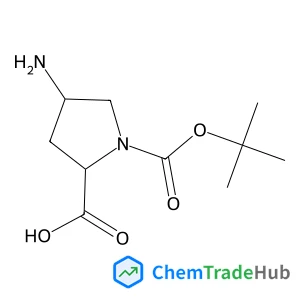
(2R,4R)-1-Boc-4-Aminopyrrolidine-2-carboxylic acid
CAS Number:
132622-98-1
Molecular Formula:
C10H18N2O4
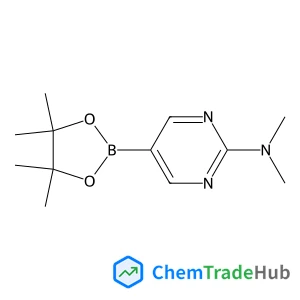
N,N-Dimethyl-5-(4,4,5,5-tetramethyl-1,3,2-dioxaborolan-2-yl)-2-pyrimidinamine
CAS Number:
1032759-30-0
Molecular Formula:
C12H20BN3O2
Recommended Suppliers






Disclaimer
This page provides academic journal information for reference and research purposes only. We are not affiliated with any journal publishers and do not handle publication submissions. For publication-related inquiries, please contact the respective journal publishers directly.
If you notice any inaccuracies in the information displayed, please contact us at support@chemtradehub.com. We will promptly review and address your concerns.