


Synergetic effect of the epoxide functional groups in the photocatalyzed atom transfer radical copolymerization of glycidyl methacrylate
Literature Information
Publication Date
2016-09-15
DOI
10.1039/C6PY01443G
Impact Factor
5.582
Authors
Frédéric Dumur
View Original
Abstract
Methyl methacrylate (MMA) and glycidyl methacrylate (GMA) were copolymerized by photocatalyzed atom transfer radical polymerization under the visible light irradiation of a compact blue LED lamp, using bis(1,10-phenanthroline)copper(I) as the photocatalyst. The polymerization was found to be all the more fast that the molar fraction of GMA was high. The same effect was observed when GMA was replaced by cyclohexene oxide (CHO) as a non-copolymerizable epoxide-containing compound. These results suggested that the epoxide functional group acted as a reducing agent in both cases, contributing to a faster regeneration of the activator form of the catalyst. This assumption was confirmed by UV-visible spectroscopy measurements, which evidenced a faster conversion of Cu(II) to Cu(I) in the presence of epoxide functional groups. Due to their large excess compared to the catalyst, no degradation of the epoxides was detected during the copolymerization of MMA and GMA, which thus provided well-defined poly(MMA-stat-GMA) copolymers as precursors for further functionalization. The statistical distribution of the epoxide side groups could also be controlled through sequenced additions of the comonomers, in a direct “one-pot” approach.
Recommended Journals

Journal of Chemical Sciences

Bioorganic & Medicinal Chemistry

Herald of the Russian Academy of Sciences

NDT & E International

Biocatalysis and Biotransformation

Medicinal Chemistry Research

Polycyclic Aromatic Compounds

Atomization and Sprays

Acta Metallurgica Sinica-English Letters

Chinese Journal of Chemistry
Related Literature
Transformation of a 4-membered ring zinc phosphate SBU to a sodalite-related 3-dimensional structure through a linear chain structure
D. Udayakumar
2003-07-24
Communication
DOI: 10.1039/B305679C
Amidinyl radicals: new and useful intermediates for the synthesis of imidazolines and imidazoles
Dominique Gennet, Samir Z. Zard, Haiwen Zhang
2003-06-23
Communication
DOI: 10.1039/B304545E
First generation of pentazole (HN5, pentazolic acid), the final azole, and a zinc pentazolate salt in solution: A new N-dearylation of 1-(p-methoxyphenyl) pyrazoles, a 2-(p-methoxyphenyl) tetrazole and application of the methodology to 1-(p-methoxyphenyl) pentazole
R. N. Butler, John C. Stephens, Luke A. Burke
2003-03-18
Communication
DOI: 10.1039/B301491F
Highly effective ferric hydroxide supported gold catalyst for selective oxidation of CO in the presence of H2
Botao Qiao, Youquan Deng
2003-07-28
Communication
DOI: 10.1039/B307181B
In situFTIR studies on the electrochemical reduction of halogenated phenols
2003-03-26
Communication
DOI: 10.1039/B212647H
Prediction of the potency of inhibitors of adenosine deaminase by QM/MM calculations
M. Paul Gleeson, Neil A. Burton, Ian H. Hillier
2003-07-21
Communication
DOI: 10.1039/B305790A
Insertion of organoindium carbenoids into rhodium halide bonds: revisiting a classic type of transition metal–group 13 metal bond formation
Tobias Steinke, Christian Gemel, Mirza Cokoja, Manuela Winter, Roland A. Fischer
2003-03-31
Communication
DOI: 10.1039/B301928D
A novel type of phosphide: synthesis and X-ray crystal structure analysis of (tBu3Si)3P4Li3
Hans-Wolfram Lerner, Matthias Wagner, Michael Bolte
2003-03-21
Communication
DOI: 10.1039/B210984K
Isolation and characterisation of transition and main group metal complexes supported by hydrogen-bonded zwitterionic polyphenolic ligands
Mary F. Mahon
2003-06-19
Communication
DOI: 10.1039/B303618A
Versatile synthesis of nanometer sized hollow silica spheres
Jeroen J. L. M. Cornelissen, Eric. F. Connor, Ho-Cheol Kim, Victor Y. Lee, Teddie Magibitang, Philip M. Rice, Willi Volksen, Linda K. Sundberg, Robert D. Miller
2003-03-21
Communication
DOI: 10.1039/B212811J
You might also like
Compound Q&A
What precautions should be taken when handling 2-Methyl-2-propanyl 5-amino-2-thiophenecarboxylate (CAS: 1498311-57-1)?
When handling 2-Methyl-2-propanyl 5-amino-2-thiophenecarboxylate (CAS: 1498311-5...
1498311-57-12-Methyl-2-propanyl ...
Compound Q&A
What are the physical and chemical properties of 5-Bromo-1,2-dichloro-3-fluorobenzene (CAS: 1000572-93-9)?
5-Bromo-1,2-dichloro-3-fluorobenzene (CAS: 1000572-93-9) is a crystalline solid ...
1000572-93-95-Bromo-1,2-dichloro...
Compound Q&A
How should (2R)-2-Amino-2-(4-bromophenyl)ethanol (CAS: 354153-64-3) be stored?
(2R)-2-Amino-2-(4-bromophenyl)ethanol (CAS: 354153-64-3) should be stored in a c...
354153-64-3(2R)-2-Amino-2-(4-br...
Compound Q&A
What regulatory guidelines apply to Methyl 4-(aminomethyl)tetrahydro-2H-pyran-4-carboxylate hydrochloride (CAS: 362707-24-2)?
Methyl 4-(aminomethyl)tetrahydro-2H-pyran-4-carboxylate hydrochloride (CAS: 3627...
362707-24-2Methyl 4-(aminomethy...
Compound Q&A
What are the main uses of 1,4-dimethyl-1H-pyrazole-5-sulfonyl chloride (CAS: 1174834-52-6)?
1,4-Dimethyl-1H-pyrazole-5-sulfonyl chloride is primarily used as an intermediat...
1174834-52-61,4-dimethyl-1H-pyra...
Compound Q&A
Is Dinaphtho[1,2-b:2',1'-d]furan (CAS: 239-69-0) safe?
Dinaphtho[1,2-b:2',1'-d]furan is generally safe when handled with appropriate pe...
239-69-0Dinaphtho[1,2-b:2',1...
Compound Q&A
What is the market or research trend for 7-Methyl-7,9-dihydro-1H-purine-2,6,8(3H)-trione (CAS: 612-37-3)?
The market for 7-Methyl-7,9-dihydro-1H-purine-2,6,8(3H)-trione (CAS: 612-37-3) i...
612-37-37-Methyl-7,9-dihydro...
Compound Q&A
What are the physical and chemical properties of 2-(4-Chlorophenyl)malonaldehyde (CAS: 205676-17-1)?
2-(4-Chlorophenyl)malonaldehyde (CAS: 205676-17-1) is a colorless or light yello...
205676-17-12-(4-Chlorophenyl)ma...
Compound Q&A
How is 2-Methylchrysene (CAS: 3351-32-4) typically synthesized?
2-Methylchrysene (CAS: 3351-32-4) is typically synthesized via the reaction of c...
3351-32-42-Methylchrysene
Compound Q&A
Is N-(6-aminopyrimidin-4-yl)acetamide (CAS: 89533-23-3) safe?
N-(6-aminopyrimidin-4-yl)acetamide (CAS: 89533-23-3) is generally considered saf...
89533-23-3N-(6-aminopyrimidin-...
Source Journal
Polymer Chemistry

CiteScore:
8.6
Self-citation Rate:
7.3%
Articles per Year:
457
Polymer Chemistry welcomes submissions in all areas of polymer science that have a strong focus on macromolecular chemistry. Manuscripts may cover a broad range of fields, yet no direct application focus is required.
Recommended Compounds
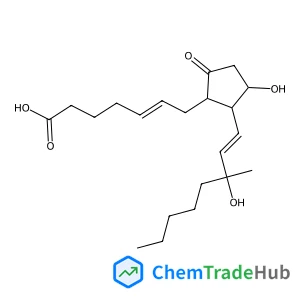
(5Z,11alpha,13E,15R)-11,15-Dihydroxy-15-methyl-9-oxoprosta-5,13-dien-1-oic acid
CAS Number:
55028-70-1
Molecular Formula:
C21H34O5
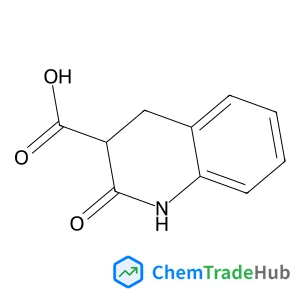
2-Oxo-1,2,3,4-tetrahydro-3-quinolinecarboxylic acid
CAS Number:
246867-17-4
Molecular Formula:
C10H9NO3
![N-[(1-Ethyl-2-pyrrolidinyl)methyl]-2-hydroxy-5-sulfamoylbenzamide structure](https://static.chemtradehub.com/structs/673/67381-52-6-877f.webp "N-[(1-Ethyl-2-pyrrolidinyl)methyl]-2-hydroxy-5-sulfamoylbenzamide structure")
N-[(1-Ethyl-2-pyrrolidinyl)methyl]-2-hydroxy-5-sulfamoylbenzamide
CAS Number:
67381-52-6
Molecular Formula:
C14H21N3O4S
Recommended Suppliers





Disclaimer
This page provides academic journal information for reference and research purposes only. We are not affiliated with any journal publishers and do not handle publication submissions. For publication-related inquiries, please contact the respective journal publishers directly.
If you notice any inaccuracies in the information displayed, please contact us at support@chemtradehub.com. We will promptly review and address your concerns.