












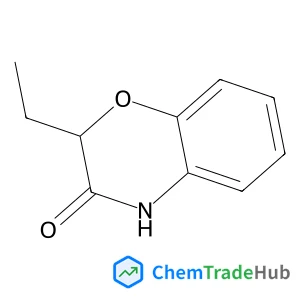
Efficient click-addition sequence for polymer–polymer couplings
Literature Information
Publication Date
2016-08-09
DOI
10.1039/C6PY00954A
Impact Factor
5.582
Authors
Guillaume Gody
View Original
Abstract
Controlled radical polymerization methods and click chemistry form a versatile toolbox for creating complex polymer architectures. However, the incompatibility between the functional groups required for click reactions and the reaction conditions of radical polymerization techniques often limits application. Here, we demonstrate how combining two complementary click reactions in a sequence circumvents compatibility issues. We employ isocyanate-amine addition on a polymer obtained by RAFT without purification, thus allowing us to work at exact equimolarity. The addition of commercially available amine-functional azido or strained alkyne compounds, yields orthogonally modified polymers, which can be coupled together in a subsequent strain promoted cycloaddition (SPAAC). The efficiency of this reaction sequence is demonstrated with different acrylate, methacrylate, and acrylamide polymers giving block copolymers in high yield. The resulting diblock copolymers remain active towards RAFT polymerization, thus allowing access to multiblock structures by simple chain extension. The orthogonality of the isocyanate-amine reaction, SPAAC and RAFT polymerization (both in terms of monomer and chain end groups) is a key advantage and offers access to functional and challenging polymer architectures without the need for stringent reaction conditions or laborious intermediate purifications.
Related Literature
Quantifying the optimal thickness in polymer:fullerene solar cells from the analysis of charge transport dynamics and photoabsorption
Shaoxian Li, Fumiya Hamada, Ryosuke Nishikubo
2022-01-04
Paper
DOI: 10.1039/D1SE01228B
A synergistic photothermal and photocatalytic membrane for efficient solar-driven contaminated water treatment
Yang Ding, Kai Feng, Panpan He, Ning Liu, Liang Hao, Jiang Gong, Ran Niu
2021-09-25
Paper
DOI: 10.1039/D1SE01360B
Cubic MnSe2 microcubes enabling high-performance sulfur cathodes for lithium–sulfur batteries
Jian Bao, Xin-Yang Yue, Rui-Jie Luo, Yong-Ning Zhou
2021-10-01
Communication
DOI: 10.1039/D1SE01263K
Effects of metal sites and acid sites on the hydrogenolysis of cornstalks in supercritical ethanol during lignin-first fractionation
Bowen Luo, Zhixiang Huang, Riyang Shu, Yu Cheng, Zhipeng Tian, Chao Wang, Ying Chen
2021-10-29
Paper
DOI: 10.1039/D1SE01403J
Progress on continuum modeling of lithium–sulfur batteries
Caitlin D. Parke, Linnette Teo, Daniel T. Schwartz, Venkat R. Subramanian
2021-10-28
Review Article
DOI: 10.1039/D1SE01090E
Sulfur-bridged iron-polyphthalocyanine on CuxO/copper foam: efficient and durable electrocatalyst for overall water splitting
Xinran Chen, Yang Li, Lu Chen, Lili Cui, Zhiyu Dou, Xingquan He, Meihong Fan, Tewodros Asefa
2021-10-26
Paper
DOI: 10.1039/D1SE01167G
Comparison of homogeneous and heterogeneous catalysts in dye-sensitised photoelectrochemical cells for alcohol oxidation coupled to dihydrogen formation
D. F. Bruggeman, S. Mathew, R. J. Detz, J. N. H. Reek
2021-09-30
Paper
DOI: 10.1039/D1SE01275D
Rich-phosphorus/nitrogen co-doped carbon for boosting the kinetics of potassium-ion hybrid capacitors
Zhenyu Xie, Daping Qiu, Min Li
2021-11-13
Paper
DOI: 10.1039/D1SE01627J
Opportunities in Na/K [hexacyanoferrate] frameworks for sustainable non-aqueous Na+/K+ batteries
Ashwani Tyagi, Nagmani, Sreeraj Puravankara
2021-12-03
Review Article
DOI: 10.1039/D1SE01653A
You might also like
Compound Q&A
What precautions should be taken when handling 2-Methyl-2-propanyl 5-amino-2-thiophenecarboxylate (CAS: 1498311-57-1)?
When handling 2-Methyl-2-propanyl 5-amino-2-thiophenecarboxylate (CAS: 1498311-5...
1498311-57-12-Methyl-2-propanyl ...
Compound Q&A
What are the physical and chemical properties of 5-Bromo-1,2-dichloro-3-fluorobenzene (CAS: 1000572-93-9)?
5-Bromo-1,2-dichloro-3-fluorobenzene (CAS: 1000572-93-9) is a crystalline solid ...
1000572-93-95-Bromo-1,2-dichloro...
Compound Q&A
How should (2R)-2-Amino-2-(4-bromophenyl)ethanol (CAS: 354153-64-3) be stored?
(2R)-2-Amino-2-(4-bromophenyl)ethanol (CAS: 354153-64-3) should be stored in a c...
354153-64-3(2R)-2-Amino-2-(4-br...
Compound Q&A
What regulatory guidelines apply to Methyl 4-(aminomethyl)tetrahydro-2H-pyran-4-carboxylate hydrochloride (CAS: 362707-24-2)?
Methyl 4-(aminomethyl)tetrahydro-2H-pyran-4-carboxylate hydrochloride (CAS: 3627...
362707-24-2Methyl 4-(aminomethy...
Compound Q&A
What are the main uses of 1,4-dimethyl-1H-pyrazole-5-sulfonyl chloride (CAS: 1174834-52-6)?
1,4-Dimethyl-1H-pyrazole-5-sulfonyl chloride is primarily used as an intermediat...
1174834-52-61,4-dimethyl-1H-pyra...
Compound Q&A
Is Dinaphtho[1,2-b:2',1'-d]furan (CAS: 239-69-0) safe?
Dinaphtho[1,2-b:2',1'-d]furan is generally safe when handled with appropriate pe...
239-69-0Dinaphtho[1,2-b:2',1...
Compound Q&A
What is the market or research trend for 7-Methyl-7,9-dihydro-1H-purine-2,6,8(3H)-trione (CAS: 612-37-3)?
The market for 7-Methyl-7,9-dihydro-1H-purine-2,6,8(3H)-trione (CAS: 612-37-3) i...
612-37-37-Methyl-7,9-dihydro...
Compound Q&A
What are the physical and chemical properties of 2-(4-Chlorophenyl)malonaldehyde (CAS: 205676-17-1)?
2-(4-Chlorophenyl)malonaldehyde (CAS: 205676-17-1) is a colorless or light yello...
205676-17-12-(4-Chlorophenyl)ma...
Compound Q&A
How is 2-Methylchrysene (CAS: 3351-32-4) typically synthesized?
2-Methylchrysene (CAS: 3351-32-4) is typically synthesized via the reaction of c...
3351-32-42-Methylchrysene
Compound Q&A
Is N-(6-aminopyrimidin-4-yl)acetamide (CAS: 89533-23-3) safe?
N-(6-aminopyrimidin-4-yl)acetamide (CAS: 89533-23-3) is generally considered saf...
89533-23-3N-(6-aminopyrimidin-...
Source Journal
Polymer Chemistry

CiteScore:
8.6
Self-citation Rate:
7.3%
Articles per Year:
457
Polymer Chemistry welcomes submissions in all areas of polymer science that have a strong focus on macromolecular chemistry. Manuscripts may cover a broad range of fields, yet no direct application focus is required.
Recommended Compounds
![1-{[5-(4,4,5,5-Tetramethyl-1,3,2-dioxaborolan-2-yl)-2-thienyl]methyl}piperidine structure](https://static.chemtradehub.com/structs/121/1218790-44-3-baef.webp "1-{[5-(4,4,5,5-Tetramethyl-1,3,2-dioxaborolan-2-yl)-2-thienyl]methyl}piperidine structure")
1-{[5-(4,4,5,5-Tetramethyl-1,3,2-dioxaborolan-2-yl)-2-thienyl]methyl}piperidine
CAS Number:
1218790-44-3
Molecular Formula:
C16H26BNO2S
![L-Lysine,N6-[2-[[(1,1-dimethylethoxy)carbonyl]amino]benzoyl]-N2-[(9H-fluoren-9-ylmethoxy)carbonyl]- structure](https://static.chemtradehub.com/structs/159/159322-59-5-c046.webp "L-Lysine,N6-[2-[[(1,1-dimethylethoxy)carbonyl]amino]benzoyl]-N2-[(9H-fluoren-9-ylmethoxy)carbonyl]- structure")
L-Lysine,N6-[2-[[(1,1-dimethylethoxy)carbonyl]amino]benzoyl]-N2-[(9H-fluoren-9-ylmethoxy)carbonyl]-
CAS Number:
159322-59-5
Molecular Formula:
C33H37N3O7
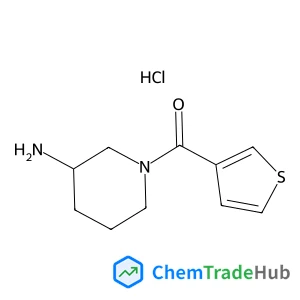
(3-Amino-piperidin-1-yl)-thiophen-3-yl-methanone hydrochloride
CAS Number:
1185316-70-4
Molecular Formula:
C10H15ClN2OS
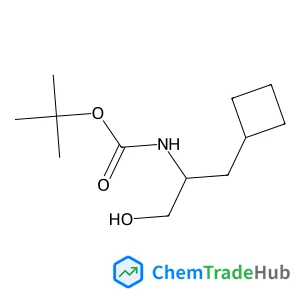
2-Methyl-2-propanyl (1-cyclobutyl-3-hydroxy-2-propanyl)carbamate
CAS Number:
816429-99-9
Molecular Formula:
C12H23NO3
Recommended Suppliers




Disclaimer
This page provides academic journal information for reference and research purposes only. We are not affiliated with any journal publishers and do not handle publication submissions. For publication-related inquiries, please contact the respective journal publishers directly.
If you notice any inaccuracies in the information displayed, please contact us at support@chemtradehub.com. We will promptly review and address your concerns.