












Spread and set silicone–boronic acid elastomers
Literature Information
Publication Date
2016-05-23
DOI
10.1039/C6PY00492J
Impact Factor
5.582
Authors
Laura Zepeda-Velazquez, Benjamin Macphail, Michael A. Brook
View Original
Abstract
The ability of boronic acids to form complexes with a variety of ligands, including other boronic acids, has been utilized to crosslink polymers and to chromatographically separate saccharides, among other applications. It was anticipated that the formation of such complexes could be used to pin boronic acids to aqueous interfaces. Silicone–boronic acid polymers, protected as esters, were synthesized using hydrosilylation. Exposure to moisture led to deprotection of tartrate- and, at a slower rate, catechol-protected silicone boronates to give the free silicone boronic acids. Surprisingly, this deprotection was accompanied by the transformation of the silicone polymer from a liquid to a soft, elastic film (Young's modulus 150–170 kPa). Protected silicone boronates were found to be extremely efficient at rapidly spreading across water: partial hydrolysis anchored the robust, thin (<2 μm) film to the interface, which led to the formation of strong, thin silicone elastomer films. Film stability was decreased in the presence of competitive ligands in the aqueous subphase, including glycerol, phosphate, Tris, or higher pH, all of which disrupted the boronic acid: boronic acid complexation. Newly introduced water droplets on top of the film were encapsulated by the highly mobile tartrate-protected silicone boronic acid, permitting the formation of stable, stacked water droplets. The strength and behavior of self-assembled stimuli-responsive silicone materials could be tailored through a combination of boronic acid density on the silicone and the use of various analytes and conditions known to impact the coordination and ionization state of boronic acids.
Related Literature
Distinguishing relaxation dynamics in transiently crosslinked polymeric networks
Ji Liu, Dominique Hoogland, Emma-Rose Janeček, Eric A. Appel, Oren A. Scherman
2017-06-28
Paper
DOI: 10.1039/C7PY00574A
Drug induced self-assembly of triblock copolymers into polymersomes for the synergistic dual-drug delivery of platinum drugs and paclitaxel
Sandy Wong, Hongxu Lu, Martina H. Stenzel
2017-09-20
Paper
DOI: 10.1039/C7PY01162H
Analysis of the reaction mechanism of the thiol–epoxy addition initiated by nucleophilic tertiary amines
Ali Osman Konuray, Xavier Fernández-Francos, Xavier Ramis
2017-08-30
Paper
DOI: 10.1039/C7PY01263B
Heterolayered hybrid dendrimers with optimized sugar head groups for enhancing carbohydrate–protein interactions
Rahul S. Bagul, Maryam Hosseini, Tze Chieh Shiao, Nadim K. Saadeh, René Roy
2017-07-21
Paper
DOI: 10.1039/C7PY01044C
A study of fused-ring thieno[3,4-e]pyrazine polymers as n-type materials for organic supercapacitors
Bryony T. McAllister, Tyler B. Schon, Paul M. DiCarmine, Dwight S. Seferos
2017-05-05
Paper
DOI: 10.1039/C7PY00512A
Dehydrogenation of cyclohexene over carbon deposited on alumina
Hidefumi Amano, Satoshi Sato, Ryoji Takahashi, Toshiaki Sodesawa
2001-02-05
Paper
DOI: 10.1039/B008895L
Helically twining polymerization for constructing polymeric double helices
Huajun Huang, Song Hong, Junya Liang, Yan Shi, Jianping Deng
2017-08-21
Paper
DOI: 10.1039/C7PY00729A
QDs decorated with thiol-monomer ligands as new multicrosslinkers for the synthesis of smart luminescent nanogels and hydrogels
M. Liras, I. Quijada-Garrido, O. García
2017-07-19
Paper
DOI: 10.1039/C7PY00954B
Switchable 19F MRI polymer theranostics: towards in situ quantifiable drug release
A. P. Bapat, G. J. Cowin
2017-04-20
Paper
DOI: 10.1039/C7PY00345E
Photo-responsive bio-inspired adhesives: facile control of adhesion strength via a photocleavable crosslinker
Minkyu Kim, Hoyong Chung
2017-09-25
Paper
DOI: 10.1039/C7PY01535F
You might also like
Compound Q&A
Are there alternatives to 1-(4-Chlorophenyl)-N-hydroxymethanimine (CAS: 3848-36-0) in synthesis?
When considering alternatives to 1-(4-Chlorophenyl)-N-hydroxymethanimine (CAS: 3...
3848-36-01-(4-Chlorophenyl)-N...
Compound Q&A
How should (1R,9S,10S,12S,14E,16S,19R,20R,21S,22R)-3,9,21-Trihydroxy-5,10,12,14,16,20,22-heptamethyl-23,24-dioxatetracyclo[17.3.1.1~6,9~.0~2,7~]tetracosa-2,5,7,14-tetraen-4-one (CAS: 183202-73-5) be stored?
This compound should be stored in a cool, dry place away from direct sunlight. I...
183202-73-5(1R,9S,10S,12S,14E,1...
Compound Q&A
How is 3-(4-Bromophenyl)-5-(2-fluorophenyl)-1,2,4-oxadiazole (CAS: 419553-16-5) typically synthesized?
3-(4-Bromophenyl)-5-(2-fluorophenyl)-1,2,4-oxadiazole is synthesized through a m...
419553-16-53-(4-Bromophenyl)-5-...
Compound Q&A
How is 5-Chloro-2-(4-chlorophenyl)-4-methyl-6-[3-(1-piperidinyl)propoxy]pyrimidine (CAS: 1639220-19-1) typically synthesized?
5-Chloro-2-(4-chlorophenyl)-4-methyl-6-[3-(1-piperidinyl)propoxy]pyrimidine (CAS...
1639220-19-15-Chloro-2-(4-chloro...
Compound Q&A
What industries use 2-Chloro-4-(difluoromethoxy)pyridine (CAS: 1206978-15-5)?
2-Chloro-4-(difluoromethoxy)pyridine is used in the pharmaceutical industry for ...
1206978-15-52-Chloro-4-(difluoro...
Compound Q&A
What regulatory guidelines apply to 3-Chloro-6-methylpyridazine (CAS: 1121-79-5)?
3-Chloro-6-methylpyridazine (CAS: 1121-79-5) is classified under the Globally Ha...
1121-79-53-Chloro-6-methylpyr...
Compound Q&A
Are there alternatives to Methyl 4,5-dimethyl-2-nitrobenzoate in synthesis?
Several alternatives can be used in the synthesis of Methyl 4,5-dimethyl-2-nitro...
90922-74-0Methyl 4,5-dimethyl-...
Compound Q&A
Are there alternatives to (2E,2'E)-3,3'-(1,4-Phenylene)bisacrylaldehyde in synthesis?
Alternatives to (2E,2'E)-3,3'-(1,4-Phenylene)bisacrylaldehyde include other acry...
63405-68-5(2E,2'E)-3,3'-(1,4-P...
Compound Q&A
What is 3-Amino-5-chloropyridin-2-ol hydrochloride (CAS: 1261906-29-9)?
3-Amino-5-chloropyridin-2-ol hydrochloride is an organic compound with the CAS n...
1261906-29-93-Amino-5-chloropyri...
Compound Q&A
What precautions should be taken when handling 6,7-Difluoro-2,3-dihydro-4H-chromen-4-one (CAS: 1092349-93-3)?
When handling 6,7-Difluoro-2,3-dihydro-4H-chromen-4-one, it is essential to wear...
1092349-93-36,7-Difluoro-2,3-dih...
Source Journal
Polymer Chemistry

CiteScore:
8.6
Self-citation Rate:
7.3%
Articles per Year:
457
Polymer Chemistry welcomes submissions in all areas of polymer science that have a strong focus on macromolecular chemistry. Manuscripts may cover a broad range of fields, yet no direct application focus is required.
Recommended Compounds
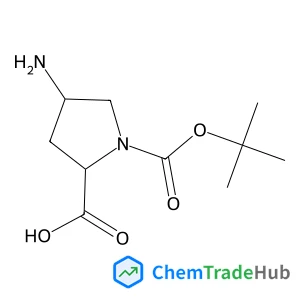
(2R,4R)-1-Boc-4-Aminopyrrolidine-2-carboxylic acid
CAS Number:
132622-98-1
Molecular Formula:
C10H18N2O4
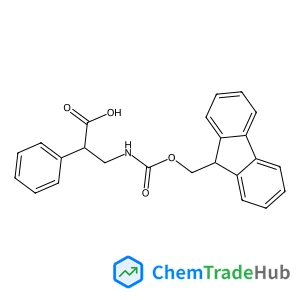
(S)-3-((((9H-Fluoren-9-yl)methoxy)carbonyl)amino)-2-phenylpropanoic acid
CAS Number:
1217663-60-9
Molecular Formula:
C24H21NO4
Recommended Suppliers



Disclaimer
This page provides academic journal information for reference and research purposes only. We are not affiliated with any journal publishers and do not handle publication submissions. For publication-related inquiries, please contact the respective journal publishers directly.
If you notice any inaccuracies in the information displayed, please contact us at support@chemtradehub.com. We will promptly review and address your concerns.