












Room temperature synthesis of non-isocyanate polyurethanes (NIPUs) using highly reactive N-substituted 8-membered cyclic carbonates
Literature Information
Publication Date
2016-02-16
DOI
10.1039/C6PY00264A
Impact Factor
5.582
Authors
Alexander Yuen, Enrique Gómez-Bengoa, Fernando Ruipérez, Mehmet Isik, James L. Hedrick, Yi Yan Yang, Haritz Sardon
View Original
Abstract
There is a growing interest to develop green synthetic pathways towards industrially relevant polymers such as polyurethanes without the use of toxic and dangerous isocyanate monomers. The most promising route towards non-isocyanate polyurethanes (NIPUs) is the aminolysis of dicyclic carbonates derived from renewable resources. Although, cyclic carbonates of 5- and 6-members have been successfully proposed, aminolysis of these compounds requires the use of high temperatures to obtain high conversions and subsequently high molecular weight NIPUs. Indeed, these cyclic carbonates do not allow the achievement of high molecular weight NIPUs using low reactive diamines analogous to two of the most industrially relevant aliphatic diisocyanates. Herein, we report a (bis) N-substituted 8-membered cyclic carbonate that could be prepared from naturally abundant epoxides, diamines and dimethyl carbonate using sustainable chemical routes. This N-substituted 8 membered cyclic carbonate appeared to be much more reactive than the smaller 5- and 6-membered cyclic carbonates. Due to this increased reactivity, we obtained high molecular weight NIPUs using a variety of diamines, including industrially relevant hindered aliphatic diamines, such as 5-amino-1,3,3-trimethylcyclohexanemethylamine (IPDA) and 4,4′-methylenebis(cyclohexylamine). The synthesis of NIPUs was demonstrated at room temperature without the need for any additional catalyst. Altogether, this paper shows that (bis) N-substituted 8-membered cyclic carbonates are ideal starting materials for the synthesis of sustainable non-isocyanate polyurethanes (NIPUs).
Related Literature
Exploring the glass transition region: crowding effect, nonergodicity and thermorheological complexity
2015-05-26
Paper
DOI: 10.1039/C5CP00301F
Enhanced dye-sensitized solar cell photocurrent and efficiency using a Y-shaped, pyrazine-containing heteroaromatic sensitizer linkage
Brian L. Watson, Benjamin D. Sherman, Ana L. Moore, Thomas A. Moore, Devens Gust
2015-05-18
Paper
DOI: 10.1039/C5CP00860C
Enhanced photocurrent density of hematite thin films on FTO substrates: effect of post-annealing temperature
Eun Soo Cho, Myung Jong Kang, Young Soo Kang
2015-05-26
Paper
DOI: 10.1039/C5CP01823D
Characterization of Znq+–imidazole (q = 0, 1, 2) organometallic complexes: DFT methods vs. standard and explicitly correlated post-Hartree–Fock methods
N. Komiha, M. Taleb, M. Mogren Al-Mogren, M. Hochlaf
2015-04-16
Paper
DOI: 10.1039/C4CP06108J
Co-solvent enhanced zinc oxysulfide buffer layers in Kesterite copper zinc tin selenide solar cells
K. Xerxes Steirer, Rebekah L. Garris, Jian V. Li, Michael J. Dzara, Paul F. Ndione, Kannan Ramanathan, Ingrid Repins, Glenn Teeter, Craig L. Perkins
2015-05-13
Paper
DOI: 10.1039/C5CP01607J
Nitrogen electrochemically reduced to ammonia with hematite: density-functional insights
Manh-Thuong Nguyen, Nicola Seriani, Ralph Gebauer
2014-11-28
Paper
DOI: 10.1039/C4CP04308A
NO reduction by CO over CuO supported on CeO2-doped TiO2: the effect of the amount of a few CeO2
Changshun Deng, Bin Li, Lihui Dong, Feiyue Zhang, Minguang Fan, Guangzhou Jin, Junbin Gao, Liwen Gao, Fei Zhang, Xinpeng Zhou
2015-06-01
Paper
DOI: 10.1039/C5CP00745C
Electronic couplings for molecular charge transfer: benchmarking CDFT, FODFT and FODFTB against high-level ab initio calculations. II
Adam Kubas, Fruzsina Gajdos, Harald Oberhofer, Jochen Blumberger
2014-12-22
Paper
DOI: 10.1039/C4CP04749D
You might also like
Compound Q&A
What are the main uses of (5-Sulfamoyl-3-pyridinyl)boronic acid (CAS: 951233-61-7)?
(5-Sulfamoyl-3-pyridinyl)boronic acid is primarily used in chemical synthesis, p...
951233-61-7(5-Sulfamoyl-3-pyrid...
Compound Q&A
How is Benzyl 2-methyl-2-(methylsulfonyl)-4-pentenoate (CAS: 1942858-50-5) typically synthesized?
Benzyl 2-methyl-2-(methylsulfonyl)-4-pentenoate is typically synthesized via est...
1942858-50-5Benzyl 2-methyl-2-(m...
Compound Q&A
What precautions should be taken when handling 8-Fluoroquinolin-6-ol (CAS: 209353-22-0)?
When handling 8-Fluoroquinolin-6-ol (CAS: 209353-22-0), it is important to use p...
209353-22-08-Fluoroquinolin-6-o...
Compound Q&A
What are the physical and chemical properties of 1,3-Dibromo-5-(2-methyl-2-propanyl)benzene (CAS: 129316-09-2)?
1,3-Dibromo-5-(2-methyl-2-propanyl)benzene (CAS: 129316-09-2) is a crystalline c...
129316-09-21,3-Dibromo-5-(2-met...
Compound Q&A
What industries use Ethyl 7-chloro-4-oxo-1-(1,3-thiazol-2-yl)-1,4-dihydro-1,8-naphthyridine-3-carboxylate (CAS: 174726-87-5)?
Ethyl 7-chloro-4-oxo-1-(1,3-thiazol-2-yl)-1,4-dihydro-1,8-naphthyridine-3-carbox...
174726-87-5Ethyl 7-chloro-4-oxo...
Compound Q&A
What precautions should be taken when handling Delta-7-Avenasterol (CAS: 23290-26-8)?
When handling Delta-7-Avenasterol (CAS: 23290-26-8), it is important to wear app...
23290-26-8Delta-7-Avenasterol
Compound Q&A
What precautions should be taken when handling N-({(5R)-3-[3-Fluoro-4-(4-morpholinyl)phenyl]-2-oxo-1,3-oxazolidin-5-yl}methyl)acetamide (CAS: 872992-20-6)?
Proper handling involves the use of personal protective equipment such as gloves...
872992-20-6N-({(5R)-3-[3-Fluoro...
Compound Q&A
What precautions should be taken when handling 2-Methyl-2-proanyl 4-[(2-aminophenyl)amino]-1-piperidinecarboxylate (CAS: 79099-00-6)?
When handling 2-Methyl-2-proanyl 4-[(2-aminophenyl)amino]-1-piperidinecarboxylat...
79099-00-62-Methyl-2-propanyl ...
Compound Q&A
What is N-Methyl-4-chlorobenzylamine hydrochloride (CAS: 65542-24-7)?
N-Methyl-4-chlorobenzylamine hydrochloride (CAS: 65542-24-7) is a organic compou...
65542-24-7N-Methyl-4-chloroben...
Compound Q&A
Is [2-(Dodecyloxy)ethoxy]acetic acid (CAS: 27306-90-7) safe?
[2-(Dodecyloxy)ethoxy]acetic acid (CAS: 27306-90-7) is generally considered safe...
27306-90-7[2-(Dodecyloxy)ethox...
Source Journal
Polymer Chemistry

CiteScore:
8.6
Self-citation Rate:
7.3%
Articles per Year:
457
Polymer Chemistry welcomes submissions in all areas of polymer science that have a strong focus on macromolecular chemistry. Manuscripts may cover a broad range of fields, yet no direct application focus is required.
Recommended Compounds
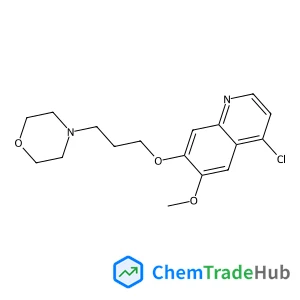
4-(3-((4-Chloro-6-methoxyquinolin-7-yl)oxy)propyl)morpholine
CAS Number:
205448-32-4
Molecular Formula:
C17H21ClN2O3
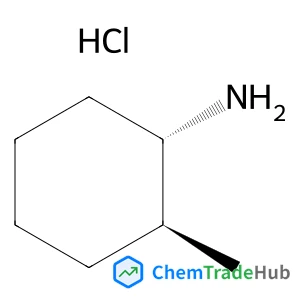
(1R,2R)-2-Methylcyclohexanamine hydrochloride (1:1)
CAS Number:
39558-31-1
Molecular Formula:
C7H16ClN
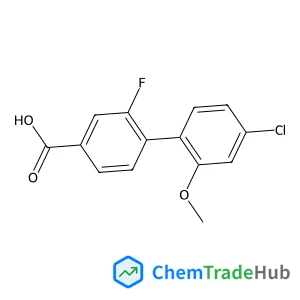
4-(4-Chloro-2-methoxyphenyl)-3-fluorobenzoic acid
CAS Number:
1261970-23-3
Molecular Formula:
C14H10ClFO3
Recommended Suppliers




Disclaimer
This page provides academic journal information for reference and research purposes only. We are not affiliated with any journal publishers and do not handle publication submissions. For publication-related inquiries, please contact the respective journal publishers directly.
If you notice any inaccuracies in the information displayed, please contact us at support@chemtradehub.com. We will promptly review and address your concerns.