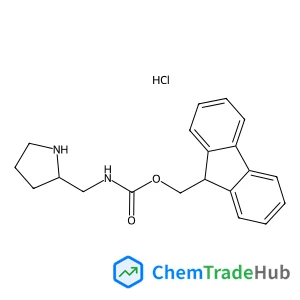
![2-(7,7-Difluorobicyclo[4.1.0]hept-1-yl)ethanamine structure](https://static.chemtradehub.com/structs/209/2098065-08-6-ff24.webp "2-(7,7-Difluorobicyclo[4.1.0]hept-1-yl)ethanamine structure")
2-(7,7-Difluorobicyclo[4.1.0]hept-1-yl)ethanamine
CAS Number:
2098065-08-6
Molecular Formula:
C9H15F2N
Mercedes M. A. Mazza, Shiori Yamazaki, Dieu X. Mai, Suyog Padgaonkar, Samuel Peurifoy, Ariane Goncalves, Yi-Lin Wu, Qiaoyu Hu, Amy M. Scott
A hexylalkoxy dipolar D–A–A molecule [7-(4-N,N-(bis(4-hexyloxyphenyl)amino)phenyl)-2,1,3-(benzothia-diazol-4-yl)methylene]propane-dinitrile, (C6-TPA-BT-CN) has been synthesized and the photophysics studied via femtosecond transient absorption spectroscopy (FsTA) in toluene and in amorphous and liquid crystalline spherulite thin films. Two spherulite macromolecular crystalline phases (banded, and non-banded) were observed through concentration dependent, solution processing techniques and are birefringent with a negative sign of elongation. A dramatic change in the electronic absorption from blue in amorphous films to green in spherulites was observed, and the molecular orientation was determined through the combined analysis of polarized light microscopy, X-ray diffraction, and scanning electron microscopy. FsTA was performed on amorphous films and show complex charge recombination dynamics, and a Stark effect, characterized from the combined TPA+˙ and [BT-CN]−˙ spectroscopic signatures at 450 nm and 510 nm and identified through spectroelectrochemistry. Radical cation dynamics of TPA+˙ was observed selectively at 750 nm with >503.3 ps (18%) recombination kinetics resulting in a rather significant yield of free charge carriers in amorphous films and consistent with previous reports on energetically disordered blend films. However, photoexcitation on large, non-banded spherulites areas (>250 μm) reveal average monoexponential charge recombination lifetimes of 169.2 ps from delocalized states similar to those observed in amorphous films and are 5× longer-lived than previous reports [Chang et al., J. Am. Chem. Soc., 2013, 135, 8790] of a related methyl-DPAT-BT-CN whose amorphous thin films were prepared through vapor deposition. Thus, the correlation between the microstructure of the blend film and the photoinduced radical pair dynamics described here is critical for developing a fundamental understanding of how dipolar states contribute to the charge carrier yield in a disordered energy system.
Ralph Koitz
DOI: 10.1039/C5CP01384D
Antti Viinikanoja, Pia Damlin, Milla Suominen, Carita Kvarnström
DOI: 10.1039/C5CP00942A
DOI: 10.1039/C5CP01136A
Arpan Bhattacharya, Surajit Chatterjee, Roopali Prajapati, Tushar Kanti Mukherjee
DOI: 10.1039/C5CP00543D
Na Li, Xiaoyu Zhang, Shulong Yuan, Xiaokai Zhang, Yuzhen Yuan, Xue Li
DOI: 10.1039/C4CP06093H
Stijn Schaltin, Gijs Vanhoutte, Minxian Wu, Fanny Bardé, Jan Fransaer
DOI: 10.1039/C5CP00386E
Robert Schennach
DOI: 10.1039/C5CP00070J
Chao-Feng Wu, Tian-Ran Wei, Jing-Feng Li
DOI: 10.1039/C4CP06021K
Bo Cai, Shengli Zhang, Ziyu Hu, Yonghong Hu, Yousheng Zou, Haibo Zeng
DOI: 10.1039/C5CP00563A
T. Bazaru Rujoiu, A. Petris, V. I. Vlad, I. Rau, A.-M. Manea, F. Kajzar
DOI: 10.1039/C5CP01727K
Waste containing N-Methoxy-N-methyl-1,3-thiazole-5-carboxamide (CAS: 898825-89-3...
N-(4-Biphenylyl)dibenzo[b,d]furan-4-amine should be stored in a tightly sealed c...
The market for 3-Acetamido-5-amino-2,4,6-triiodobenzoic acid (CAS: 1713-07-1) is...
Benzyl 2-O-acetyl-3,4,6-tri-O-benzyl-beta-D-galactopyranoside (CAS: 61820-03-9) ...
2-Ethylpiperazine dihydrochloride (CAS: 438050-52-3) is regulated under the Glob...
1,1'-[1,3-Phenylenebis(methylene)]bis(3-methyl-1H-pyrrole-2,5-dione) (CAS: 11946...
Several alternatives can be used in the synthesis of 5-Fluoro-2-(1-pyrrolidinyl)...
Proper personal protective equipment (PPE) must be worn when handling this compo...
When handling 6-Bromoimidazo[1,2-a]pyridin-8-amine, it is important to wear appr...
Alternatives to (2S,4R)-4-(4-Nitrobenzyl)pyrrolidine-2-carboxylic acid hydrochlo...

Physical Chemistry Chemical Physics (PCCP) is an international journal co-owned by 19 physical chemistry and physics societies from around the world. This journal publishes original, cutting-edge research in physical chemistry, chemical physics and biophysical chemistry. To be suitable for publication in PCCP, articles must include significant innovation and/or insight into physical chemistry; this is the most important criterion that reviewers and Editors will judge against when evaluating submissions. The journal has a broad scope and welcomes contributions spanning experiment, theory, computation and data science. Topical coverage includes spectroscopy, dynamics, kinetics, statistical mechanics, thermodynamics, electrochemistry, catalysis, surface science, quantum mechanics, quantum computing and machine learning. Interdisciplinary research areas such as polymers and soft matter, materials, nanoscience, energy, surfaces/interfaces, and biophysical chemistry are welcomed if they demonstrate significant innovation and/or insight into physical chemistry. Joined experimental/theoretical studies are particularly appreciated when complementary and based on up-to-date approaches.
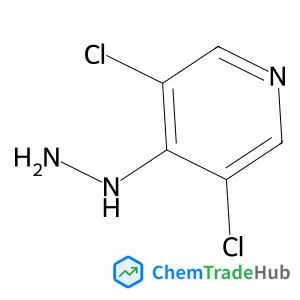
![4-[(2-{2-[2-(2-Aminoethoxy)ethoxy]ethoxy}ethyl)amino]-2-(2,6-dioxo-3-piperidinyl)-1H-isoindole-1,3(2H)-dione structure](https://static.chemtradehub.com/structs/209/2093416-31-8-3162.webp "4-[(2-{2-[2-(2-Aminoethoxy)ethoxy]ethoxy}ethyl)amino]-2-(2,6-dioxo-3-piperidinyl)-1H-isoindole-1,3(2H)-dione structure")