












Preservation of electronic properties of double-decker complexes on metallic supports
Literature Information
Publication Date
2017-02-27
DOI
10.1039/C6CP08239D
Impact Factor
3.676
Authors
B. Cirera, J. Matarrubia, T. Kaposi, N. Giménez-Agulló, M. Paszkiewicz, F. Klappenberger, J. V. Barth, W. Auwärter, D. Ecija
View Original
Abstract
Single-molecule magnets based on lanthanide double-deckers are attracting significant attention due to their unrivaled single-ion anisotropy. To exploit their fascinating electronic and magnetic properties in devices for information storage or spin transport, studies on the preservation or variation of electronic and magnetic functionalities upon adsorption on surfaces are necessary. Herein, we introduced a comprehensive scanning tunneling microscopy (STM) and X-ray photoelectron spectroscopy (XPS) surface science study, complemented by density functional theory (DFT) simulations, of a recently synthesized single-molecule magnet based on porphyrazine deckers, conveniently equipped with ethyl moieties to make them soluble and sublimable. We demonstrated that the double-decker species were intactly adsorbed on Au(111), Ag(111), and Cu(111) in a flat-on fashion and self-assembled in hexagonal close-packed layers. Systematic multi- and monolayer XPS was performed on the surface-confined species, confirming the preservation of the electronic properties of the ligands and the lanthanide center upon adsorption.
Recommended Journals
Related Literature
Transition from smectic nanofibers to smectic vesicles in the self-assemblies of PEG-b-liquid crystal polycarbonates
Lu Zhou, Dapeng Zhang, Sabrina Hocine, Alessia Pilone, Sylvain Trépout, Sergio Marco, Christophe Thomas, Jia Guo
2017-07-26
Communication
DOI: 10.1039/C7PY01131H
Opportunities for dual RDRP agents in synthesizing novel polymeric materials
Samuel Pearson, Claude St Thomas, Ramiro Guerrero-Santos, Franck D'Agosto
2017-04-24
Review Article
DOI: 10.1039/C7PY00344G
A facile strategy for manipulating micellar size and morphology through intramolecular cross-linking of amphiphilic block copolymers
Ryoto Tanaka, Kodai Watanabe, Takuya Yamamoto, Kenji Tajima, Takuya Isono, Toshifumi Satoh
2017-05-23
Paper
DOI: 10.1039/C7PY00646B
A carboxylic azo monomer and its homopolymer: synthesis, self-organization and fluorescence behaviour in solution
Hao Ren, Dong Chen, Yan Shi, Haifeng Yu, Zhifeng Fu
2014-09-09
Paper
DOI: 10.1039/C4PY01062K
Dispersion RAFT polymerization: comparison between the monofunctional and bifunctional macromolecular RAFT agents
Chengqiang Gao, Shentong Li, Quanlong Li, Pengfei Shi, Sayyar Ali Shah, Wangqing Zhang
2014-08-22
Paper
DOI: 10.1039/C4PY01069H
Metallo-supramolecular hydrogels based on amphiphilic polymers bearing a hydrophobic Schiff base ligand with rapid self-healing and multi-stimuli responsive properties
Liuyan Tang, Xiuli Chen, Lei Wang, Jinqing Qu
2017-07-07
Paper
DOI: 10.1039/C7PY00739F
Chemoenzymatic synthesis of a peptide containing nylon monomer units for thermally processable peptide material application
Kenjiro Yazawa, Joan Gimenez-Dejoz, Takaaki Hikima, Keiji Numata
2017-05-23
Communication
DOI: 10.1039/C7PY00770A
You might also like
Compound Q&A
What are the main uses of 4-Nitrophenyl phosphate disodium salt hexahydrate (CAS: 333338-18-4)?
4-Nitrophenyl phosphate disodium salt hexahydrate is primarily used as a substra...
333338-18-44-Nitrophenyl phosph...
Compound Q&A
What are the main uses of 2-(Trifluoromethyl)-1,3-oxazole-4-carboxylic Acid (CAS: 1060816-01-4)?
2-(Trifluoromethyl)-1,3-oxazole-4-carboxylic Acid (CAS: 1060816-01-4) is widely ...
1060816-01-42-(Trifluoromethyl)-...
Compound Q&A
How should 2-Fluoro-4-biphenylcarboxylic acid (CAS: 137045-30-8) be stored?
2-Fluoro-4-biphenylcarboxylic acid should be stored in a cool, dry place at room...
137045-30-82-Fluoro-4-biphenylc...
Compound Q&A
What industries use Prednisolone-21-Carboxylic Acid (CAS: 61549-70-0)?
Prednisolone-21-Carboxylic Acid is primarily used in the pharmaceutical industry...
61549-70-0Prednisolone-21-Carb...
Compound Q&A
How should 4-(Hydrazinomethyl)-1,2,3-benzenetriol (CAS: 3614-72-0) be stored?
4-(Hydrazinomethyl)-1,2,3-benzenetriol (CAS: 3614-72-0) should be stored in a co...
3614-72-04-(Hydrazinomethyl)-...
Compound Q&A
What industries use 4-Amino-1-methyl-1H-pyrazole-5-carboxylic acid hydrochloride (CAS: 92534-70-8)?
4-Amino-1-methyl-1H-pyrazole-5-carboxylic acid hydrochloride (CAS: 92534-70-8) i...
92534-70-84-Amino-1-methyl-1H-...
Compound Q&A
What regulatory guidelines apply to dehydropachymic acid (CAS: 77012-31-8)?
Dehydropachymic acid (CAS: 77012-31-8) is regulated by various agencies. It fall...
77012-31-8Dehydropachymic acid
Compound Q&A
What is the market or research trend for 6-[(2,2-Dimethylpropanoyl)amino]nicotinic acid (CAS: 898561-66-5)?
The market and research trends for 6-[(2,2-Dimethylpropanoyl)amino]nicotinic aci...
898561-66-56-[(2,2-Dimethylprop...
Compound Q&A
How should 1,10-Phenanthroline-2,9-dicarbaldehyde (CAS: 57709-62-3) be stored?
1,10-Phenanthroline-2,9-dicarbaldehyde should be stored in a cool, dry place awa...
57709-62-31,10-Phenanthroline-...
Compound Q&A
How is 5-Carbamoyl-11-oxo-10,11-dihydro-5H-dibenzo[b,f]azepin-10-yl acetate (CAS: 113952-21-9) typically synthesized?
5-Carbamoyl-11-oxo-10,11-dihydro-5H-dibenzo[b,f]azepin-10-yl acetate can be synt...
113952-21-95-Carbamoyl-11-oxo-1...
Source Journal
Physical Chemistry Chemical Physics

CiteScore:
5.5
Self-citation Rate:
10.3%
Articles per Year:
3036
Physical Chemistry Chemical Physics (PCCP) is an international journal co-owned by 19 physical chemistry and physics societies from around the world. This journal publishes original, cutting-edge research in physical chemistry, chemical physics and biophysical chemistry. To be suitable for publication in PCCP, articles must include significant innovation and/or insight into physical chemistry; this is the most important criterion that reviewers and Editors will judge against when evaluating submissions. The journal has a broad scope and welcomes contributions spanning experiment, theory, computation and data science. Topical coverage includes spectroscopy, dynamics, kinetics, statistical mechanics, thermodynamics, electrochemistry, catalysis, surface science, quantum mechanics, quantum computing and machine learning. Interdisciplinary research areas such as polymers and soft matter, materials, nanoscience, energy, surfaces/interfaces, and biophysical chemistry are welcomed if they demonstrate significant innovation and/or insight into physical chemistry. Joined experimental/theoretical studies are particularly appreciated when complementary and based on up-to-date approaches.
Recommended Compounds
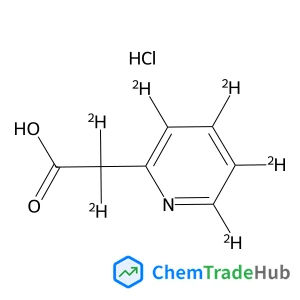
2,2-dideuterio-2-(3,4,5,6-tetradeuterio-2-pyridyl)acetic acid;hydrochloride
CAS Number:
1329799-67-8
Molecular Formula:
C7H2ClD6NO2
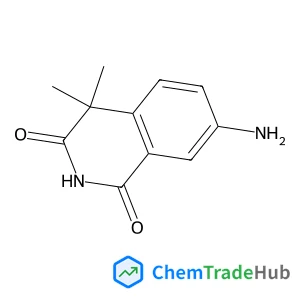
1,3(2H,4H)-Isoquinolinedione, 7-amino-4,4-dimethyl-
CAS Number:
14576-22-8
Molecular Formula:
C11H12N2O2

![[(1S,2S,3R,4S,7R,9S,10S,12R,15S)-4,12-Diacetyloxy-15-[(2R,3S)-3-benzamido-3-phenyl-2-(2,2,2-trichloroethoxycarbonyloxy)propanoyl]oxy-1,9-dihydroxy-10,14,17,17-tetramethyl-11-oxo-6-oxatetracyclo[11.3.1.03,10.04,7]heptadec-13-en-2-yl] benzoate structure](https://static.chemtradehub.com/structs/100/100431-55-8-7104.webp "[(1S,2S,3R,4S,7R,9S,10S,12R,15S)-4,12-Diacetyloxy-15-[(2R,3S)-3-benzamido-3-phenyl-2-(2,2,2-trichloroethoxycarbonyloxy)propanoyl]oxy-1,9-dihydroxy-10,14,17,17-tetramethyl-11-oxo-6-oxatetracyclo[11.3.1.03,10.04,7]heptadec-13-en-2-yl] benzoate structure")
Recommended Suppliers



Disclaimer
This page provides academic journal information for reference and research purposes only. We are not affiliated with any journal publishers and do not handle publication submissions. For publication-related inquiries, please contact the respective journal publishers directly.
If you notice any inaccuracies in the information displayed, please contact us at support@chemtradehub.com. We will promptly review and address your concerns.