


amine structure](https://static.chemtradehub.com/structs/629/62924-61-2-0728.webp "[(2-chlorophenyl)methyl](ethyl)amine structure")
A systematic computational study of the structure crossover and coordination number distribution of metallic nanoparticles
Literature Information
Publication Date
2017-06-12
DOI
10.1039/C6CP07571A
Impact Factor
3.676
Authors
Pavel V. Stishenko, Anna I. Svalova
View Original
Abstract
In this study, we identified stable configurations for three nanoparticle structure motifs (icosahedral, decahedral and cuboctahedral) of eight transition metals (Cu, Ag, Au, Pd, Ni, Rh, Ir, and Pt) ranging in size from 140 to 3000 atoms. We made simple yet precise analytical approximations of the energy of the stable configurations as a function of nanoparticle size and calculated the structure crossover sizes from these approximations. We then analyzed the surface structure of the nanoparticles in terms of the distribution of the coordination numbers and active sites. We found that low-coordinated atoms are most preferable for cuboctahedral forms and for lighter metals – Cu, Ni and Rh. Compared to other considered metals, gold nanoparticles exhibited unique features as follows: the least amount of low-coordinated atoms, the largest fraction of (111) faces on its surface and a concave reconstruction of five-fold vertices.
Recommended Journals

Bioorganic & Medicinal Chemistry

Biocatalysis and Biotransformation

Herald of the Russian Academy of Sciences

Journal of Asian Natural Products Research

Bioorganic & Medicinal Chemistry Letters

Acta Metallurgica Sinica-English Letters

Critical Reviews in Solid State and Materials Sciences

Chinese Journal of Chemistry

Polycyclic Aromatic Compounds

Journal of Chemical Sciences
Related Literature
The high resolution spectrum of the S1←S0 transition of anisole
C. G. Eisenhardt
2001-03-14
Paper
DOI: 10.1039/B009507I
Vapour phase hydrogenation of crotonaldehyde over magnesia-supported platinum–tin catalysts
Narcís Homs, Jordi Llorca, Pilar Ramírez de la Piscina, Francisco Rodríguez-Reinoso, Antonio Sepúlveda-Escribano, Joaquín Silvestre-Albero
2001-03-29
Paper
DOI: 10.1039/B100770J
Interpenetrating covalent adaptable networks with enhanced mechanical properties and facile reprocessability and recyclability
Yufeng Lei, Anqiang Zhang, Yaling Lin
2021-06-21
Paper
DOI: 10.1039/D1PY00623A
Detection of charge compensating cation vacancies near Rh2+ complexes in AgCl and NaCl using Q-band ENDOR
H. Vrielinck, K. Sabbe, F. Callens, P. Matthys
2001-03-19
Paper
DOI: 10.1039/B008244I
Molecular oxygen interaction with Bi2O3 : a spectroscopic and spectromagnetic investigation
Davide Barreca, Franca Morazzoni, Gian Andrea Rizzi, Roberto Scotti, Eugenio Tondello
2001-03-29
Paper
DOI: 10.1039/B009482J
Equilibrium adsorption of linear and branched C6 alkanes on silicalite-1 studied by the tapered element oscillating microbalance
W. Zhu, F. Kapteijn, B. van der Linden, J. A. Moulijn
2001-03-22
Paper
DOI: 10.1039/B100941I
You might also like
Compound Q&A
What are the main uses of (3.beta.)-3-Hydroxy-N,N-dimethyl-chol-5-en-24-amide (CAS: 79066-03-8)?
(3.beta.)-3-Hydroxy-N,N-dimethyl-chol-5-en-24-amide (CAS: 79066-03-8) is primari...
79066-03-8(3.beta.)-3-Hydroxy-...
Compound Q&A
What regulatory guidelines apply to 5-(aminomethyl)-2-methoxyphenol (CAS: 89702-89-6)?
5-(Aminomethyl)-2-methoxyphenol (CAS: 89702-89-6) is classified under GHS as a s...
89702-89-65-(aminomethyl)-2-me...
Compound Q&A
What is Thieno[2,3-c]pyridin-7(6H)-one (CAS: 28981-13-7)?
Thieno[2,3-c]pyridin-7(6H)-one (CAS: 28981-13-7) is a heterocyclic organic compo...
28981-13-7Thieno[2,3-c]pyridin...
Compound Q&A
Is 1-[(6-Methoxy-3-pyridinyl)methyl]-4-piperidinamine dihydrochloride (CAS: 1185311-28-7) safe?
1-[(6-Methoxy-3-pyridinyl)methyl]-4-piperidinamine dihydrochloride is generally ...
1185311-28-71-[(6-Methoxy-3-pyri...
Compound Q&A
What regulatory guidelines apply to [(2E)-3-Phenyl-2-propen-1-yl]phosphonic acid (CAS: 146404-58-2)?
[(2E)-3-Phenyl-2-propen-1-yl]phosphonic acid (CAS: 146404-58-2) is regulated und...
146404-58-2[(2E)-3-Phenyl-2-pro...
Compound Q&A
What regulatory guidelines apply to 6-Bromo-7-methoxyquinoline (CAS: 1620515-86-7)?
6-Bromo-7-methoxyquinoline (CAS: 1620515-86-7) falls under the scope of the Glob...
1620515-86-76-Bromo-7-methoxyqui...
Compound Q&A
What industries use (2R)-1-(1-Benzofuran-2-yl)-N-propyl-2-pentanamine (CAS: 260550-89-8)?
This compound is primarily used in the pharmaceutical industry for the developme...
260550-89-8(2R)-1-(1-Benzofuran...
Compound Q&A
What are the main uses of 1-Ethyl-7-[2-methyl-6-(4H-1,2,4-triazol-3-yl)-3-pyridinyl]-3,5-dihydropyrazino[2,3-b]pyrazin-2(1H)-one (CAS: 1228013-15-7)?
1-Ethyl-7-[2-methyl-6-(4H-1,2,4-triazol-3-yl)-3-pyridinyl]-3,5-dihydropyrazino[2...
1228013-15-71-Ethyl-7-[2-methyl-...
Compound Q&A
Are there alternatives to {5-(Acryloylamino)-2-[(dimethylamino)methyl]phenyl}boronic acid (CAS: 1217500-78-1) in synthesis?
Alternative reagents such as 2-[(dimethylamino)methyl]phenylboronic acid or rela...
1217500-78-1{5-(Acryloylamino)-2...
Compound Q&A
What is 3-(Piperidin-4-yloxy)pyridine (CAS: 310881-48-2)?
3-(Piperidin-4-yloxy)pyridine (CAS: 310881-48-2) is an organic compound with the...
310881-48-23-(Piperidin-4-yloxy...
Source Journal
Physical Chemistry Chemical Physics

CiteScore:
5.5
Self-citation Rate:
10.3%
Articles per Year:
3036
Physical Chemistry Chemical Physics (PCCP) is an international journal co-owned by 19 physical chemistry and physics societies from around the world. This journal publishes original, cutting-edge research in physical chemistry, chemical physics and biophysical chemistry. To be suitable for publication in PCCP, articles must include significant innovation and/or insight into physical chemistry; this is the most important criterion that reviewers and Editors will judge against when evaluating submissions. The journal has a broad scope and welcomes contributions spanning experiment, theory, computation and data science. Topical coverage includes spectroscopy, dynamics, kinetics, statistical mechanics, thermodynamics, electrochemistry, catalysis, surface science, quantum mechanics, quantum computing and machine learning. Interdisciplinary research areas such as polymers and soft matter, materials, nanoscience, energy, surfaces/interfaces, and biophysical chemistry are welcomed if they demonstrate significant innovation and/or insight into physical chemistry. Joined experimental/theoretical studies are particularly appreciated when complementary and based on up-to-date approaches.
Recommended Compounds
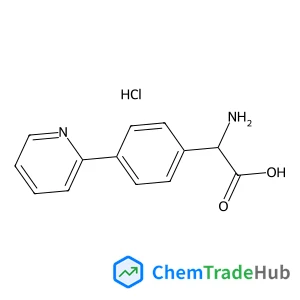
2-Amino-2-(4-(pyridin-2-YL)phenyl)acetic acid hydrochloride
CAS Number:
1135818-89-1
Molecular Formula:
C13H13ClN2O2
![Bis(N,N''-dimethylpiperazine)tetra[copper(I) iodide] structure](https://static.chemtradehub.com/structs/140/1401708-91-5-2b86.webp "Bis(N,N''-dimethylpiperazine)tetra[copper(I) iodide] structure")
Bis(N,N''-dimethylpiperazine)tetra[copper(I) iodide]
CAS Number:
1401708-91-5
Molecular Formula:
C12H28Cu4I4N4
![N-[4-(Cyanoethynyl)phenyl]-16-oxo-4,7,10,13-tetraoxa-17-azahenicos-1-yn-21-amide structure](https://static.chemtradehub.com/structs/218/2183440-36-8-68cb.webp "N-[4-(Cyanoethynyl)phenyl]-16-oxo-4,7,10,13-tetraoxa-17-azahenicos-1-yn-21-amide structure")
N-[4-(Cyanoethynyl)phenyl]-16-oxo-4,7,10,13-tetraoxa-17-azahenicos-1-yn-21-amide
CAS Number:
2183440-36-8
Molecular Formula:
C25H31N3O6
Recommended Suppliers






Disclaimer
This page provides academic journal information for reference and research purposes only. We are not affiliated with any journal publishers and do not handle publication submissions. For publication-related inquiries, please contact the respective journal publishers directly.
If you notice any inaccuracies in the information displayed, please contact us at support@chemtradehub.com. We will promptly review and address your concerns.