


Kinetics of prebiotic depsipeptide formation from the ester–amide exchange reaction
Literature Information
Publication Date
2016-09-21
DOI
10.1039/C6CP05527C
Impact Factor
3.676
Authors
View Original
Abstract
In this work, we introduce a kinetic model to study the effectiveness of ester-mediated amide bond formation under prebiotic conditions. In our previous work, we found that a simple system composed of α-hydroxy acids and α-amino acids is capable of forming peptide bonds via esterification followed by the ester–amide exchange reaction. To further understand the kinetic behavior of this copolymerization, we first tracked the growth of initial species from a valine/lactic acid mixture in a closed system reactor. A mathematical model was developed to simulate the reactions and evaluate the rate constants at different temperatures. We found these reactions can be described by the empirical Arrhenius equation even when reaction occurred in the solid (dry) state. Further calculations for activation parameters showed that the ester-mediated pathway facilitates amide bond formation by lowering activation entropies. These results provide a theoretical framework that illustrates why the ester-mediated pathway for peptide bond formation is efficient and why it would have been more favorable on the early Earth, compared to peptide bond formation without the aid of hydroxy acids.
Recommended Journals

Journal of Catalysis

Proceedings of the National Academy of Sciences of the United States of America

Pharmacological Reviews

Israel Journal of Chemistry

Journal of Heterocyclic Chemistry

Science

Russian Chemical Reviews

Organic Preparations and Procedures International

Kinetics and Catalysis

Journal of Medicinal Chemistry
Related Literature
Ab initio calculations of the optical absorption spectra of C60-conjugated polymer hybrids
Peter D. Haynes
2013-06-24
Paper
DOI: 10.1039/C3CP52043A
Separation of cobalt and nickel by solvent extraction with two mutually immiscible ionic liquids
Sil Wellens, Ben Thijs, Claudia Möller, Koen Binnemans
2013-04-12
Paper
DOI: 10.1039/C3CP50819F
Sorption enhanced CO2 methanation
Andreas Borgschulte, Noris Gallandat, Benjamin Probst, Riccardo Suter, Elsa Callini, Davide Ferri, Yadira Arroyo, Rolf Erni, Hans Geerlings, Andreas Züttel
2013-04-15
Paper
DOI: 10.1039/C3CP51408K
In situ surface-enhanced Raman spectroscopic study of formic acid electrooxidation on spontaneously deposited platinum on gold
Ranjani Muralidharan, Michael McIntosh, Xiao Li
2013-04-18
Paper
DOI: 10.1039/C3CP51128F
Structural specificity of alkoxy radical formation in crystalline carbohydrates
Siv G. Aalbergsjø, Eli O. Hole, Einar Sagstuen
2013-04-22
Paper
DOI: 10.1039/C3CP50789K
Effects of the morphology of nanostructured ZnO and interface modification on the device configuration and charge transport of ZnO/polymer hybrid solar cells
Pipat Ruankham, Susumu Yoshikawa, Takashi Sagawa
2013-01-29
Paper
DOI: 10.1039/C3CP50266J
Comparative investigation of the performances of hematite nanoplates and nanograins in lithium-ion batteries
Fengqi Lu, Qili Wu, Xianfeng Yang, Liqiao Chen, Junjie Cai, Chaolun Liang, Mingmei Wu, Peikang Shen
2013-04-26
Paper
DOI: 10.1039/C3CP50619C
TiO2–graphene composites with exposed {001} facets produced by a one-pot solvothermal approach for high performance photocatalyst
Rongbin Zhang
2013-05-29
Paper
DOI: 10.1039/C3CP50942G
Infiltrating sulfur in hierarchical architecture MWCNT@meso C core–shell nanocomposites for lithium–sulfur batteries
Yingchao Yu, Weidong Zhou, Hao Chen, Francis J. DiSalvo, Héctor D. Abruña
2013-04-12
Communication
DOI: 10.1039/C3CP51551F
Understanding electronic and optical properties of anatase TiO2 photocatalysts co-doped with nitrogen and transition metals
Qingsen Meng, Tuo Wang, Enzuo Liu, Xinbin Ma, Jinlong Gong
2013-04-09
Paper
DOI: 10.1039/C3CP51476E
You might also like
Compound Q&A
How is Ethyl 4-chlorothieno[2,3-b]pyridine-5-carboxylate (CAS: 59713-58-5) typically synthesized?
Ethyl 4-chlorothieno[2,3-b]pyridine-5-carboxylate (CAS: 59713-58-5) can be synth...
59713-58-5Ethyl 4-chlorothieno...
Compound Q&A
What regulatory guidelines apply to 5-Methyl-1H-indole-3-carbaldehyde (CAS: 52562-50-2)?
5-Methyl-1H-indole-3-carbaldehyde (CAS: 52562-50-2) is subject to various regula...
52562-50-25-Methyl-1H-indole-3...
Compound Q&A
What are the physical and chemical properties of (1,3-Dimethyl-2,4-dioxo-1,2,3,4-tetrahydro-5-pyrimidinyl)boronic acid (CAS: 223418-73-3)?
(1,3-Dimethyl-2,4-dioxo-1,2,3,4-tetrahydro-5-pyrimidinyl)boronic acid is a white...
223418-73-3(1,3-Dimethyl-2,4-di...
Compound Q&A
How should waste containing Sulfocostunolide A (CAS: 1016983-51-9) be handled?
Waste containing Sulfocostunolide A (CAS: 1016983-51-9) should be handled with c...
1016983-51-9Sulfocostunolide A
Compound Q&A
What precautions should be taken when handling Murraxocin (CAS: 88478-44-8)?
When handling Murraxocin (CAS: 88478-44-8), ensure proper personal protective eq...
88478-44-8Murraxocin
Compound Q&A
What are the physical and chemical properties of Formvar (CAS: 63148-64-1)?
Formvar (CAS: 63148-64-1) is an alkyd resin characterized by a high molecular we...
63148-64-1Formvar(R)
Compound Q&A
Is (S)-4-benzyl-2-((benzyloxy)methyl)morpholine (CAS: 205242-66-6) safe?
(S)-4-benzyl-2-((benzyloxy)methyl)morpholine is generally safe when handled with...
205242-66-6(S)-4-benzyl-2-((ben...
Compound Q&A
What industries use Methyl 1-(5-bromo-2-pyrimidinyl)cyclopropanecarboxylate (CAS: 1447607-69-3)?
Methyl 1-(5-bromo-2-pyrimidinyl)cyclopropanecarboxylate (CAS: 1447607-69-3) is p...
1447607-69-3Methyl 1-(5-bromo-2-...
Compound Q&A
Is 2-Methyl-1-phenyl-1-propanamine hydrochloride (CAS: 24290-47-9) safe?
2-Methyl-1-phenyl-1-propanamine hydrochloride (CAS: 24290-47-9) is generally con...
24290-47-92-Methyl-1-phenyl-1-...
Compound Q&A
How is 3-(4-Bromophenyl)-2-methylpropanoic acid (CAS: 66735-01-1) typically synthesized?
3-(4-Bromophenyl)-2-methylpropanoic acid is synthesized through a multi-step pro...
66735-01-13-(4-Bromophenyl)-2-...
Source Journal
Physical Chemistry Chemical Physics

CiteScore:
5.5
Self-citation Rate:
10.3%
Articles per Year:
3036
Physical Chemistry Chemical Physics (PCCP) is an international journal co-owned by 19 physical chemistry and physics societies from around the world. This journal publishes original, cutting-edge research in physical chemistry, chemical physics and biophysical chemistry. To be suitable for publication in PCCP, articles must include significant innovation and/or insight into physical chemistry; this is the most important criterion that reviewers and Editors will judge against when evaluating submissions. The journal has a broad scope and welcomes contributions spanning experiment, theory, computation and data science. Topical coverage includes spectroscopy, dynamics, kinetics, statistical mechanics, thermodynamics, electrochemistry, catalysis, surface science, quantum mechanics, quantum computing and machine learning. Interdisciplinary research areas such as polymers and soft matter, materials, nanoscience, energy, surfaces/interfaces, and biophysical chemistry are welcomed if they demonstrate significant innovation and/or insight into physical chemistry. Joined experimental/theoretical studies are particularly appreciated when complementary and based on up-to-date approaches.
Recommended Compounds
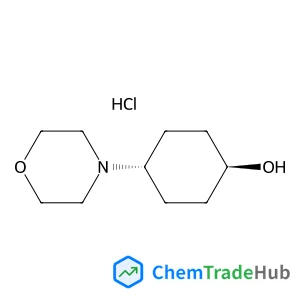
trans-4-(4-Morpholinyl)cyclohexanol hydrochloride (1:1)
CAS Number:
1588441-09-1
Molecular Formula:
C10H20ClNO2
Recommended Suppliers


Disclaimer
This page provides academic journal information for reference and research purposes only. We are not affiliated with any journal publishers and do not handle publication submissions. For publication-related inquiries, please contact the respective journal publishers directly.
If you notice any inaccuracies in the information displayed, please contact us at support@chemtradehub.com. We will promptly review and address your concerns.