












![2-Azaspiro[4.5]decane-3,8-dione structure](https://static.chemtradehub.com/structs/914/914780-96-4-e94b.webp "2-Azaspiro[4.5]decane-3,8-dione structure")
Delineating the conformational flexibility of trisaccharides from NMR spectroscopy experiments and computer simulations
Literature Information
Publication Date
2016-06-16
DOI
10.1039/C6CP02970A
Impact Factor
3.676
Authors
Mingjun Yang, Thibault Angles d’Ortoli, Elin Säwén, Göran Widmalm, Alexander D. MacKerell, Jr.
View Original
Abstract
The conformation of saccharides in solution is challenging to characterize in the context of a single well-defined three-dimensional structure. Instead, they are better represented by an ensemble of conformations associated with their structural diversity and flexibility. In this study, we delineate the conformational heterogeneity of five trisaccharides via a combination of experimental and computational techniques. Experimental NMR measurements target conformationally sensitive parameters, including J couplings and effective distances around the glycosidic linkages, while the computational simulations apply the well-calibrated additive CHARMM carbohydrate force field in combination with efficient enhanced sampling molecular dynamics simulation methods. Analysis of conformational heterogeneity is performed based on sampling of discreet states as defined by dihedral angles, on root-mean-square differences of Cartesian coordinates and on the extent of volume sampled. Conformational clustering, based on the glycosidic linkage dihedral angles, shows that accounting for the full range of sampled conformations is required to reproduce the experimental data, emphasizing the utility of the molecular simulations in obtaining an atomic detailed description of the conformational properties of the saccharides. Results show the presence of differential conformational preferences as a function of primary sequence and glycosidic linkage types. Significant differences in conformational ensembles associated with the anomeric configuration of a single glycosidic linkage reinforce the impact of such changes on the conformational properties of carbohydrates. The present structural insights of the studied trisaccharides represent a foundation for understanding the range of conformations adopted in larger oligosaccharides and how these molecules encode their conformational heterogeneity into the monosaccharide sequence.
Recommended Journals
Related Literature
Predicting the voltage dependence of interfacial electrochemical processes at lithium-intercalated graphite edge planes
2014-11-21
Paper
DOI: 10.1039/C4CP04494K
The effect of the functionalization and molecular weight of cationic dextran polyelectrolytes on their electrochemical behavior at the water/1,2-dichloroethane interface
Julieta S. Riva, Lidia M. Yudi
2014-11-12
Paper
DOI: 10.1039/C4CP03483J
Intriguing cysteine induced improvement of the emissive property of carbon dots with sensing applications
Jayasmita Jana, Mainak Ganguly, Tarasankar Pal
2014-11-21
Paper
DOI: 10.1039/C4CP04982A
Salt-specific effects observed in calorimetric studies of alkali and tetraalkylammonium salt solutions of poly(thiophen-3-ylacetic acid)
Gregor Hostnik, Vojko Vlachy, Dmitrij Bondarev, Ji, Janez Cerar
2014-12-03
Paper
DOI: 10.1039/C4CP04710A
Isothermal transport properties and majority-type defects of BaCo0.70Fe0.22Nb0.08O3−δ
Taewon Lee, Deok-Yong Cho, Hyung-Soon Kwon, Han-Ill Yoo
2014-12-02
Paper
DOI: 10.1039/C4CP04576A
A functionalised nickel cyclam catalyst for CO2 reduction: electrocatalysis, semiconductor surface immobilisation and light-driven electron transfer
Gaia Neri, James J. Walsh, Calum Wilson, Anna Reynal, Jason Y. C. Lim, Xiaoe Li, Andrew J. P. White, Nicholas J. Long, James R. Durrant, Alexander J. Cowan
2014-11-26
Communication
DOI: 10.1039/C4CP04871G
A high-temperature dielectric process as a probe of large-scale silica filler structure in simplified industrial nanocomposites
Angel Alegria, Marc Couty
2014-11-20
Paper
DOI: 10.1039/C4CP04597A
Protic ionic liquids (PILs) nanostructure and physicochemical properties: development of high-throughput methodology for PIL creation and property screens
Benjamin W. Muir, Shaun C. Howard, Nigel Kirby
2014-11-14
Paper
DOI: 10.1039/C4CP04241G
Comparison of direct dynamics simulations with different electronic structure methods. F− + CH3I with MP2 and DFT/B97-1
Rui Sun, Jiaxu Zhang, William L. Hase
2014-10-09
Paper
DOI: 10.1039/C4CP03589E
The influence of edge and corner evolution on plasmon properties and resonant edge effect in gold nanoplatelets
Jiang-shan Luo, Xi-bo Li, You-gen Yi, Yong-jian Tang
2014-11-28
Paper
DOI: 10.1039/C4CP04714A
You might also like
Compound Q&A
What are the main uses of (5-Sulfamoyl-3-pyridinyl)boronic acid (CAS: 951233-61-7)?
(5-Sulfamoyl-3-pyridinyl)boronic acid is primarily used in chemical synthesis, p...
951233-61-7(5-Sulfamoyl-3-pyrid...
Compound Q&A
How is Benzyl 2-methyl-2-(methylsulfonyl)-4-pentenoate (CAS: 1942858-50-5) typically synthesized?
Benzyl 2-methyl-2-(methylsulfonyl)-4-pentenoate is typically synthesized via est...
1942858-50-5Benzyl 2-methyl-2-(m...
Compound Q&A
What precautions should be taken when handling 8-Fluoroquinolin-6-ol (CAS: 209353-22-0)?
When handling 8-Fluoroquinolin-6-ol (CAS: 209353-22-0), it is important to use p...
209353-22-08-Fluoroquinolin-6-o...
Compound Q&A
What are the physical and chemical properties of 1,3-Dibromo-5-(2-methyl-2-propanyl)benzene (CAS: 129316-09-2)?
1,3-Dibromo-5-(2-methyl-2-propanyl)benzene (CAS: 129316-09-2) is a crystalline c...
129316-09-21,3-Dibromo-5-(2-met...
Compound Q&A
What industries use Ethyl 7-chloro-4-oxo-1-(1,3-thiazol-2-yl)-1,4-dihydro-1,8-naphthyridine-3-carboxylate (CAS: 174726-87-5)?
Ethyl 7-chloro-4-oxo-1-(1,3-thiazol-2-yl)-1,4-dihydro-1,8-naphthyridine-3-carbox...
174726-87-5Ethyl 7-chloro-4-oxo...
Compound Q&A
What precautions should be taken when handling Delta-7-Avenasterol (CAS: 23290-26-8)?
When handling Delta-7-Avenasterol (CAS: 23290-26-8), it is important to wear app...
23290-26-8Delta-7-Avenasterol
Compound Q&A
What precautions should be taken when handling N-({(5R)-3-[3-Fluoro-4-(4-morpholinyl)phenyl]-2-oxo-1,3-oxazolidin-5-yl}methyl)acetamide (CAS: 872992-20-6)?
Proper handling involves the use of personal protective equipment such as gloves...
872992-20-6N-({(5R)-3-[3-Fluoro...
Compound Q&A
What precautions should be taken when handling 2-Methyl-2-proanyl 4-[(2-aminophenyl)amino]-1-piperidinecarboxylate (CAS: 79099-00-6)?
When handling 2-Methyl-2-proanyl 4-[(2-aminophenyl)amino]-1-piperidinecarboxylat...
79099-00-62-Methyl-2-propanyl ...
Compound Q&A
What is N-Methyl-4-chlorobenzylamine hydrochloride (CAS: 65542-24-7)?
N-Methyl-4-chlorobenzylamine hydrochloride (CAS: 65542-24-7) is a organic compou...
65542-24-7N-Methyl-4-chloroben...
Compound Q&A
Is [2-(Dodecyloxy)ethoxy]acetic acid (CAS: 27306-90-7) safe?
[2-(Dodecyloxy)ethoxy]acetic acid (CAS: 27306-90-7) is generally considered safe...
27306-90-7[2-(Dodecyloxy)ethox...
Source Journal
Physical Chemistry Chemical Physics

CiteScore:
5.5
Self-citation Rate:
10.3%
Articles per Year:
3036
Physical Chemistry Chemical Physics (PCCP) is an international journal co-owned by 19 physical chemistry and physics societies from around the world. This journal publishes original, cutting-edge research in physical chemistry, chemical physics and biophysical chemistry. To be suitable for publication in PCCP, articles must include significant innovation and/or insight into physical chemistry; this is the most important criterion that reviewers and Editors will judge against when evaluating submissions. The journal has a broad scope and welcomes contributions spanning experiment, theory, computation and data science. Topical coverage includes spectroscopy, dynamics, kinetics, statistical mechanics, thermodynamics, electrochemistry, catalysis, surface science, quantum mechanics, quantum computing and machine learning. Interdisciplinary research areas such as polymers and soft matter, materials, nanoscience, energy, surfaces/interfaces, and biophysical chemistry are welcomed if they demonstrate significant innovation and/or insight into physical chemistry. Joined experimental/theoretical studies are particularly appreciated when complementary and based on up-to-date approaches.
Recommended Compounds

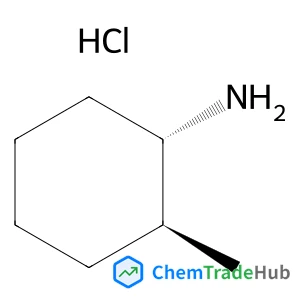
(1R,2R)-2-Methylcyclohexanamine hydrochloride (1:1)
CAS Number:
39558-31-1
Molecular Formula:
C7H16ClN
Recommended Suppliers




Disclaimer
This page provides academic journal information for reference and research purposes only. We are not affiliated with any journal publishers and do not handle publication submissions. For publication-related inquiries, please contact the respective journal publishers directly.
If you notice any inaccuracies in the information displayed, please contact us at support@chemtradehub.com. We will promptly review and address your concerns.