













An experimental NEXAFS and computational TDDFT and ΔDFT study of the gas-phase core excitation spectra of nitroxide free radical TEMPO and its analogues
Literature Information
Publication Date
2016-03-14
DOI
10.1039/C6CP00490C
Impact Factor
3.676
Authors
Ivan Ljubić, Antti Kivimäki, Marcello Coreno
View Original
Abstract
Core-hole spectroscopy adds to the fundamental understanding of the electronic structure of stable nitroxide free radicals thus paving way for a sensible design of new analogues with desired functionalities. We study the gas-phase C 1s, N 1s and O 1s excitation spectra of three nitroxide free radicals – TEMPO and two of its amide-substituted analogues – using the experimental NEXAFS technique and the theoretical TDDFT and ΔDFT methods in the unrestricted setting. The short-range corrected SRC1-BLYP and SRC2-BLYP exchange–correlation functionals are used with TDDFT, and the standard B3LYP functional with ΔDFT. The TDDFT-based detailed spectral assignment includes the valence, mixed valence-Rydberg and Rydberg portions of the spectra from the onset of absorptions to the vicinity of the core-ionization thresholds. The relative overlaps between the experimental and TDDFT-modelled spectra are reasonably good, in the range of 0.7–0.8, 0.6–0.8, and 0.7–0.8 for the C 1s, N 1s, and O 1s spectra, respectively. The extent of spin contamination within the unrestricted framework and its effect on the accuracy of the calculated excitation energies and dipole intensities are discussed in detail. It is concluded that, despite the sizeable spin contamination, the presently used methods are capable of predicting the core-excitation spectra of comparatively large free radical species fairly reliably over a wide spectral range.
Related Literature
Towards understanding a mechanism for reversible hydrogenstorage: theoretical study of transition metal catalysed dehydrogenation of sodium alanate
Ivan Ljubić, David C. Clary
2010-03-04
Paper
DOI: 10.1039/B922617F
Self-organized distribution of periodicity and chaos in an electrochemical oscillator
Melke A. Nascimento, Hamilton Varela
2010-10-13
Paper
DOI: 10.1039/C0CP01038C
Structure and stability of one-dimensional o-phthalaldehyde lines on the Si(100)-2 × 1:H surface
Jin-Ho Choi, Jun-Hyung Cho
2010-11-16
Communication
DOI: 10.1039/C0CP01284J
Self-assembly of trehalose molecules on a lysozyme surface: the broken glass hypothesis
Maxim V. Fedorov, Jonathan M. Goodman, Dmitry Nerukh, Stephan Schumm
2010-11-29
Paper
DOI: 10.1039/C0CP01705A
Conformations and vibrational spectra of a model tripeptide: change of secondary structure upon micro-solvation
Hui Zhu, Martine Blom, Isabel Compagnon, Anouk M. Rijs, Santanu Roy, Gert von Helden, Burkhard Schmidt
2010-02-23
Paper
DOI: 10.1039/B926413B
Hydrogen-bond strengths by magnetically induced currents
Heike Fliegl, Olli Lehtonen, Dage Sundholm
2010-11-12
Communication
DOI: 10.1039/C0CP00622J
Sugar–salt and sugar–salt–water complexes: structure and dynamics of glucose–KNO3–(H2O)n
Brina Brauer, Victoria Buch
2010-02-22
Paper
DOI: 10.1039/B925797G
Effect of hydrophobic nanopatches within an ionic surface on the structure of liquids
Christopher Hardacre
2010-11-01
Paper
DOI: 10.1039/C0CP01838D
First principles Monte Carlo simulations of aggregation in the vapor phase of hydrogen fluoride
Christopher J. Mundy, I-F. Will Kuo, J. Ilja Siepmann
2010-05-27
Paper
DOI: 10.1039/B924506E
You might also like
Compound Q&A
What is 1-(2,4,6-Trifluorophenyl)ethanol (CAS: 1250113-83-7)?
1-(2,4,6-Trifluorophenyl)ethanol is an organic compound with the CAS number 1250...
1250113-83-71-(2,4,6-Trifluoroph...
Compound Q&A
Is 1-(2,4-Dimethoxybenzyl)-4-(hydroxymethyl)-2-pyrrolidinone (CAS: 919111-34-5) safe?
1-(2,4-Dimethoxybenzyl)-4-(hydroxymethyl)-2-pyrrolidinone (CAS: 919111-34-5) is ...
919111-34-51-(2,4-Dimethoxybenz...
Compound Q&A
What are the physical and chemical properties of (7S,15R)-6β,15-Diacetoxy-7α,20-epoxy-7-hydroxykaura-2,16-dien-1-one (CAS: 51419-51-3)?
(7S,15R)-6β,15-Diacetoxy-7α,20-epoxy-7-hydroxykaura-2,16-dien-1-one is a crystal...
51419-51-3(7S,15R)-6β,15-Diace...
Compound Q&A
What regulatory guidelines apply to rac-ethyl (1r,4r)-4-hydroxycyclohexane-1-carboxylate, trans (CAS: 3618-04-0)?
The compound rac-ethyl (1r,4r)-4-hydroxycyclohexane-1-carboxylate, trans (CAS: 3...
3618-04-0rac-ethyl (1r,4r)-4-...
Compound Q&A
What is the market or research trend for 2-(2,4-Difluorophenoxy)-3-nitropyridine (CAS: 175135-62-3)?
The market for 2-(2,4-Difluorophenoxy)-3-nitropyridine (CAS: 175135-62-3) is cur...
175135-62-32-(2,4-Difluoropheno...
Compound Q&A
What are the main uses of 6-Diazo-5-oxo-L-norleucine (CAS: 157-03-9)?
The main uses of 6-Diazo-5-oxo-L-norleucine (CAS: 157-03-9) include research in ...
157-03-96-Diazo-5-oxo-L-norl...
Compound Q&A
What precautions should be taken when handling 2-Aminoethyl-mono-amide-DOTA-tris(tBu ester) (CAS: 173308-19-5)?
When handling 2-Aminoethyl-mono-amide-DOTA-tris(tBu ester) (CAS: 173308-19-5), i...
173308-19-52-Aminoethyl-mono-am...
Compound Q&A
How is 5-Methylimidazo[1,2-a]pyridine-3-carbaldehyde (CAS: 178488-37-4) typically synthesized?
5-Methylimidazo[1,2-a]pyridine-3-carbaldehyde (CAS: 178488-37-4) can be synthesi...
178488-37-45-Methylimidazo[1,2-...
Compound Q&A
Are there alternatives to 2,4,6-Trihydroxyisophthalaldehyde (CAS: 4396-13-8) in synthesis?
There are alternative reagents that can be used in the synthesis of 2,4,6-Trihyd...
4396-13-82,4,6-Trihydroxyisop...
Compound Q&A
What is (2Z)-3-(5-Fluoro-1H-indol-3-yl)-2-sulfanylacrylic acid (CAS: 179461-52-0)?
(2Z)-3-(5-Fluoro-1H-indol-3-yl)-2-sulfanylacrylic acid is a chemical compound wi...
179461-52-0(2Z)-3-(5-Fluoro-1H-...
Source Journal
Physical Chemistry Chemical Physics

CiteScore:
5.5
Self-citation Rate:
10.3%
Articles per Year:
3036
Physical Chemistry Chemical Physics (PCCP) is an international journal co-owned by 19 physical chemistry and physics societies from around the world. This journal publishes original, cutting-edge research in physical chemistry, chemical physics and biophysical chemistry. To be suitable for publication in PCCP, articles must include significant innovation and/or insight into physical chemistry; this is the most important criterion that reviewers and Editors will judge against when evaluating submissions. The journal has a broad scope and welcomes contributions spanning experiment, theory, computation and data science. Topical coverage includes spectroscopy, dynamics, kinetics, statistical mechanics, thermodynamics, electrochemistry, catalysis, surface science, quantum mechanics, quantum computing and machine learning. Interdisciplinary research areas such as polymers and soft matter, materials, nanoscience, energy, surfaces/interfaces, and biophysical chemistry are welcomed if they demonstrate significant innovation and/or insight into physical chemistry. Joined experimental/theoretical studies are particularly appreciated when complementary and based on up-to-date approaches.
Recommended Compounds

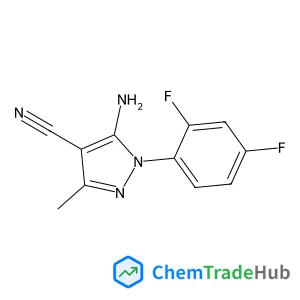
5-Amino-1-(2,4-difluorophenyl)-3-methyl-1H-pyrazole-4-carbonitrile
CAS Number:
1020057-92-4
Molecular Formula:
C11H8F2N4

![9,9'-Spirobi[fluoren]-2-amine structure](https://static.chemtradehub.com/structs/118/118951-68-1-0d14.webp "9,9'-Spirobi[fluoren]-2-amine structure")
Recommended Suppliers





Disclaimer
This page provides academic journal information for reference and research purposes only. We are not affiliated with any journal publishers and do not handle publication submissions. For publication-related inquiries, please contact the respective journal publishers directly.
If you notice any inaccuracies in the information displayed, please contact us at support@chemtradehub.com. We will promptly review and address your concerns.