


The oxygen reduction reaction (ORR) on reduced metals: evidence for a unique relationship between the coverage of adsorbed oxygen species and adsorption energy
Literature Information
Publication Date
2016-03-21
DOI
10.1039/C6CP00106H
Impact Factor
3.676
Authors
S. C. Perry, G. Denuault
View Original
Abstract
Using chronoamperometry and voltammetry at oxide-free microelectrodes in non-adsorbing electrolyte, KClO4, we investigated the reduction of oxygen containing species which adsorb at potentials below those where oxides are grown electrochemically when the electrode is exposed to dissolved oxygen. Their coverage is found to vary with the metal substrate as follows, Ni > Cu > Pt > Ag, and is negligible on Au microdiscs. This dependence is consistent with the adsorption energy of atomic oxygen for the respective metals predicted by DFT. Furthermore the adsorption energies derived from the stripping peak potentials for the different metals agree very well with those predicted by the DFT calculations. We exploit the oxygen coverage differences between Pt, Pt0.9Rh0.1 and Pt0.9Ir0.1 microdiscs to predict the adsorption energy of these species on the Pt alloys and demonstrate a clear correlation between the metal activity towards the ORR and the charge associated with the reduction of the adsorbed oxygen species. In effect the coverage – adsorption energy relationship turns the charge associated with the reduction of the adsorbed oxygen species into a descriptor of the electrode activity towards the ORR. This study provides new insight into the oxygen reduction reaction and offers a new methodology to investigate low temperature fuel cell ORR catalysts.
Recommended Journals

Accounts of Chemical Research

Chemistry of Natural Compounds

Bulletin of the Chemical Society of Japan

Journal of the Chinese Chemical Society

Doklady Chemistry

Anti-Corrosion Methods and Materials

Journal of the American Chemical Society

Chemical Reviews

Canadian Metallurgical Quarterly

Australian Journal of Chemistry
Related Literature
Hydrogen-bond strengths by magnetically induced currents
Heike Fliegl, Olli Lehtonen, Dage Sundholm
2010-11-12
Communication
DOI: 10.1039/C0CP00622J
Six conformers of neutral aspartic acid identified in the gas phase
M. Eugenia Sanz, Juan C. López, José L. Alonso
2010-03-05
Paper
DOI: 10.1039/B926520A
Drainage of the air–water–quartz film: experiments and theory
Rogerio Manica
2010-12-09
Paper
DOI: 10.1039/C0CP00677G
Supramolecular assembly of a biomineralizing antimicrobial peptide in coarse-grained Monte Carlo simulations
Glenn R. Johnson, Barry L. Farmer, Ras B. Pandey
2010-11-12
Paper
DOI: 10.1039/C0CP01364A
Self-assembled monolayers of benzylmercaptan and para-cyanobenzylmercaptan on gold: surface infrared spectroscopic characterization
K. Rajalingam, L. Hallmann, A. Bashir, C. Wöll, F. Tuczek
2010-03-05
Paper
DOI: 10.1039/B923628G
Pressure-amorphized cubic structure II clathrate hydrate: crystallization in slow motion
Marion Bauer, Daniel M. Többens, Erwin Mayer, Thomas Loerting
2010-11-22
Paper
DOI: 10.1039/C0CP01351J
Predicting the coordination geometry for Mg2+ in the p53 DNA-binding domain: insights from computational studies
Teng Wang, Xueguang Shao, Wensheng Cai, Yonglai Xue, Shuai Wang, Xizeng Feng
2010-11-15
Paper
DOI: 10.1039/C0CP00678E
Redox-induced Ru(bpy)32+-methylviologen radical formation and its dimerization in cucurbit[8]uril
Shiguo Sun, Wenyan Gao, Fengyu Liu, Fusheng Li, Jiangli Fan, Xiaojun Peng
2010-11-01
Paper
DOI: 10.1039/C0CP00712A
You might also like
Compound Q&A
What is 1-(2,4,6-Trifluorophenyl)ethanol (CAS: 1250113-83-7)?
1-(2,4,6-Trifluorophenyl)ethanol is an organic compound with the CAS number 1250...
1250113-83-71-(2,4,6-Trifluoroph...
Compound Q&A
Is 1-(2,4-Dimethoxybenzyl)-4-(hydroxymethyl)-2-pyrrolidinone (CAS: 919111-34-5) safe?
1-(2,4-Dimethoxybenzyl)-4-(hydroxymethyl)-2-pyrrolidinone (CAS: 919111-34-5) is ...
919111-34-51-(2,4-Dimethoxybenz...
Compound Q&A
What are the physical and chemical properties of (7S,15R)-6β,15-Diacetoxy-7α,20-epoxy-7-hydroxykaura-2,16-dien-1-one (CAS: 51419-51-3)?
(7S,15R)-6β,15-Diacetoxy-7α,20-epoxy-7-hydroxykaura-2,16-dien-1-one is a crystal...
51419-51-3(7S,15R)-6β,15-Diace...
Compound Q&A
What regulatory guidelines apply to rac-ethyl (1r,4r)-4-hydroxycyclohexane-1-carboxylate, trans (CAS: 3618-04-0)?
The compound rac-ethyl (1r,4r)-4-hydroxycyclohexane-1-carboxylate, trans (CAS: 3...
3618-04-0rac-ethyl (1r,4r)-4-...
Compound Q&A
What is the market or research trend for 2-(2,4-Difluorophenoxy)-3-nitropyridine (CAS: 175135-62-3)?
The market for 2-(2,4-Difluorophenoxy)-3-nitropyridine (CAS: 175135-62-3) is cur...
175135-62-32-(2,4-Difluoropheno...
Compound Q&A
What are the main uses of 6-Diazo-5-oxo-L-norleucine (CAS: 157-03-9)?
The main uses of 6-Diazo-5-oxo-L-norleucine (CAS: 157-03-9) include research in ...
157-03-96-Diazo-5-oxo-L-norl...
Compound Q&A
What precautions should be taken when handling 2-Aminoethyl-mono-amide-DOTA-tris(tBu ester) (CAS: 173308-19-5)?
When handling 2-Aminoethyl-mono-amide-DOTA-tris(tBu ester) (CAS: 173308-19-5), i...
173308-19-52-Aminoethyl-mono-am...
Compound Q&A
How is 5-Methylimidazo[1,2-a]pyridine-3-carbaldehyde (CAS: 178488-37-4) typically synthesized?
5-Methylimidazo[1,2-a]pyridine-3-carbaldehyde (CAS: 178488-37-4) can be synthesi...
178488-37-45-Methylimidazo[1,2-...
Compound Q&A
Are there alternatives to 2,4,6-Trihydroxyisophthalaldehyde (CAS: 4396-13-8) in synthesis?
There are alternative reagents that can be used in the synthesis of 2,4,6-Trihyd...
4396-13-82,4,6-Trihydroxyisop...
Compound Q&A
What is (2Z)-3-(5-Fluoro-1H-indol-3-yl)-2-sulfanylacrylic acid (CAS: 179461-52-0)?
(2Z)-3-(5-Fluoro-1H-indol-3-yl)-2-sulfanylacrylic acid is a chemical compound wi...
179461-52-0(2Z)-3-(5-Fluoro-1H-...
Source Journal
Physical Chemistry Chemical Physics

CiteScore:
5.5
Self-citation Rate:
10.3%
Articles per Year:
3036
Physical Chemistry Chemical Physics (PCCP) is an international journal co-owned by 19 physical chemistry and physics societies from around the world. This journal publishes original, cutting-edge research in physical chemistry, chemical physics and biophysical chemistry. To be suitable for publication in PCCP, articles must include significant innovation and/or insight into physical chemistry; this is the most important criterion that reviewers and Editors will judge against when evaluating submissions. The journal has a broad scope and welcomes contributions spanning experiment, theory, computation and data science. Topical coverage includes spectroscopy, dynamics, kinetics, statistical mechanics, thermodynamics, electrochemistry, catalysis, surface science, quantum mechanics, quantum computing and machine learning. Interdisciplinary research areas such as polymers and soft matter, materials, nanoscience, energy, surfaces/interfaces, and biophysical chemistry are welcomed if they demonstrate significant innovation and/or insight into physical chemistry. Joined experimental/theoretical studies are particularly appreciated when complementary and based on up-to-date approaches.
Recommended Compounds
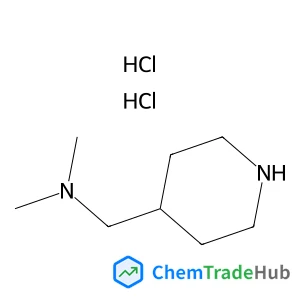
N,N-dimethyl(piperidin-4-yl)methanamine hydrochloride
CAS Number:
172281-72-0
Molecular Formula:
C8H20Cl2N2
![9,9'-Spirobi[fluoren]-2-amine structure](https://static.chemtradehub.com/structs/118/118951-68-1-0d14.webp "9,9'-Spirobi[fluoren]-2-amine structure")
Recommended Suppliers







Disclaimer
This page provides academic journal information for reference and research purposes only. We are not affiliated with any journal publishers and do not handle publication submissions. For publication-related inquiries, please contact the respective journal publishers directly.
If you notice any inaccuracies in the information displayed, please contact us at support@chemtradehub.com. We will promptly review and address your concerns.