


A quantum mechanical study of the mechanism and stereoselectivity of the N-heterocyclic carbene catalyzed [4 + 2] annulation reaction of enals with azodicarboxylates
Literature Information
Publication Date
2015-05-06
DOI
10.1039/C5QO00121H
Impact Factor
5.281
Authors
Yang Wang, Linjie Zheng, Donghui Wei, Mingsheng Tang
View Original
Abstract
A systematic theoretical study has been carried out to understand the mechanism and stereoselectivity of [4 + 2] annulation reaction between γ-oxidized enals and azodicarboxylates catalyzed by the N-heterocyclic carbene (NHC). The calculated results reveal that the catalytic cycle can be characterized by three stages (Stages 1, 2, and 3). Stage 1 is the nucleophilic addition of the NHC catalyst to enals upon the intramolecular proton transfer to generate the Breslow intermediate. In this stage, apart from the direct proton transfer mechanism, the H2O (H2O and 2H2O cluster) and bicarbonate anion (HCO3−) mediated proton transfer mechanisms are also investigated; the free energy barrier for the crucial proton transfer steps in Stage 1 is found to be significantly lower by explicit inclusion of the bicarbonate anion (HCO3−). For Stage 2, the removal of the leaving group occurs, followed by C–C bond rotation for the formation of cis-dienolate. Stage 3 is the endo/exo [4 + 2] cycloaddition and dissociation of the catalyst from the final products. The formal [4 + 2] cycloaddition step is calculated to be the enantioselectivity determining step, and the R-configured PR is the predominant product according to the computations, which is in good agreement with the experimental observations. Moreover, the stereoselectivity associated with the chiral carbon center is attributed to the CH–π interaction between Cα−H and the mesityl group of NHC and the variation in the distortion of the dienolate. The mechanistic insights obtained in the present study should be valuable for the other NHC-catalyzed reactions.
Recommended Journals

Medicinal Chemistry Research

Critical Reviews in Solid State and Materials Sciences

Electroanalysis

Polycyclic Aromatic Compounds

Bioorganic & Medicinal Chemistry

Bioorganic & Medicinal Chemistry Letters

Journal of the Indian Institute of Science

Atomization and Sprays

Biocatalysis and Biotransformation

Main Group Chemistry
Related Literature
Water-soluble hexakis-imidazolium cages: synthesis and selective binding of sodium urate
Sheng-Yi Zhuang, Gang Wu, Jian-Da Sun, Jiangshan Zhang, Jiabin Xing, Yan Wu, Hui Wang, Zhan-Ting Li, Dan-Wei Zhang
2023-11-27
Research Article
DOI: 10.1039/D3QO01780J
Divergent synthesis of nitrocyclopropanes and isoxazoline N-oxides from nitro compounds and vinyl sulfonium salts
Pavel Yu. Ushakov, Ivan S. Golovanov, Sema L. Ioffe, Andrey A. Tabolin
2023-11-22
Research Article
DOI: 10.1039/D3QO01664A
A deconstruction–reconstruction strategy to access 1-naphthol derivatives: application to the synthesis of aristolactam scaffolds
Jeong Min Bak, Moonyeong Song, Inji Shin, Hee Nam Lim
2023-10-27
Paper
DOI: 10.1039/D3OB01603J
Asymmetric copper-catalyzed alkynylallylic dimethylamination
2023-12-05
Research Article
DOI: 10.1039/D3QO01749D
Pulsed electrolysis: enhancing primary benzylic C(sp3)–H nucleophilic fluorination
Alexander P. Atkins, Atul K. Chaturvedi, Joseph A. Tate, Alastair J. J. Lennox
2023-12-13
Research Article
DOI: 10.1039/D3QO01865B
Theoretical insights into unraveling the mechanism, selectivity patterns, and ligand effects in gold(i)-catalyzed annulations between ynamides and isoxazoles
Qing Sun, Jia-Jie Chen, Jia-Yi Liu, Wen-Qing Zhang, Xin Lu, Ren-Jie Song
2023-12-05
Research Article
DOI: 10.1039/D3QO01792C
Hydantoin hexameric rosettes: harnessing H-bonds for supergelation and liquid crystals
Lucía González, Iván Marín, Rosa M. Tejedor, Joaquín Barberá, Pilar Romero, Alberto Concellón, Santiago Uriel, José L. Serrano
2023-12-04
Research Article
DOI: 10.1039/D3QO01832F
You might also like
Compound Q&A
How should 2-Methylbenzene-1,4-diamine dihydrochloride (CAS: 615-45-2) be stored?
2-Methylbenzene-1,4-diamine dihydrochloride (CAS: 615-45-2) should be stored in ...
615-45-22-Methylbenzene-1,4-...
Compound Q&A
Is (1S,4S)-2,5-Diazabicyclo[2.2.1]heptane dihydrobromide (CAS: 132747-20-7) safe?
(1S,4S)-2,5-Diazabicyclo[2.2.1]heptane dihydrobromide is generally considered sa...
132747-20-7(1S,4S)-2,5-Diazabic...
Compound Q&A
What industries use (6-Chloropyridazin-3-YL)methanamine (CAS: 871826-15-2)?
(6-Chloropyridazin-3-YL)methanamine finds applications in the pharmaceutical ind...
871826-15-2(6-Chloropyridazin-3...
Compound Q&A
What are the main uses of 2-Fluoro-3-methylphenol (CAS: 77772-72-6)?
2-Fluoro-3-methylphenol is primarily used in the synthesis of pharmaceuticals, p...
77772-72-62-Fluoro-3-methylphe...
Compound Q&A
What precautions should be taken when handling 3-Methoxy-4-nitrobenzonitrile (CAS: 177476-75-4)?
When handling 3-Methoxy-4-nitrobenzonitrile, it is important to wear appropriate...
177476-75-43-Methoxy-4-nitroben...
Compound Q&A
What precautions should be taken when handling 1,3-Oxazolo[4,5-b]pyridine-2(3H)-thione (CAS: 211949-57-4)?
When handling 1,3-Oxazolo[4,5-b]pyridine-2(3H)-thione (CAS: 211949-57-4), it is ...
211949-57-4[1,3]Oxazolo[4,5-b]p...
Compound Q&A
What regulatory guidelines apply to 4-Ethynylbenzamide (CAS: 90347-86-7)?
4-Ethynylbenzamide (CAS: 90347-86-7) falls under various regulatory guidelines i...
90347-86-74-Ethynylbenzamide
Compound Q&A
What are the main uses of 3-(2-Ethylphenyl)-2-thioxo-4-imidazolidinone (CAS: 186822-57-1)?
3-(2-Ethylphenyl)-2-thioxo-4-imidazolidinone is primarily used as an intermediat...
186822-57-13-(2-Ethylphenyl)-2-...
Compound Q&A
What is (2-Fluoro-6-methoxyphenyl)acetic acid (CAS: 500912-19-6)?
(2-Fluoro-6-methoxyphenyl)acetic acid, also known as 4-fluoro-3-methoxybenzoic a...
500912-19-6(2-Fluoro-6-methoxyp...
Compound Q&A
What is the market or research trend for 2-[4-(Hydroxymethyl)phenoxy]ethanol (CAS: 102196-18-9)?
Market trends for 2-[4-(Hydroxymethyl)phenoxy]ethanol (CAS: 102196-18-9) indicat...
102196-18-92-[4-(Hydroxymethyl)...
Source Journal
Organic Chemistry Frontiers

CiteScore:
7.8
Self-citation Rate:
8.7%
Articles per Year:
724
Organic Chemistry Frontiers publishes high-quality research from across organic chemistry. Emphases are placed on studies that make significant contributions to the field of organic chemistry by reporting either new or significantly improved protocols or methodologies. Topics include, but are not limited to the following: Organic synthesis Development of synthetic methodologies Catalysis Natural products Functional organic materials Supramolecular and macromolecular chemistry Physical and computational organic chemistry
Recommended Compounds


(S)-(9H-Fluoren-9-yl)methyl (pyrrolidin-2-ylmethyl)carbamate hydrochloride
CAS Number:
1217813-15-4
Molecular Formula:
C20H23ClN2O2
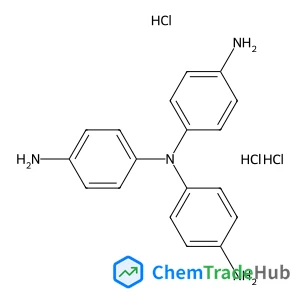
N1,N1-Bis(4-aminophenyl)benzene-1,4-diamine trihydrochloride
CAS Number:
114254-48-7
Molecular Formula:
C18H21Cl3N4
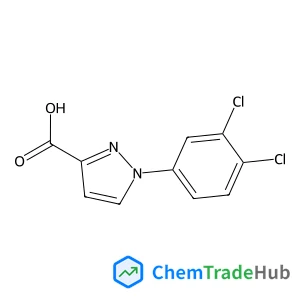
1-(3,4-Dichlorophenyl)-1H-pyrazole-3-carboxylic acid
CAS Number:
1152949-12-6
Molecular Formula:
C10H6Cl2N2O2
Recommended Suppliers







Disclaimer
This page provides academic journal information for reference and research purposes only. We are not affiliated with any journal publishers and do not handle publication submissions. For publication-related inquiries, please contact the respective journal publishers directly.
If you notice any inaccuracies in the information displayed, please contact us at support@chemtradehub.com. We will promptly review and address your concerns.