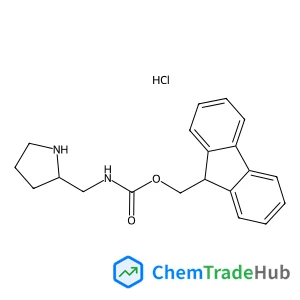
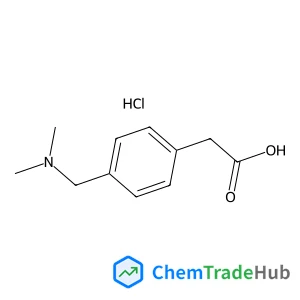
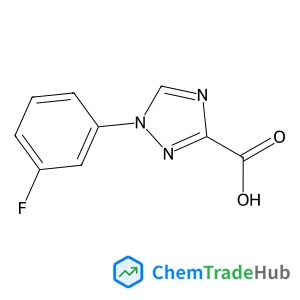
(2S)-2-(Fluoromethyl)piperidine hydrochloride (1:1)
CAS Number:
886216-73-5
Molecular Formula:
C6H13ClFN
Filipe Gomes, Vanessa Narbonne, Florent Blanchard
We developed a simple and convenient method to assemble biaryls exploiting a photoredox catalyst and visible light. Diazonium salts generate aryl radicals that could then add on unactivated (hetero)arenes and the sequence eventually delivers products via formal homolytic aromatic substitutions. The direct C–H arylation of these usually unreactive substrates is achieved at room temperature using low catalyst loadings and shows broad functional group tolerance.
Adrián Luguera Ruiz, Elena Mariani, Stefano Protti, Maurizio Fagnoni
DOI: 10.1039/D3QO01856C
Xiaoping Liu, Dongjie Wang, Jordan Garo, Jean-Marc Sotiropoulos, Marc Taillefer
DOI: 10.1039/D3QO01875J
Jianchao Liu, Jie-Ping Wan, Yunyun Liu
DOI: 10.1039/D3QO01844J
Jeong Min Bak, Moonyeong Song, Inji Shin, Hee Nam Lim
DOI: 10.1039/D3OB01603J
Zhao-Zhao Li, Si-Jing Jiang, Shu-Yun He, Yu-Ning Gao, Ming Bian, Hui-Yu Chen
DOI: 10.1039/D3QO01671D
Lucía González, Iván Marín, Rosa M. Tejedor, Joaquín Barberá, Pilar Romero, Alberto Concellón, Santiago Uriel, José L. Serrano
DOI: 10.1039/D3QO01832F
Irene Sánchez-Sordo, Sergio Barbeira-Arán, Martín Fañanás-Mastral
DOI: 10.1039/D3QO01631E
Justin S. Lamb, Futa Koyama, Noriyuki Suzuki, Yumiko Suzuki
DOI: 10.1039/D3QO01579C
Pavel Yu. Ushakov, Ivan S. Golovanov, Sema L. Ioffe, Andrey A. Tabolin
DOI: 10.1039/D3QO01664A
DOI: 10.1039/D3QO01735D
2-Methylbenzene-1,4-diamine dihydrochloride (CAS: 615-45-2) should be stored in ...
(1S,4S)-2,5-Diazabicyclo[2.2.1]heptane dihydrobromide is generally considered sa...
(6-Chloropyridazin-3-YL)methanamine finds applications in the pharmaceutical ind...
2-Fluoro-3-methylphenol is primarily used in the synthesis of pharmaceuticals, p...
When handling 3-Methoxy-4-nitrobenzonitrile, it is important to wear appropriate...
When handling 1,3-Oxazolo[4,5-b]pyridine-2(3H)-thione (CAS: 211949-57-4), it is ...
4-Ethynylbenzamide (CAS: 90347-86-7) falls under various regulatory guidelines i...
3-(2-Ethylphenyl)-2-thioxo-4-imidazolidinone is primarily used as an intermediat...
(2-Fluoro-6-methoxyphenyl)acetic acid, also known as 4-fluoro-3-methoxybenzoic a...
Market trends for 2-[4-(Hydroxymethyl)phenoxy]ethanol (CAS: 102196-18-9) indicat...

Organic Chemistry Frontiers publishes high-quality research from across organic chemistry. Emphases are placed on studies that make significant contributions to the field of organic chemistry by reporting either new or significantly improved protocols or methodologies. Topics include, but are not limited to the following: Organic synthesis Development of synthetic methodologies Catalysis Natural products Functional organic materials Supramolecular and macromolecular chemistry Physical and computational organic chemistry