












Thermoresponsive, well-defined, poly(vinyl alcohol) co-polymers
Literature Information
Publication Date
2015-06-01
DOI
10.1039/C5PY00775E
Impact Factor
5.582
Authors
Thomas Congdon, Peter Shaw, Matthew I. Gibson
View Original
Abstract
Thermoresponsive polymers have attracted huge interest as adaptable biomaterials based on their reversible solubility behaviour which can be exploited for controlled drug delivery or cellular uptake. The most famous and successful of these is poly(ethylene glycol) (PEG), but the thermal transition temperatures that are practically accessible are not physiologically useful. There are some notable examples of synthetic, responsive, polymers that are highly tunable over a physiologically relevant range, but there is still a need for these to be clinically validated in terms of toxicology and immunogenity for in vivo usage, in addition to their widely used in vitro applications. Poly(vinyl alcohol), PVA, is an appealing biocompatible polymer which is already used for a huge range of biomedical applications. Here, PVA is shown to be a highly tunable, thermoresponsive polymer scaffold. RAFT/MADIX polymerization is used to obtain a library of well-defined polymers between 8 and 50 kDa. Selective alkanoylation of the obtained PVA enabled the effect of side-chains, end-groups and molecular weight on the observable transition temperatures to be studied by turbidimetry. It was found that increasingly hydrophobic side chains (acetyl, propanoyl, butanoyl), or increasing their density led to corresponding decreases in cloud point. PVA with just 10 mol% butanoylation was shown to have a thermal transition temperature close to physiological temperatures (37 °C), compared to 70 mol% for acetylation, with temperatures in between accessible by controlling both the relative degree of functionalization, or by altering the chain length. Finally, a secondary response to esterase enzymes was demonstrated as a route to ‘turn off’ the responsive behaviour on demand. This study suggests that PVA-derived polymers may be a useful platform for responsive biomaterials.
Related Literature
A facile synthetic strategy to polysiloxanes containing sulfonyl side groups with high dielectric permittivity
Dorina M. Opris
2016-12-09
Paper
DOI: 10.1039/C6PY01917J
An anomalous trade-off effect on the properties of smart ortho-functional benzoxazines
Hatsuo Ishida
2015-02-05
Paper
DOI: 10.1039/C5PY00031A
Direct light-induced (co-)grafting of photoactive polymers to graphitic nanodiamonds
Vanessa Trouillet, Ralf Köppe, Peter W. Roesky, Martina H. Stenzel
2017-01-06
Communication
DOI: 10.1039/C6PY02035F
Thiol-reactive Passerini-methacrylates and polymorphic surface functional soft matter nanoparticles via ethanolic RAFT dispersion polymerization and post-synthesis modification
Yiwen Pei, Janina-Miriam Noy, Peter J. Roth, Andrew B. Lowe
2015-01-02
Communication
DOI: 10.1039/C4PY01558D
Double pH-responsive supramolecular copolymer micelles based on the complementary multiple hydrogen bonds of nucleobases and acetalated dextran for drug delivery
Jizhen Li, Xuesi Chen, Zhigang Xie, Xiabin Jing, Yubin Huang
2015-03-30
Paper
DOI: 10.1039/C5PY00042D
Facile synthesis of well-defined redox responsive diselenide-labeled polymers via organoselenium-mediated CRP and aminolysis
Feng Gao, Xiangqiang Pan, Jian Zhu, Zhengbiao Zhang, Wei Zhang, Xiulin Zhu
2014-11-19
Paper
DOI: 10.1039/C4PY01481B
Homopolymer bifunctionalization through sequential thiol–epoxy and esterification reactions: an optimization, quantification, and structural elucidation study
Ikhlas Gadwal, Mihaiela C. Stuparu, Anzar Khan
2014-12-10
Paper
DOI: 10.1039/C4PY01453G
Sequential Michael addition thiol–ene and radical-mediated thiol–ene reactions in one-pot produced sequence-ordered polymers
Lei Yu, Long-Hai Wang, Zong-Tao Hu, Ye-Zi You, De-Cheng Wu, Chun-Yan Hong
2014-12-04
Paper
DOI: 10.1039/C4PY01363H
Surface-initiated Cu(0) mediated controlled radical polymerization (SI-CuCRP) using a copper plate
Tao Zhang, Yunhao Du, Felix Müller, Ihsan Amin, Rainer Jordan
2015-02-17
Paper
DOI: 10.1039/C5PY00093A
You might also like
Compound Q&A
What are the main uses of (5-Sulfamoyl-3-pyridinyl)boronic acid (CAS: 951233-61-7)?
(5-Sulfamoyl-3-pyridinyl)boronic acid is primarily used in chemical synthesis, p...
951233-61-7(5-Sulfamoyl-3-pyrid...
Compound Q&A
How is Benzyl 2-methyl-2-(methylsulfonyl)-4-pentenoate (CAS: 1942858-50-5) typically synthesized?
Benzyl 2-methyl-2-(methylsulfonyl)-4-pentenoate is typically synthesized via est...
1942858-50-5Benzyl 2-methyl-2-(m...
Compound Q&A
What precautions should be taken when handling 8-Fluoroquinolin-6-ol (CAS: 209353-22-0)?
When handling 8-Fluoroquinolin-6-ol (CAS: 209353-22-0), it is important to use p...
209353-22-08-Fluoroquinolin-6-o...
Compound Q&A
What are the physical and chemical properties of 1,3-Dibromo-5-(2-methyl-2-propanyl)benzene (CAS: 129316-09-2)?
1,3-Dibromo-5-(2-methyl-2-propanyl)benzene (CAS: 129316-09-2) is a crystalline c...
129316-09-21,3-Dibromo-5-(2-met...
Compound Q&A
What industries use Ethyl 7-chloro-4-oxo-1-(1,3-thiazol-2-yl)-1,4-dihydro-1,8-naphthyridine-3-carboxylate (CAS: 174726-87-5)?
Ethyl 7-chloro-4-oxo-1-(1,3-thiazol-2-yl)-1,4-dihydro-1,8-naphthyridine-3-carbox...
174726-87-5Ethyl 7-chloro-4-oxo...
Compound Q&A
What precautions should be taken when handling Delta-7-Avenasterol (CAS: 23290-26-8)?
When handling Delta-7-Avenasterol (CAS: 23290-26-8), it is important to wear app...
23290-26-8Delta-7-Avenasterol
Compound Q&A
What precautions should be taken when handling N-({(5R)-3-[3-Fluoro-4-(4-morpholinyl)phenyl]-2-oxo-1,3-oxazolidin-5-yl}methyl)acetamide (CAS: 872992-20-6)?
Proper handling involves the use of personal protective equipment such as gloves...
872992-20-6N-({(5R)-3-[3-Fluoro...
Compound Q&A
What precautions should be taken when handling 2-Methyl-2-proanyl 4-[(2-aminophenyl)amino]-1-piperidinecarboxylate (CAS: 79099-00-6)?
When handling 2-Methyl-2-proanyl 4-[(2-aminophenyl)amino]-1-piperidinecarboxylat...
79099-00-62-Methyl-2-propanyl ...
Compound Q&A
What is N-Methyl-4-chlorobenzylamine hydrochloride (CAS: 65542-24-7)?
N-Methyl-4-chlorobenzylamine hydrochloride (CAS: 65542-24-7) is a organic compou...
65542-24-7N-Methyl-4-chloroben...
Compound Q&A
Is [2-(Dodecyloxy)ethoxy]acetic acid (CAS: 27306-90-7) safe?
[2-(Dodecyloxy)ethoxy]acetic acid (CAS: 27306-90-7) is generally considered safe...
27306-90-7[2-(Dodecyloxy)ethox...
Source Journal
Polymer Chemistry

CiteScore:
8.6
Self-citation Rate:
7.3%
Articles per Year:
457
Polymer Chemistry welcomes submissions in all areas of polymer science that have a strong focus on macromolecular chemistry. Manuscripts may cover a broad range of fields, yet no direct application focus is required.
Recommended Compounds
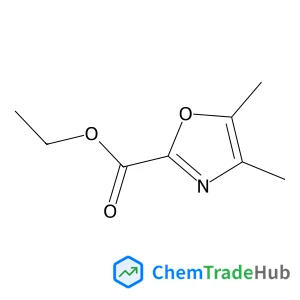
![2-Methyl-2-propanyl 4-oxo-3,9-diazabicyclo[4.2.1]nonane-9-carboxylate structure](https://static.chemtradehub.com/structs/131/1312456-05-5-9a15.webp "2-Methyl-2-propanyl 4-oxo-3,9-diazabicyclo[4.2.1]nonane-9-carboxylate structure")
2-Methyl-2-propanyl 4-oxo-3,9-diazabicyclo[4.2.1]nonane-9-carboxylate
CAS Number:
1312456-05-5
Molecular Formula:
C12H20N2O3
Recommended Suppliers







Disclaimer
This page provides academic journal information for reference and research purposes only. We are not affiliated with any journal publishers and do not handle publication submissions. For publication-related inquiries, please contact the respective journal publishers directly.
If you notice any inaccuracies in the information displayed, please contact us at support@chemtradehub.com. We will promptly review and address your concerns.