



Highly alkynyl-functionalization of cellulose nanocrystals and advanced nanocomposites thereof via click chemistry
Literature Information
Publication Date
2015-05-05
DOI
10.1039/C5PY00367A
Impact Factor
5.582
Authors
Jun Chen, Jin Huang
View Original
Abstract
A series of reactive GAP (glycidyl azide polymer)/PTPB (propargyl-terminated polybutadiene) nanocomposites reinforced by alkynylated cellulose nanocrystals (ACNC) were synthesized by Huisgen click chemistry. High-efficiency substitution (more than 80%) of the hydroxyl groups by alkynyl groups on the surface of CNC was realized through the esterification reaction between the alkynylated anhydride compound and the cellulose nanocrystals. The covalent bonding from the alkynyl groups of ACNC and the azide groups of GAP was proved by Fourier transform infrared spectroscopy, which indicated the possible participation of the click reactions among the ACNC, GAP, and PTPB components in the composites. The nanoreinforcing effect of the rigid ACNC on the GAP/PTPB matrix and the strong interfacial interaction through the covalent grafting between nanoparticles and the matrix significantly improved the mechanical properties of the prepared nanocomposites. In comparison with the neat GAP/PTPB (GP2) material, the tensile strength, Young's modulus, and the elongation at break of the GP2/ACNC-1.0 nanocomposite (containing only 1.0 wt% ACNC) were increased by 103.3%, 100.0% and 12.4%, respectively. This study is a promising attempt to develop advanced polymeric composites reinforced with biomass-based nanoparticles with the simultaneous improvement of strength, modulus and toughness.
Recommended Journals

Contact Lens & Anterior Eye

Physical Chemistry Chemical Physics

Green Chemistry

CrystEngComm

Environmental Toxicology and Pharmacology

Photochemical & Photobiological Sciences

Nature Reviews Drug Discovery

Mini-Reviews in Medicinal Chemistry

Journal of Enzyme inhibition and Medicinal Chemistry

European Journal of Organic Chemistry
Related Literature
Ion-neutral collisional cross sections of carbohydrate isomers as divalent cation adducts and their electron transfer products
Yuting Huang, Eric D. Dodds
2015-07-22
Paper
DOI: 10.1039/C5AN01093D
A polyvinyl alcohol-coated silica gel stationary phase for hydrophilic interaction chromatography
Shunli Ji, Yang Zheng, Feifang Zhang, Xinmiao Liang, Bingcheng Yang
2015-08-06
Communication
DOI: 10.1039/C5AN01159K
3,5-Diformyl-borondipyrromethene for selective detection of cyanide anion
Sheri Madhu, Santanu Kumar Basu, Sameer Jadhav, Mangalampalli Ravikanth
2012-10-25
Paper
DOI: 10.1039/C2AN36407G
An instrument-free, screen-printed paper microfluidic device that enables bio and chemical sensing
Saeed Mohammadi, Masatoshi Maeki, Reza M. Mohamadi, Akihiko Ishida, Hirofumi Tani
2015-07-14
Paper
DOI: 10.1039/C5AN00909J
Chemical contrast observed in thermal images of blood-stained fabrics exposed to steam
Wayne L. O'Brien, Nicholas D. Boltin, Zhenyu Lu, Brianna M. Cassidy, Raymond G. Belliveau, Emory J. Straub, Stephanie A. DeJong, Stephen L. Morgan, M. L. Myrick
2015-07-24
Communication
DOI: 10.1039/C5AN01413A
Electrochemiluminescent lead biosensor based on GR-5 lead-dependent DNAzyme for Ru(phen)32+ intercalation and lead recognition
Ai Gao, Chun-Xia Tang, Xi-Wen He, Xue-Bo Yin
2012-10-23
Paper
DOI: 10.1039/C2AN36398D
Sample collection and amino acids analysis of extracellular fluid of mouse brain slices with low flow push–pull perfusion
G. Ojeda-Torres, L. Williams
2015-08-18
Paper
DOI: 10.1039/C5AN00805K
Simultaneous quantification of Escherichia coli O157:H7 and Shigella boydii using a visual-antibody-macroarray
Man Wu, Haolin Li, Yinghui Jiang, Chunmei Song, Huiqin Guo, Shuyan Wu, Cheng Liu, Jianwu Li, Haijuan Zeng, Xuzhao Zhai, Weisheng Zhang, Enguo Fan, Qing Liu
2015-08-06
Paper
DOI: 10.1039/C5AN01035G
High resolution ion mobility-mass spectrometry for separation and identification of isomeric lipids
M. Groessl, S. Graf, R. Knochenmuss
2015-08-20
Paper
DOI: 10.1039/C5AN00838G
Effects of charge states, charge sites and side chain interactions on conformational preferences of a series of model peptide ions
Chunying Xiao, Lisa M. Pérez, David H. Russell
2015-06-10
Paper
DOI: 10.1039/C5AN00826C
You might also like
Compound Q&A
What are the main uses of 4-Nitrophenyl phosphate disodium salt hexahydrate (CAS: 333338-18-4)?
4-Nitrophenyl phosphate disodium salt hexahydrate is primarily used as a substra...
333338-18-44-Nitrophenyl phosph...
Compound Q&A
What are the main uses of 2-(Trifluoromethyl)-1,3-oxazole-4-carboxylic Acid (CAS: 1060816-01-4)?
2-(Trifluoromethyl)-1,3-oxazole-4-carboxylic Acid (CAS: 1060816-01-4) is widely ...
1060816-01-42-(Trifluoromethyl)-...
Compound Q&A
How should 2-Fluoro-4-biphenylcarboxylic acid (CAS: 137045-30-8) be stored?
2-Fluoro-4-biphenylcarboxylic acid should be stored in a cool, dry place at room...
137045-30-82-Fluoro-4-biphenylc...
Compound Q&A
What industries use Prednisolone-21-Carboxylic Acid (CAS: 61549-70-0)?
Prednisolone-21-Carboxylic Acid is primarily used in the pharmaceutical industry...
61549-70-0Prednisolone-21-Carb...
Compound Q&A
How should 4-(Hydrazinomethyl)-1,2,3-benzenetriol (CAS: 3614-72-0) be stored?
4-(Hydrazinomethyl)-1,2,3-benzenetriol (CAS: 3614-72-0) should be stored in a co...
3614-72-04-(Hydrazinomethyl)-...
Compound Q&A
What industries use 4-Amino-1-methyl-1H-pyrazole-5-carboxylic acid hydrochloride (CAS: 92534-70-8)?
4-Amino-1-methyl-1H-pyrazole-5-carboxylic acid hydrochloride (CAS: 92534-70-8) i...
92534-70-84-Amino-1-methyl-1H-...
Compound Q&A
What regulatory guidelines apply to dehydropachymic acid (CAS: 77012-31-8)?
Dehydropachymic acid (CAS: 77012-31-8) is regulated by various agencies. It fall...
77012-31-8Dehydropachymic acid
Compound Q&A
What is the market or research trend for 6-[(2,2-Dimethylpropanoyl)amino]nicotinic acid (CAS: 898561-66-5)?
The market and research trends for 6-[(2,2-Dimethylpropanoyl)amino]nicotinic aci...
898561-66-56-[(2,2-Dimethylprop...
Compound Q&A
How should 1,10-Phenanthroline-2,9-dicarbaldehyde (CAS: 57709-62-3) be stored?
1,10-Phenanthroline-2,9-dicarbaldehyde should be stored in a cool, dry place awa...
57709-62-31,10-Phenanthroline-...
Compound Q&A
How is 5-Carbamoyl-11-oxo-10,11-dihydro-5H-dibenzo[b,f]azepin-10-yl acetate (CAS: 113952-21-9) typically synthesized?
5-Carbamoyl-11-oxo-10,11-dihydro-5H-dibenzo[b,f]azepin-10-yl acetate can be synt...
113952-21-95-Carbamoyl-11-oxo-1...
Source Journal
Polymer Chemistry

CiteScore:
8.6
Self-citation Rate:
7.3%
Articles per Year:
457
Polymer Chemistry welcomes submissions in all areas of polymer science that have a strong focus on macromolecular chemistry. Manuscripts may cover a broad range of fields, yet no direct application focus is required.
Recommended Compounds

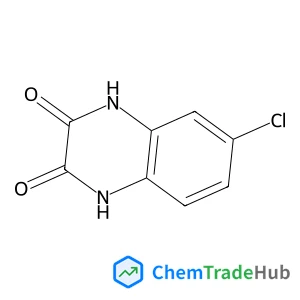
6-CHLORO-2,3-DIOXO-1,2,3,4-TETRAHYDROQUINOXALINE, 97
CAS Number:
169-14-2
Molecular Formula:
C8H5ClN2O2

cis-3-Amino-1-(trifluoromethyl)cyclobutanol hydrochloride (1:1)
CAS Number:
1408075-16-0
Molecular Formula:
C5H9ClF3NO
Recommended Suppliers




Disclaimer
This page provides academic journal information for reference and research purposes only. We are not affiliated with any journal publishers and do not handle publication submissions. For publication-related inquiries, please contact the respective journal publishers directly.
If you notice any inaccuracies in the information displayed, please contact us at support@chemtradehub.com. We will promptly review and address your concerns.