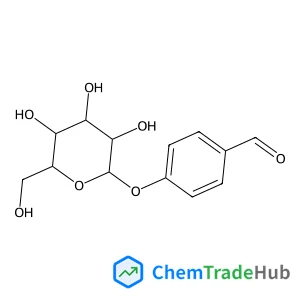
![1-(Hexopyranosyloxy)-4a,5-dihydroxy-7-methyl-1,4a,5,6,7,7a-hexahydrocyclopenta[c]pyran-7-yl 3-phenylacrylate structure](https://static.chemtradehub.com/structs/192/19210-12-9-ecae.webp "1-(Hexopyranosyloxy)-4a,5-dihydroxy-7-methyl-1,4a,5,6,7,7a-hexahydrocyclopenta[c]pyran-7-yl 3-phenylacrylate structure")
1-(Hexopyranosyloxy)-4a,5-dihydroxy-7-methyl-1,4a,5,6,7,7a-hexahydrocyclopenta[c]pyran-7-yl 3-phenylacrylate
CAS Number:
19210-12-9
Molecular Formula:
C24H30O11
Mingzheng Ge, Chunyan Cao, Shuhui Li, Songnan Zhang, Shu Deng, Jianying Huang, Qingsong Li, Salem S. Al-Deyab
An ultrasonication-assisted successive ionic layer adsorption and reaction (SILAR) strategy was developed for uniform deposition of high density p-type Bi2O3 quantum dots on n-type TiO2 nanotube arrays (Bi2O3@TiO2 NTAs), which were constructed by electrochemical anodization in ethylene glycol containing the electrolyte. Compared with pristine TiO2 NTAs, the Bi2O3 quantum dots sensitized TiO2 NTAs exhibited highly efficient photocatalytic degradation of methyl orange (MO). The kinetic constant of Bi2O3@TiO2 NTAs prepared by an ultrasonication-assisted SILAR process of 4 cycles was 1.95 times higher than that of the pristine TiO2 NTA counterpart. The highly efficient photocatalytic activity is attributed to the synergistic effect between the formation of a uniform p–n heterojunction with high-density for enhancing light absorption and facilitating photogenerated electron–hole separation/transfer. The results suggest that Bi2O3@TiO2 p–n heterojunction nanotube arrays are very promising for enhancing the photocatalytic activity and open up a promising strategy for designing and constructing high efficiency heterogeneous semiconductor photocatalysts.
Santiago Carballares, Donald Craig, Christopher J. T. Hyland, Pengfei Lu, Tanya Mathie, Andrew J. P. White
DOI: 10.1039/B815971H
Vincent Steinmetz, François Couty, Olivier R. P. David
DOI: 10.1039/B816628E
Yi Fu, Jian Zhang, Joseph R. Lakowicz
DOI: 10.1039/B816736B
Yuuki Fujii, Jun Terao, Yuichiro Kato, Nobuaki Kambe
DOI: 10.1039/B813596G
Nazrul Islam, Takashi Ooi, Tetsuo Iwasawa, Masaki Nishiuchi, Yasuhiko Kawamura
DOI: 10.1039/B815620D
Jiaxiang Zhou, Wenxin Wang, Silvia Villarroya, Kristofer J. Thurecht, Steven M. Howdle
DOI: 10.1039/B810297J
Lenuta Sbircea, Narain D. Sharma, William Clegg, Ross W. Harrington, Peter N. Horton, Michael B. Hursthouse, David C. Apperley, Derek R. Boyd, Stuart L. James
DOI: 10.1039/B812366G
Hisahiro Sasabe, Takayuki Chiba, Shi-Jian Su, Yong-Jin Pu, Ken-ichi Nakayama, Junji Kido
DOI: 10.1039/B812270A
Akihiro Ito, Yuko Yamagishi, Koji Fukui, Syuuzi Inoue, Yasukazu Hirao, Ko Furukawa, Tatsuhisa Kato
DOI: 10.1039/B816311A
Bhartesh Dhudshia, Benjamin F. T. Cooper, Charles L. B. Macdonald, Avinash N. Thadani
DOI: 10.1039/B816576A
Ethyl 3-cyclohexylpropanoate is a clear, colorless to light yellow liquid with a...
Waste containing 2-(Hydroxymethyl)-5-(methoxycarbonyl)-6-methyl-4-(2-nitrophenyl...
Waste containing 2,4,6-Tris(pentafluoroethyl)-1,3,5-triazine (CAS: 858-46-8) sho...
When handling Chloroac-nle-oh (CAS: 56787-36-1), it is essential to wear appropr...
Ethyl 6-phenylimidazo[2,1-b][1,3]thiazole-3-carboxylate is primarily used in the...
Alternatives to alpha-(2-Bromophenyl)benzylamine (CAS: 55095-15-3) in synthesis ...
Waste containing 2-Chloro-5-methoxypyridine (CAS: 139585-48-1) should be managed...
1-(4-Methoxyphenyl)-2,5-dimethyl-1H-pyrrole (CAS: 5044-27-9) is used in various ...
There are alternative reagents and compounds that can be used in the synthesis o...
Tungsten(IV) oxide, also known as tungsten dioxide, is a chemical compound with ...
Nanoscale is a high-impact international journal, publishing high-quality research across nanoscience and nanotechnology. Nanoscale publishes a full mix of research articles on experimental and theoretical work, including reviews, communications, and full papers. Highly interdisciplinary, Nanoscale appeals to scientists, researchers and professionals interested in nanoscience and nanotechnology, quantum materials and quantum technology, including the areas of physics, chemistry, biology, medicine, materials, energy/environment, information technology, detection science, healthcare and drug discovery, and electronics. For publication in Nanoscale, papers must report high-quality reproducible new work that will be of significant general interest to the journal's wide international readership. Nanoscale is a collaborative venture between the Royal Society of Chemistry Publishing and a leading nanoscience research centre, the National Center for Nanoscience and Technology (NCNST) in Beijing, China. image block The journal publishes weekly issues, complementing and building on the nano content already published across the Royal Society of Chemistry Publishing journal portfolio. Since its launch in late 2009, Nanoscale has established itself as a platform for high-quality, cross-community research that bridges the various disciplines involved with nanoscience and nanotechnology, publishing important research from leading international research groups.
![3-[(4-Nitrobenzyl)oxy]-3-oxopropanoic Acid structure](https://static.chemtradehub.com/structs/773/77359-11-6-0d04.webp "3-[(4-Nitrobenzyl)oxy]-3-oxopropanoic Acid structure")