













Two reaction regimes in the oxidation of larger cationic tantalum clusters (Tan+, n = 13–40) under multi-collision conditions
Literature Information
Publication Date
2016-02-16
DOI
10.1039/C5CP07245J
Impact Factor
3.676
Authors
D. Neuwirth, J. F. Eckhard, B. R. Visser, M. Tschurl, U. Heiz
View Original
Abstract
The reaction of cationic tantalum clusters (Tan+, n = 13–40) with molecular oxygen is studied under multi-collision conditions and at different temperatures. Consecutive reaction proceeds in several steps upon subsequent attachment of O2. All cluster sizes exhibit fast reaction with oxygen and form a characteristic final reaction product. The time-dependent product analysis enables the fitting to a kinetic model with the extraction of all the rate constants. Determined rate constants reveal the existence of two different regimes, which are interpreted as a change in the reaction mechanism. Based on the temperature-dependent reaction behavior, it is proposed that the reaction changes from a dissociative to a molecular adsorption of oxygen on the clusters. It is found that both regimes appear for all cluster sizes, but the transition takes place at different intermediate oxides TanOx+. In general it is observed that transition occurs later for larger clusters, which is attributed to an increased cluster surface.
Related Literature
Low recombination rates and improving charge transfer as decisive conditions for high current densities and fill factors in ZnS complex systems
Cristian Dias Fernandes, Mateus Meneghetti Ferrer, Cristiane Wienke Raubach, Eduardo Ceretta Moreira, Pedro Lovato Gomes Jardim, Ramon Dadalto Carvalho, Elson Longo
2022-05-24
Paper
DOI: 10.1039/D2CP00328G
Antioxidant and copper-chelating power of new molecules suggested as multiple target agents against Alzheimer's disease. A theoretical comparative study
Maciej Spiegel, Tiziana Marino, Mario Prejanò, Nino Russo
2022-06-13
Paper
DOI: 10.1039/D2CP01918C
Predicting spinel solid solutions using a random atom substitution method
Robert C. Dickson, Troy D. Manning, Edwin S. Raj, Jonathan C. S. Booth, Matthew J. Rosseinsky, Matthew S. Dyer
2022-06-14
Paper
DOI: 10.1039/D2CP02180C
Nature of excited-state dependent hydrogen bonds and their critical role in determining the photophysical properties of aromatic thioketones
Wei-Hai Fang
2022-06-24
Paper
DOI: 10.1039/D2CP02016E
Auger electron spectroscopy of fulminic acid, HCNO: an experimental and theoretical study
Marius Gerlach, Tobias Preitschopf, Emil Karaev, Heidy M. Quitián-Lara, Dennis Mayer, John Bozek, Ingo Fischer, Reinhold F. Fink
2022-06-08
Paper
DOI: 10.1039/D2CP02104H
Current understanding and insights towards protein stabilization and activation in deep eutectic solvents as sustainable solvent media
Niketa Yadav, Pannuru Venkatesu
2022-04-14
Perspective
DOI: 10.1039/D2CP00084A
Adiabatic models for the quantum dynamics of surface scattering with lattice effects
Qingyong Meng, Jianxing Ma, Xingyu Zhang
2022-06-06
Perspective
DOI: 10.1039/D2CP01560A
Nanostructure engineering of two-dimensional diamonds toward high thermal conductivity and approaching zero Poisson's ratio
Yanxiao Hu, Ding Li, Chunbao Feng, Shichang Li, Bole Chen, Dengfeng Li, Gang Zhang
2022-05-31
Paper
DOI: 10.1039/D2CP01745H
Quantum spin Hall effect in tilted penta silicene and its isoelectronic substitutions
Lijin Zhan, Yimei Fang, Ruotong Zhang, Xiancong Lu, Tie-yu Lü, Shunqing Wu
2022-05-04
Paper
DOI: 10.1039/D2CP01390H
pH dependent reactivity of boehmite surfaces from first principles molecular dynamics
William Smith, Maxime Pouvreau, Kevin Rosso
2022-04-21
Paper
DOI: 10.1039/D2CP00534D
You might also like
Compound Q&A
What precautions should be taken when handling 2-Methyl-2-propanyl 5-amino-2-thiophenecarboxylate (CAS: 1498311-57-1)?
When handling 2-Methyl-2-propanyl 5-amino-2-thiophenecarboxylate (CAS: 1498311-5...
1498311-57-12-Methyl-2-propanyl ...
Compound Q&A
What are the physical and chemical properties of 5-Bromo-1,2-dichloro-3-fluorobenzene (CAS: 1000572-93-9)?
5-Bromo-1,2-dichloro-3-fluorobenzene (CAS: 1000572-93-9) is a crystalline solid ...
1000572-93-95-Bromo-1,2-dichloro...
Compound Q&A
How should (2R)-2-Amino-2-(4-bromophenyl)ethanol (CAS: 354153-64-3) be stored?
(2R)-2-Amino-2-(4-bromophenyl)ethanol (CAS: 354153-64-3) should be stored in a c...
354153-64-3(2R)-2-Amino-2-(4-br...
Compound Q&A
What regulatory guidelines apply to Methyl 4-(aminomethyl)tetrahydro-2H-pyran-4-carboxylate hydrochloride (CAS: 362707-24-2)?
Methyl 4-(aminomethyl)tetrahydro-2H-pyran-4-carboxylate hydrochloride (CAS: 3627...
362707-24-2Methyl 4-(aminomethy...
Compound Q&A
What are the main uses of 1,4-dimethyl-1H-pyrazole-5-sulfonyl chloride (CAS: 1174834-52-6)?
1,4-Dimethyl-1H-pyrazole-5-sulfonyl chloride is primarily used as an intermediat...
1174834-52-61,4-dimethyl-1H-pyra...
Compound Q&A
Is Dinaphtho[1,2-b:2',1'-d]furan (CAS: 239-69-0) safe?
Dinaphtho[1,2-b:2',1'-d]furan is generally safe when handled with appropriate pe...
239-69-0Dinaphtho[1,2-b:2',1...
Compound Q&A
What is the market or research trend for 7-Methyl-7,9-dihydro-1H-purine-2,6,8(3H)-trione (CAS: 612-37-3)?
The market for 7-Methyl-7,9-dihydro-1H-purine-2,6,8(3H)-trione (CAS: 612-37-3) i...
612-37-37-Methyl-7,9-dihydro...
Compound Q&A
What are the physical and chemical properties of 2-(4-Chlorophenyl)malonaldehyde (CAS: 205676-17-1)?
2-(4-Chlorophenyl)malonaldehyde (CAS: 205676-17-1) is a colorless or light yello...
205676-17-12-(4-Chlorophenyl)ma...
Compound Q&A
How is 2-Methylchrysene (CAS: 3351-32-4) typically synthesized?
2-Methylchrysene (CAS: 3351-32-4) is typically synthesized via the reaction of c...
3351-32-42-Methylchrysene
Compound Q&A
Is N-(6-aminopyrimidin-4-yl)acetamide (CAS: 89533-23-3) safe?
N-(6-aminopyrimidin-4-yl)acetamide (CAS: 89533-23-3) is generally considered saf...
89533-23-3N-(6-aminopyrimidin-...
Source Journal
Physical Chemistry Chemical Physics

CiteScore:
5.5
Self-citation Rate:
10.3%
Articles per Year:
3036
Physical Chemistry Chemical Physics (PCCP) is an international journal co-owned by 19 physical chemistry and physics societies from around the world. This journal publishes original, cutting-edge research in physical chemistry, chemical physics and biophysical chemistry. To be suitable for publication in PCCP, articles must include significant innovation and/or insight into physical chemistry; this is the most important criterion that reviewers and Editors will judge against when evaluating submissions. The journal has a broad scope and welcomes contributions spanning experiment, theory, computation and data science. Topical coverage includes spectroscopy, dynamics, kinetics, statistical mechanics, thermodynamics, electrochemistry, catalysis, surface science, quantum mechanics, quantum computing and machine learning. Interdisciplinary research areas such as polymers and soft matter, materials, nanoscience, energy, surfaces/interfaces, and biophysical chemistry are welcomed if they demonstrate significant innovation and/or insight into physical chemistry. Joined experimental/theoretical studies are particularly appreciated when complementary and based on up-to-date approaches.
Recommended Compounds
![2-[2-(2-Methoxyethoxy)ethoxy]-2-methylpropane structure](https://static.chemtradehub.com/structs/527/52788-79-1-71c1.webp "2-[2-(2-Methoxyethoxy)ethoxy]-2-methylpropane structure")
methyl]-N,2-dimethyl-2-propanesulfinamide structure](https://static.chemtradehub.com/structs/256/2565792-50-7-8a26.webp "N-[(R)-[3-(Benzyloxy)-2-(dicyclohexylphosphino)phenyl](phenyl)methyl]-N,2-dimethyl-2-propanesulfinamide structure")
N-[(R)-[3-(Benzyloxy)-2-(dicyclohexylphosphino)phenyl](phenyl)methyl]-N,2-dimethyl-2-propanesulfinamide
CAS Number:
2565792-50-7
Molecular Formula:
C37H50NO2PS
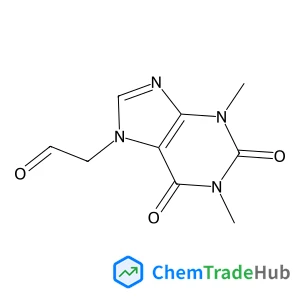
(1,3-Dimethyl-2,6-dioxo-1,2,3,6-tetrahydro-7H-purin-7-yl)acetaldehyde
CAS Number:
5614-53-9
Molecular Formula:
C9H10N4O3
Recommended Suppliers



Disclaimer
This page provides academic journal information for reference and research purposes only. We are not affiliated with any journal publishers and do not handle publication submissions. For publication-related inquiries, please contact the respective journal publishers directly.
If you notice any inaccuracies in the information displayed, please contact us at support@chemtradehub.com. We will promptly review and address your concerns.