












Hydrogen bond mediated stabilization of the salt bridge structure for the glycine dimer anion
Literature Information
Publication Date
2015-10-27
DOI
10.1039/C5CP06120B
Impact Factor
3.676
Authors
S. Heiles, Richard J. Cooper, Giel Berden, Evan R. Williams
View Original
Abstract
The formation of a salt bridge in deprotonated glycine dimer anions in a solvent-free environment is investigated using both infrared multiple photon dissociation spectroscopy between 600 and 1800 cm−1 and theory. The zwitterionic and nonzwitterionic forms of glycine in this complex are computed to be nearly iso-energetic, yet predominantly the zwitterionic form is observed experimentally. The zwitterion stability is attributed to both the Coulombic attraction and the high stabilization from intramolecular hydrogen bonding that drives the energetic cost of proton transfer in a solvent free environment. These results show that there is a fine balance between the stabilities of these two forms of the anion. Elucidating the role of intrinsic factors, such as hydrogen bonding, can lead to a better understanding of the stabilities of salt bridges in the interiors of large proteins or at protein interfaces.
Related Literature
Stereoselective RNA reaction with chiral 2′-OH acylating agents
Ryuta Shioi, Lu Xiao, Sayantan Chatterjee
2023-11-07
Edge Article
DOI: 10.1039/D3SC03067A
Rare earth oxide based electrocatalysts: synthesis, properties and applications
Yong Jiang, Zhong Liang, Qian Zhang, Yaping Du
2023-12-18
Review Article
DOI: 10.1039/D3CS00708A
Correction: A tutorial on asymmetric electrocatalysis
Jonas Rein, Samson B. Zacate, Kaining Mao, Song Lin
2023-12-05
Correction
DOI: 10.1039/D3CS90096G
3D-hosted lithium metal anodes
Xin He, Kai Zhang, Zhiqiang Zhu, Zhangfa Tong
2023-11-20
Tutorial Review
DOI: 10.1039/D3CS00495C
The synthesis and application of crystalline–amorphous hybrid materials
Hao Lan, Jiawei Wang, Liwei Cheng, Dandan Yu, Hua Wang, Lin Guo
2023-12-20
Review Article
DOI: 10.1039/D3CS00860F
Designing drugs and chemical probes with the dualsteric approach
Jixiao He, Chengwei Wu, Mingyang Zhang
2023-11-22
Review Article
DOI: 10.1039/D3CS00650F
Recent progress in SERS monitoring of photocatalytic reactions
Xinlu Zheng, Ziwei Ye, Zeeshan Akmal, Chun He, Jinlong Zhang, Lingzhi Wang
2024-01-02
Review Article
DOI: 10.1039/D3CS00462G
Nickel-catalysed asymmetric hydromonofluoromethylation of 1,3-enynes for enantioselective construction of monofluoromethyl-tethered chiral allenes
Ying Zhang, Jimin Yang, Yu-Long Ruan, Ling Liao, Chuang Ma
2023-10-23
Edge Article
DOI: 10.1039/D3SC04474B
Reticular framework materials for photocatalytic organic reactions
Ning-Yu Huang, Yu-Tao Zheng, Di Chen, Zhen-Yu Chen, Chao-Zhu Huang, Qiang Xu
2023-10-25
Review Article
DOI: 10.1039/D2CS00289B
You might also like
Compound Q&A
How should waste containing 6-Chloro-5-(2'-hydroxy-3'-methoxy-4-biphenylyl)-3-(3-methoxyphenyl)-1H-pyrrolo[3,2-d]pyrimidine-2,4(3H,5H)-dione (CAS: 1346607-05-3) be handled?
Waste containing 6-Chloro-5-(2'-hydroxy-3'-methoxy-4-biphenylyl)-3-(3-methoxyphe...
1346607-05-36-Chloro-5-(2'-hydro...
Compound Q&A
What are the main uses of (3alpha,5alpha)-3-Hydroxypregnane-11,20-dione (CAS: 23930-19-0)?
(3alpha,5alpha)-3-Hydroxypregnane-11,20-dione is primarily used in the pharmaceu...
23930-19-0(3alpha,5alpha)-3-Hy...
Compound Q&A
What is the market or research trend for 4-Amino-6-chloro-2-pyridinecarboxylic acid (CAS: 546141-56-4)?
The market for 4-Amino-6-chloro-2-pyridinecarboxylic acid (CAS: 546141-56-4) is ...
546141-56-44-Amino-6-chloro-2-p...
Compound Q&A
Are there alternatives to (2-Benzoylethyl)trimethylammonium chloride (CAS: 24472-88-6) in synthesis?
Alternatives to (2-Benzoylethyl)trimethylammonium chloride (CAS: 24472-88-6) in ...
24472-88-6(2-Benzoylethyl)trim...
Compound Q&A
Is N-[4-Nitro-3-(trifluoromethyl)phenyl]acetamide (CAS: 393-12-4) safe?
N-[4-Nitro-3-(trifluoromethyl)phenyl]acetamide (CAS: 393-12-4) is generally safe...
393-12-4N-[4-Nitro-3-(triflu...
Compound Q&A
Are there alternatives to [(4R,5R,6S)-5-hydroxy-10-imino-3,7-dioxa-1,9-diazatricyclo[6.4.0.02,6]dodeca-8,11-dien-4-yl]methyl dihydrogen phosphate (CAS: 39679-56-6) in synthesis?
Alternative reagents such as other phosphates or similar functional groups can b...
39679-56-6[(4R,5R,6S)-5-hydrox...
Compound Q&A
Are there alternatives to N,N'-Bis(3-aminopropyl)-1,3-propanediamine (CAS: 4605-14-5) in synthesis?
There are alternatives to N,N'-Bis(3-aminopropyl)-1,3-propanediamine (CAS: 4605-...
4605-14-5N,N'-Bis(3-aminoprop...
Compound Q&A
What precautions should be taken when handling Aluminium trihexadecanoate (CAS: 555-35-1)?
When handling Aluminium trihexadecanoate, it is important to use appropriate per...
555-35-1Aluminium trihexadec...
Compound Q&A
What is (1,1-Dioxido-3-oxo-1,2-benzothiazol-2(3H)-yl)acetic acid (CAS: 52188-11-1)?
(1,1-Dioxido-3-oxo-1,2-benzothiazol-2(3H)-yl)acetic acid is a chemical compound ...
52188-11-1(1,1-Dioxido-3-oxo-1...
Compound Q&A
Are there alternatives to 5,5-dimethyloxolan-2-one (CAS: 3123-97-5) in synthesis?
Several alternatives to 5,5-dimethyloxolan-2-one (CAS: 3123-97-5) can be used in...
3123-97-55,5-dimethyloxolan-2...
Source Journal
Physical Chemistry Chemical Physics

CiteScore:
5.5
Self-citation Rate:
10.3%
Articles per Year:
3036
Physical Chemistry Chemical Physics (PCCP) is an international journal co-owned by 19 physical chemistry and physics societies from around the world. This journal publishes original, cutting-edge research in physical chemistry, chemical physics and biophysical chemistry. To be suitable for publication in PCCP, articles must include significant innovation and/or insight into physical chemistry; this is the most important criterion that reviewers and Editors will judge against when evaluating submissions. The journal has a broad scope and welcomes contributions spanning experiment, theory, computation and data science. Topical coverage includes spectroscopy, dynamics, kinetics, statistical mechanics, thermodynamics, electrochemistry, catalysis, surface science, quantum mechanics, quantum computing and machine learning. Interdisciplinary research areas such as polymers and soft matter, materials, nanoscience, energy, surfaces/interfaces, and biophysical chemistry are welcomed if they demonstrate significant innovation and/or insight into physical chemistry. Joined experimental/theoretical studies are particularly appreciated when complementary and based on up-to-date approaches.
Recommended Compounds
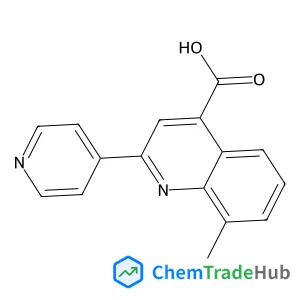
8-Methyl-2-pyridin-4-ylquinoline-4-carboxylic acid
CAS Number:
107027-42-9
Molecular Formula:
C16H12N2O2
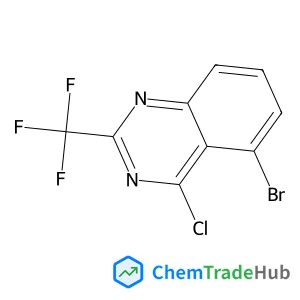
5-Bromo-4-chloro-2-(trifluoromethyl)quinazoline
CAS Number:
2089311-03-3
Molecular Formula:
C9H3BrClF3N2
Recommended Suppliers






Disclaimer
This page provides academic journal information for reference and research purposes only. We are not affiliated with any journal publishers and do not handle publication submissions. For publication-related inquiries, please contact the respective journal publishers directly.
If you notice any inaccuracies in the information displayed, please contact us at support@chemtradehub.com. We will promptly review and address your concerns.