












A theoretical study of O2 activation by the Au7-cluster on Mg(OH)2: roles of surface hydroxyls and hydroxyl defects
Literature Information
Publication Date
2015-10-26
DOI
10.1039/C5CP05591A
Impact Factor
3.676
Authors
Weiliu Fan
View Original
Abstract
Using density functional theory (DFT) calculations, we investigated O2 activation by the Au7-cluster supported on the perfect and hydroxyl defective Mg(OH)2(0001) surface. It is revealed that hydroxyl groups on the perfect Mg(OH)2(0001) surface can not only enhance the stability of the Au7-cluster, but also help the adsorption of the O2 molecule through hydrogen-bonding interactions with the 2nd-layered interfacial Au sites. Density of states (DOS) analysis shows that the d-band centers of the 2nd-layered interfacial Au atoms are very close to the Fermi level, which thereby reduce the Pauli repulsion and promote the O2 adsorption. These two responses make the 2nd-layered interfacial Au atoms favor O2 activation. Interestingly, the surface hydrogen atoms activated by the 1st-layered Au atoms can facilitate the O2 dissociation process as well. Such a process is dynamically favorable and more inclined to occur at low temperatures compared to the direct dissociation process. Meanwhile, the hydroxyl defects of Mg(OH)2(0001) located right under the Au7-cluster can also up-shift the d-band centers of the surrounding Au atoms toward the Fermi level, enhancing its catalytic activity for O2 dissociation. In contrast, the d-band center of Au atoms surrounding the hydroxyl defect near the Au7-cluster exhibits an effective down-shift to lower energies, and therefore holds low activity. These results unveiled the roles of surface hydroxyls and hydroxyl defects on the Au/Mg(OH)2 catalyst in O2 activation and could provide a theoretical guidance for chemists to efficiently synthesize Au/hydroxide catalysts.
Related Literature
Synthesis and hybridization of CuInS2 nanocrystals for emerging applications
Xiuwen Xu
2023-11-10
Review Article
DOI: 10.1039/D3CS00611E
Cyclic voltammetry and chronoamperometry: mechanistic tools for organic electrosynthesis
Mohammad Rafiee, Dylan J. Abrams, Luana Cardinale, Zachary Goss, Shannon S. Stahl
2023-12-05
Tutorial Review
DOI: 10.1039/D2CS00706A
Electron transport through supercrystals of atomically precise gold nanoclusters: a thermal bi-stability effect
Tatsuya Higaki, Jake C. Russell, Daniel W. Paley, Xavier Roy, Rongchao Jin
2023-11-09
Edge Article
DOI: 10.1039/D3SC02753H
Unveiling practical considerations for reliable and standardized SERS measurements: lessons from a comprehensive review of oblique angle deposition-fabricated silver nanorod array substrates
Yiping Zhao, Amit Kumar, Yanjun Yang
2023-12-20
Review Article
DOI: 10.1039/D3CS00540B
Nanotechnologies in ceramic electrochemical cells
Jiafeng Cao, Yuexia Ji, Zongping Shao
2023-12-15
Review Article
DOI: 10.1039/D3CS00303E
Metallosupramolecular polymers: current status and future prospects
Rahul Dev Mukhopadhyay
2023-11-14
Review Article
DOI: 10.1039/D3CS00692A
Photocatalysis with atomically thin sheets
Yingying Fan, Jinguang Hu, Hyeon Suk Shin, Damien Voiry, Qingye Lu, Jimmy C. Yu
2023-10-25
Tutorial Review
DOI: 10.1039/D2CS00205A
Nanoscale engineering of solid-state materials for boosting hydrogen storage
Yudong Xue
2023-12-19
Review Article
DOI: 10.1039/D3CS00706E
You might also like
Compound Q&A
How should waste containing 6-Chloro-5-(2'-hydroxy-3'-methoxy-4-biphenylyl)-3-(3-methoxyphenyl)-1H-pyrrolo[3,2-d]pyrimidine-2,4(3H,5H)-dione (CAS: 1346607-05-3) be handled?
Waste containing 6-Chloro-5-(2'-hydroxy-3'-methoxy-4-biphenylyl)-3-(3-methoxyphe...
1346607-05-36-Chloro-5-(2'-hydro...
Compound Q&A
What are the main uses of (3alpha,5alpha)-3-Hydroxypregnane-11,20-dione (CAS: 23930-19-0)?
(3alpha,5alpha)-3-Hydroxypregnane-11,20-dione is primarily used in the pharmaceu...
23930-19-0(3alpha,5alpha)-3-Hy...
Compound Q&A
What is the market or research trend for 4-Amino-6-chloro-2-pyridinecarboxylic acid (CAS: 546141-56-4)?
The market for 4-Amino-6-chloro-2-pyridinecarboxylic acid (CAS: 546141-56-4) is ...
546141-56-44-Amino-6-chloro-2-p...
Compound Q&A
Are there alternatives to (2-Benzoylethyl)trimethylammonium chloride (CAS: 24472-88-6) in synthesis?
Alternatives to (2-Benzoylethyl)trimethylammonium chloride (CAS: 24472-88-6) in ...
24472-88-6(2-Benzoylethyl)trim...
Compound Q&A
Is N-[4-Nitro-3-(trifluoromethyl)phenyl]acetamide (CAS: 393-12-4) safe?
N-[4-Nitro-3-(trifluoromethyl)phenyl]acetamide (CAS: 393-12-4) is generally safe...
393-12-4N-[4-Nitro-3-(triflu...
Compound Q&A
Are there alternatives to [(4R,5R,6S)-5-hydroxy-10-imino-3,7-dioxa-1,9-diazatricyclo[6.4.0.02,6]dodeca-8,11-dien-4-yl]methyl dihydrogen phosphate (CAS: 39679-56-6) in synthesis?
Alternative reagents such as other phosphates or similar functional groups can b...
39679-56-6[(4R,5R,6S)-5-hydrox...
Compound Q&A
Are there alternatives to N,N'-Bis(3-aminopropyl)-1,3-propanediamine (CAS: 4605-14-5) in synthesis?
There are alternatives to N,N'-Bis(3-aminopropyl)-1,3-propanediamine (CAS: 4605-...
4605-14-5N,N'-Bis(3-aminoprop...
Compound Q&A
What precautions should be taken when handling Aluminium trihexadecanoate (CAS: 555-35-1)?
When handling Aluminium trihexadecanoate, it is important to use appropriate per...
555-35-1Aluminium trihexadec...
Compound Q&A
What is (1,1-Dioxido-3-oxo-1,2-benzothiazol-2(3H)-yl)acetic acid (CAS: 52188-11-1)?
(1,1-Dioxido-3-oxo-1,2-benzothiazol-2(3H)-yl)acetic acid is a chemical compound ...
52188-11-1(1,1-Dioxido-3-oxo-1...
Compound Q&A
Are there alternatives to 5,5-dimethyloxolan-2-one (CAS: 3123-97-5) in synthesis?
Several alternatives to 5,5-dimethyloxolan-2-one (CAS: 3123-97-5) can be used in...
3123-97-55,5-dimethyloxolan-2...
Source Journal
Physical Chemistry Chemical Physics

CiteScore:
5.5
Self-citation Rate:
10.3%
Articles per Year:
3036
Physical Chemistry Chemical Physics (PCCP) is an international journal co-owned by 19 physical chemistry and physics societies from around the world. This journal publishes original, cutting-edge research in physical chemistry, chemical physics and biophysical chemistry. To be suitable for publication in PCCP, articles must include significant innovation and/or insight into physical chemistry; this is the most important criterion that reviewers and Editors will judge against when evaluating submissions. The journal has a broad scope and welcomes contributions spanning experiment, theory, computation and data science. Topical coverage includes spectroscopy, dynamics, kinetics, statistical mechanics, thermodynamics, electrochemistry, catalysis, surface science, quantum mechanics, quantum computing and machine learning. Interdisciplinary research areas such as polymers and soft matter, materials, nanoscience, energy, surfaces/interfaces, and biophysical chemistry are welcomed if they demonstrate significant innovation and/or insight into physical chemistry. Joined experimental/theoretical studies are particularly appreciated when complementary and based on up-to-date approaches.
Recommended Compounds

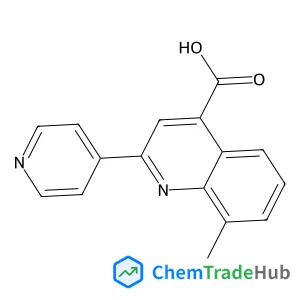
8-Methyl-2-pyridin-4-ylquinoline-4-carboxylic acid
CAS Number:
107027-42-9
Molecular Formula:
C16H12N2O2

Recommended Suppliers




Disclaimer
This page provides academic journal information for reference and research purposes only. We are not affiliated with any journal publishers and do not handle publication submissions. For publication-related inquiries, please contact the respective journal publishers directly.
If you notice any inaccuracies in the information displayed, please contact us at support@chemtradehub.com. We will promptly review and address your concerns.