












Computational modeling of self-trapped electrons in rutile TiO2
Literature Information
Publication Date
2015-10-05
DOI
10.1039/C5CP05271H
Impact Factor
3.676
Authors
Justin E. Elenewski, Wei Jiang, Hanning Chen
View Original
Abstract
In conjunction with the constrained density functional theory, a valence-bond representation has been employed to model the migration of anionic polaron in bulk rutile TiO2. It was found that the charge delocalization of a self-trapped electron proceeded predominately along the c crystal axis of rutile, thus exhibiting pronounced directional heterogeneity of polaron migration. As a result, the extrapolated polaron activation energies are 0.026 eV and 0.195 eV along the [001] and [111] lattice vectors, respectively. According to the Holstein theory, the difference on the activation energy makes the polaron drift over 100 times faster along the c crystal axis than on the ab crystal plane at room temperature. The notable anisotropy of the anionic polaron was also reflected through the electron paramagnetic resonance (EPR) g-matrix, whose principal component along [001] is substantially smaller than that along [110] or [10]. Finally, the extent of polaron charge was probed by our calculated isotropic hyperfine coupling constants on two groups of crystallographically inequivalent 17O atoms, which manifest distinct strengths of spin–orbit interaction with the unpaired electron.
Related Literature
Reticular framework materials for photocatalytic organic reactions
Ning-Yu Huang, Yu-Tao Zheng, Di Chen, Zhen-Yu Chen, Chao-Zhu Huang, Qiang Xu
2023-10-25
Review Article
DOI: 10.1039/D2CS00289B
Correction: Virus-mimicking nanosystems: from design to biomedical applications
Hao-Yang Liu, Xiao Li, Zhi-Gang Wang
2023-12-20
Correction
DOI: 10.1039/D3CS90101G
Reactivity of metal–oxo clusters towards biomolecules: from discrete polyoxometalates to metal–organic frameworks
David E. Salazar Marcano, Nada D. Savić, Kilian Declerck, Shorok A. M. Abdelhameed, Tatjana N. Parac-Vogt
2023-11-28
Review Article
DOI: 10.1039/D3CS00195D
An efficient and mild oxidative approach from thiols to sulfonyl derivatives with DMSO/HBr
Hongye Wang, Zhaoting Li, Rongheng Dai, Ning Jiao, Song Song
2023-11-01
Edge Article
DOI: 10.1039/D3SC04945K
Discovery of a selective TC-PTP degrader for cancer immunotherapy
Jinmin Miao, Jiajun Dong, Yiming Miao, Yunpeng Bai, Zihan Qu, Brenson A. Jassim, Bo Huang, Quyen Nguyen, Yuan Ma, Allison A. Murray, Jinyue Li
2023-10-24
Edge Article
DOI: 10.1039/D3SC04541B
Hybrid classical/machine-learning force fields for the accurate description of molecular condensed-phase systems
Moritz Thürlemann, Sereina Riniker
2023-10-31
Edge Article
DOI: 10.1039/D3SC04317G
Correction: Fast and scalable solvent-free access to Lappert's heavier tetrylenes E{N(SiMe3)2}2 (E = Ge, Sn, Pb) and ECl{N(SiMe3)2} (E = Ge, Sn)
Javier A. Cabeza, Javier F. Reynes, Pablo García-Álvarez, Rubén García-Soriano
2023-11-03
Correction
DOI: 10.1039/D3SC90211K
Mechanisms and models for water transport in reverse osmosis membranes: history, critical assessment, and recent developments
Hanqing Fan, Xinglin Lu, Menachem Elimelech
2023-10-27
Tutorial Review
DOI: 10.1039/D3CS00395G
Enantioselective and collective total synthesis of pentacyclic 19-nor-clerodanes
Zhi-Mao Zhang, Junliang Zhang, Quan Cai
2023-10-23
Edge Article
DOI: 10.1039/D3SC04335E
Unveiling practical considerations for reliable and standardized SERS measurements: lessons from a comprehensive review of oblique angle deposition-fabricated silver nanorod array substrates
Yiping Zhao, Amit Kumar, Yanjun Yang
2023-12-20
Review Article
DOI: 10.1039/D3CS00540B
You might also like
Compound Q&A
How should waste containing 6-Chloro-5-(2'-hydroxy-3'-methoxy-4-biphenylyl)-3-(3-methoxyphenyl)-1H-pyrrolo[3,2-d]pyrimidine-2,4(3H,5H)-dione (CAS: 1346607-05-3) be handled?
Waste containing 6-Chloro-5-(2'-hydroxy-3'-methoxy-4-biphenylyl)-3-(3-methoxyphe...
1346607-05-36-Chloro-5-(2'-hydro...
Compound Q&A
What are the main uses of (3alpha,5alpha)-3-Hydroxypregnane-11,20-dione (CAS: 23930-19-0)?
(3alpha,5alpha)-3-Hydroxypregnane-11,20-dione is primarily used in the pharmaceu...
23930-19-0(3alpha,5alpha)-3-Hy...
Compound Q&A
What is the market or research trend for 4-Amino-6-chloro-2-pyridinecarboxylic acid (CAS: 546141-56-4)?
The market for 4-Amino-6-chloro-2-pyridinecarboxylic acid (CAS: 546141-56-4) is ...
546141-56-44-Amino-6-chloro-2-p...
Compound Q&A
Are there alternatives to (2-Benzoylethyl)trimethylammonium chloride (CAS: 24472-88-6) in synthesis?
Alternatives to (2-Benzoylethyl)trimethylammonium chloride (CAS: 24472-88-6) in ...
24472-88-6(2-Benzoylethyl)trim...
Compound Q&A
Is N-[4-Nitro-3-(trifluoromethyl)phenyl]acetamide (CAS: 393-12-4) safe?
N-[4-Nitro-3-(trifluoromethyl)phenyl]acetamide (CAS: 393-12-4) is generally safe...
393-12-4N-[4-Nitro-3-(triflu...
Compound Q&A
Are there alternatives to [(4R,5R,6S)-5-hydroxy-10-imino-3,7-dioxa-1,9-diazatricyclo[6.4.0.02,6]dodeca-8,11-dien-4-yl]methyl dihydrogen phosphate (CAS: 39679-56-6) in synthesis?
Alternative reagents such as other phosphates or similar functional groups can b...
39679-56-6[(4R,5R,6S)-5-hydrox...
Compound Q&A
Are there alternatives to N,N'-Bis(3-aminopropyl)-1,3-propanediamine (CAS: 4605-14-5) in synthesis?
There are alternatives to N,N'-Bis(3-aminopropyl)-1,3-propanediamine (CAS: 4605-...
4605-14-5N,N'-Bis(3-aminoprop...
Compound Q&A
What precautions should be taken when handling Aluminium trihexadecanoate (CAS: 555-35-1)?
When handling Aluminium trihexadecanoate, it is important to use appropriate per...
555-35-1Aluminium trihexadec...
Compound Q&A
What is (1,1-Dioxido-3-oxo-1,2-benzothiazol-2(3H)-yl)acetic acid (CAS: 52188-11-1)?
(1,1-Dioxido-3-oxo-1,2-benzothiazol-2(3H)-yl)acetic acid is a chemical compound ...
52188-11-1(1,1-Dioxido-3-oxo-1...
Compound Q&A
Are there alternatives to 5,5-dimethyloxolan-2-one (CAS: 3123-97-5) in synthesis?
Several alternatives to 5,5-dimethyloxolan-2-one (CAS: 3123-97-5) can be used in...
3123-97-55,5-dimethyloxolan-2...
Source Journal
Physical Chemistry Chemical Physics

CiteScore:
5.5
Self-citation Rate:
10.3%
Articles per Year:
3036
Physical Chemistry Chemical Physics (PCCP) is an international journal co-owned by 19 physical chemistry and physics societies from around the world. This journal publishes original, cutting-edge research in physical chemistry, chemical physics and biophysical chemistry. To be suitable for publication in PCCP, articles must include significant innovation and/or insight into physical chemistry; this is the most important criterion that reviewers and Editors will judge against when evaluating submissions. The journal has a broad scope and welcomes contributions spanning experiment, theory, computation and data science. Topical coverage includes spectroscopy, dynamics, kinetics, statistical mechanics, thermodynamics, electrochemistry, catalysis, surface science, quantum mechanics, quantum computing and machine learning. Interdisciplinary research areas such as polymers and soft matter, materials, nanoscience, energy, surfaces/interfaces, and biophysical chemistry are welcomed if they demonstrate significant innovation and/or insight into physical chemistry. Joined experimental/theoretical studies are particularly appreciated when complementary and based on up-to-date approaches.
Recommended Compounds
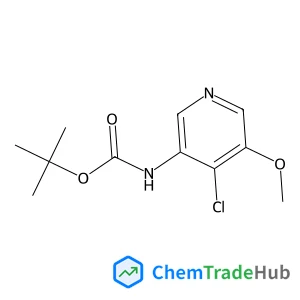
tert-Butyl 4-chloro-5-methoxypyridin-3-ylcarbamate
CAS Number:
1045858-17-0
Molecular Formula:
C11H15ClN2O3
Recommended Suppliers






Disclaimer
This page provides academic journal information for reference and research purposes only. We are not affiliated with any journal publishers and do not handle publication submissions. For publication-related inquiries, please contact the respective journal publishers directly.
If you notice any inaccuracies in the information displayed, please contact us at support@chemtradehub.com. We will promptly review and address your concerns.