












DFT+U studies of Cu doping and p-type compensation in crystalline and amorphous ZnS
Literature Information
Publication Date
2015-09-03
DOI
10.1039/C5CP04623H
Impact Factor
3.676
Authors
Hieu H. Pham, Gerard T. Barkema, Lin-Wang Wang
View Original
Abstract
Zinc sulfide is an excellent candidate for the development of a p-type transparent conducting material that has great demands in solar energy and optoelectronic applications. Doping with Cu is one potential way to make ZnS p-type while preserving its optical transparency for the solar spectrum; however, this is limited by the extremely low solubility of Cu in ZnS and charge compensation mechanisms that eliminate the p-type characteristics. These mechanisms are different in crystalline (c-ZnS) and amorphous structures (a-ZnS), leading to different tendencies of doping Cu in these two ZnS phases, as well as the feasibility to form the p-type material. In this work, we have carried out fundamental studies of Cu doping in both c-ZnS and a-ZnS, using the continuous random network model and density functional theory with Hubbard's energy correction (DFT+U). The formation of a complex that contains two CuZn and one S vacancy is highly favorable in both phases. The local environment of this charge-compensated Cu complex obtained by DFT calculations agrees well with the previous EXAFS measurements. The incorporation of Cu into a-ZnS, on the one hand, is more tolerable compared to its crystal counterparts (zincblende), indicating possible higher Cu concentration. On the other hand, there is also another intrinsic mechanism to compensate the p-type characteristics in a-ZnS: the formation of the covalent S–S “dumbbell” units. This reconstruction of the local structure to form a S–S bond could occur spontaneously, thus making the p-type doping for ZnS challenging even in the amorphous phase.
Recommended Journals
Related Literature
Topological bands in the PdSe2 pentagonal monolayer
Sergio Bravo, M. Pacheco, J. D. Correa, Leonor Chico
2022-05-25
Paper
DOI: 10.1039/D2CP01822E
Protonation and orientation: a computational approach to cocaine diffusion through a model membrane
Nora Kremer, Safa Ben Amara, Ali Zaidi, Thorsten Koslowski
2022-05-30
Paper
DOI: 10.1039/D2CP01140A
Torsional fracture of carbon nanotube bundles: a reactive molecular dynamics study
Marcelo Lopes Pereira Júnior, Tainá de Sousa Oliveira, Fábio Ferreira Monteiro, Wiliam Ferreira da Cunha, Pedro Henrique de Oliveira Neto, Luiz Antônio Ribeiro Júnior
2022-05-30
Paper
DOI: 10.1039/D2CP01589G
Three-centre two-electron bonds from the quantum interference perspective‡
David Wilian Oliveira de Sousa, Marco Antonio Chaer Nascimento
2022-06-06
Paper
DOI: 10.1039/D2CP00841F
Adsorption characteristics of peptides on ω-functionalized self-assembled monolayers: a molecular dynamics study
Hari O. S. Yadav, An-Tsung Kuo, Shingo Urata, Kosuke Funahashi, Yutaka Imamura
2022-05-27
Paper
DOI: 10.1039/D2CP01348G
Ab initio trajectory surface-hopping dynamics studies of excited-state proton-coupled electron transfer reactions in trianisoleheptazine–phenol complexes
Xiang Huang, Wolfgang Domcke
2022-06-16
Paper
DOI: 10.1039/D2CP01262F
Breakthrough pressure of oil displacement by water through the ultra-narrow kerogen pore throat from the Young–Laplace equation and molecular dynamic simulations
Yinuo Zhao, Wenhui Li, Zhehui Jin
2022-07-02
Paper
DOI: 10.1039/D2CP01643E
Electronic structures of hydroxylated low index surfaces of rutile and anatase-type titanium dioxide
Lu Wu, Jin Lin, Linyuan Ren, Qianni Li, Xin Chi, Ling Luo, Ming-Hua Zeng
2022-05-27
Paper
DOI: 10.1039/D1CP04729A
You might also like
Compound Q&A
What precautions should be taken when handling 2-Methyl-2-propanyl 5-amino-2-thiophenecarboxylate (CAS: 1498311-57-1)?
When handling 2-Methyl-2-propanyl 5-amino-2-thiophenecarboxylate (CAS: 1498311-5...
1498311-57-12-Methyl-2-propanyl ...
Compound Q&A
What are the physical and chemical properties of 5-Bromo-1,2-dichloro-3-fluorobenzene (CAS: 1000572-93-9)?
5-Bromo-1,2-dichloro-3-fluorobenzene (CAS: 1000572-93-9) is a crystalline solid ...
1000572-93-95-Bromo-1,2-dichloro...
Compound Q&A
How should (2R)-2-Amino-2-(4-bromophenyl)ethanol (CAS: 354153-64-3) be stored?
(2R)-2-Amino-2-(4-bromophenyl)ethanol (CAS: 354153-64-3) should be stored in a c...
354153-64-3(2R)-2-Amino-2-(4-br...
Compound Q&A
What regulatory guidelines apply to Methyl 4-(aminomethyl)tetrahydro-2H-pyran-4-carboxylate hydrochloride (CAS: 362707-24-2)?
Methyl 4-(aminomethyl)tetrahydro-2H-pyran-4-carboxylate hydrochloride (CAS: 3627...
362707-24-2Methyl 4-(aminomethy...
Compound Q&A
What are the main uses of 1,4-dimethyl-1H-pyrazole-5-sulfonyl chloride (CAS: 1174834-52-6)?
1,4-Dimethyl-1H-pyrazole-5-sulfonyl chloride is primarily used as an intermediat...
1174834-52-61,4-dimethyl-1H-pyra...
Compound Q&A
Is Dinaphtho[1,2-b:2',1'-d]furan (CAS: 239-69-0) safe?
Dinaphtho[1,2-b:2',1'-d]furan is generally safe when handled with appropriate pe...
239-69-0Dinaphtho[1,2-b:2',1...
Compound Q&A
What is the market or research trend for 7-Methyl-7,9-dihydro-1H-purine-2,6,8(3H)-trione (CAS: 612-37-3)?
The market for 7-Methyl-7,9-dihydro-1H-purine-2,6,8(3H)-trione (CAS: 612-37-3) i...
612-37-37-Methyl-7,9-dihydro...
Compound Q&A
What are the physical and chemical properties of 2-(4-Chlorophenyl)malonaldehyde (CAS: 205676-17-1)?
2-(4-Chlorophenyl)malonaldehyde (CAS: 205676-17-1) is a colorless or light yello...
205676-17-12-(4-Chlorophenyl)ma...
Compound Q&A
How is 2-Methylchrysene (CAS: 3351-32-4) typically synthesized?
2-Methylchrysene (CAS: 3351-32-4) is typically synthesized via the reaction of c...
3351-32-42-Methylchrysene
Compound Q&A
Is N-(6-aminopyrimidin-4-yl)acetamide (CAS: 89533-23-3) safe?
N-(6-aminopyrimidin-4-yl)acetamide (CAS: 89533-23-3) is generally considered saf...
89533-23-3N-(6-aminopyrimidin-...
Source Journal
Physical Chemistry Chemical Physics

CiteScore:
5.5
Self-citation Rate:
10.3%
Articles per Year:
3036
Physical Chemistry Chemical Physics (PCCP) is an international journal co-owned by 19 physical chemistry and physics societies from around the world. This journal publishes original, cutting-edge research in physical chemistry, chemical physics and biophysical chemistry. To be suitable for publication in PCCP, articles must include significant innovation and/or insight into physical chemistry; this is the most important criterion that reviewers and Editors will judge against when evaluating submissions. The journal has a broad scope and welcomes contributions spanning experiment, theory, computation and data science. Topical coverage includes spectroscopy, dynamics, kinetics, statistical mechanics, thermodynamics, electrochemistry, catalysis, surface science, quantum mechanics, quantum computing and machine learning. Interdisciplinary research areas such as polymers and soft matter, materials, nanoscience, energy, surfaces/interfaces, and biophysical chemistry are welcomed if they demonstrate significant innovation and/or insight into physical chemistry. Joined experimental/theoretical studies are particularly appreciated when complementary and based on up-to-date approaches.
Recommended Compounds
![4-Chloro-N-{[4-(dimethylamino)phenyl]carbamoyl}benzenesulfonamide structure](https://static.chemtradehub.com/structs/558/5581-42-0-7dcb.webp "4-Chloro-N-{[4-(dimethylamino)phenyl]carbamoyl}benzenesulfonamide structure")
4-Chloro-N-{[4-(dimethylamino)phenyl]carbamoyl}benzenesulfonamide
CAS Number:
5581-42-0
Molecular Formula:
C15H16ClN3O3S
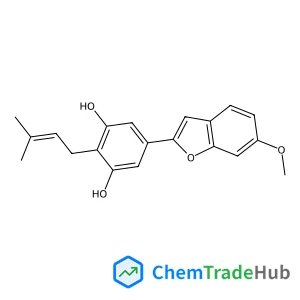
5-(6-Methoxy-1-benzofuran-2-yl)-2-(3-methyl-2-buten-1-yl)-1,3-benzenediol
CAS Number:
1017277-40-5
Molecular Formula:
C20H20O4
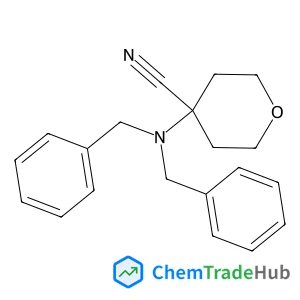
4-(Dibenzylamino)tetrahydro-2H-pyran-4-carbonitrile
CAS Number:
1630906-81-8
Molecular Formula:
C20H22N2O
![2-Bromo-7-chloro-4H-pyrrolo[2,3-b]pyrazine structure](https://static.chemtradehub.com/structs/115/1150617-58-5-0b0a.webp "2-Bromo-7-chloro-4H-pyrrolo[2,3-b]pyrazine structure")
Recommended Suppliers





Disclaimer
This page provides academic journal information for reference and research purposes only. We are not affiliated with any journal publishers and do not handle publication submissions. For publication-related inquiries, please contact the respective journal publishers directly.
If you notice any inaccuracies in the information displayed, please contact us at support@chemtradehub.com. We will promptly review and address your concerns.