












Thermal luminescence quenching of amine-functionalized silicon quantum dots: a pH and wavelength-dependent study
Literature Information
Publication Date
2015-08-20
DOI
10.1039/C5CP04483A
Impact Factor
3.676
Authors
Surajit Chatterjee, Tushar Kanti Mukherjee
View Original
Abstract
Understanding and resolving the mechanisms that affect the photoluminescence (PL) of Si QDs are of great importance because of their strong potential for optoelectronic and solar cell materials. In this article, the intrinsic exciton dynamics of water-dispersed allylamine-functionalized silicon quantum dots (Si QDs) have been explored as a function of temperature by means of steady-state and time-resolved PL spectroscopy. Significant PL quenching of Si QDs has been observed with increase in temperature from 278 K to 348 K. This thermal quenching is found to be a reversible process. The mechanism involves nonradiative reversible relaxation of conduction band electrons through the thermally-created temporary trap states. These temporary trap states arise due to the displacement of surface atoms from their regular positions at elevated temperature. Upon cooling, these surface irregularities relax back to their equilibrium positions with retrieval of the original PL intensity. It has been observed that the quenching mechanism is strongly influenced by the pH and excitation wavelength (λex). At pH 3.5, the quenching mechanism involves nonradiative relaxation of conduction band electrons through the thermally-created temporary trap states. However, at pH 7.4, the unprotonated surface amine groups introduce permanent nitrogen-related surface defects inside the bandgap of Si QDs. At elevated temperature, the conduction band electrons get trapped in these nitrogen-related surface defects through the involvement of thermally-created temporary trap states. Subsequent exciton recombination of these nitrogen-related defect states results in red-shifted green color luminescence. By using the Arrhenius equation we have estimated the activation energy of this nonradiative thermal relaxation process and it was found to be 138 and 139 meV at pH 3.5 and pH 7.4, respectively.
Related Literature
Drainage of the air–water–quartz film: experiments and theory
Rogerio Manica
2010-12-09
Paper
DOI: 10.1039/C0CP00677G
Single particle tracking in systems showing anomalous diffusion: the role of weak ergodicity breaking
Stas Burov, Jae-Hyung Jeon, Ralf Metzler, Eli Barkai
2011-01-04
Paper
DOI: 10.1039/C0CP01879A
Stability of intermediates in the glycerol hydrogenolysis on transition metal catalysts from first principles
Françoise Delbecq, Yosslen Aray, Philippe Sautet
2010-11-25
Paper
DOI: 10.1039/C0CP00858C
Structure and stability of one-dimensional o-phthalaldehyde lines on the Si(100)-2 × 1:H surface
Jin-Ho Choi, Jun-Hyung Cho
2010-11-16
Communication
DOI: 10.1039/C0CP01284J
Molecular dynamics calculation of activation volumes
Elna Deglint, Heather Martens, Essex Edwards, Nicholas Boon, Paul Dance
2010-11-12
Communication
DOI: 10.1039/C0CP01570A
Conformations and vibrational spectra of a model tripeptide: change of secondary structure upon micro-solvation
Hui Zhu, Martine Blom, Isabel Compagnon, Anouk M. Rijs, Santanu Roy, Gert von Helden, Burkhard Schmidt
2010-02-23
Paper
DOI: 10.1039/B926413B
The benzene+OH potential energy surface: intermediates and transition states
David S. Hollman, Andrew C. Simmonett, Henry F. Schaefer
2010-11-23
Paper
DOI: 10.1039/C0CP01607A
Temperature-resolved thermal analysis of cisplatin by means of Li+ ion attachment mass spectrometry
Seiji Takahashi, Yuki Kitahara, Megumi Nakamura, Yoshiro Shiokawa, Toshihiro Fujii
2010-02-24
Paper
DOI: 10.1039/B923454C
You might also like
Compound Q&A
What is 1-(2,4,6-Trifluorophenyl)ethanol (CAS: 1250113-83-7)?
1-(2,4,6-Trifluorophenyl)ethanol is an organic compound with the CAS number 1250...
1250113-83-71-(2,4,6-Trifluoroph...
Compound Q&A
Is 1-(2,4-Dimethoxybenzyl)-4-(hydroxymethyl)-2-pyrrolidinone (CAS: 919111-34-5) safe?
1-(2,4-Dimethoxybenzyl)-4-(hydroxymethyl)-2-pyrrolidinone (CAS: 919111-34-5) is ...
919111-34-51-(2,4-Dimethoxybenz...
Compound Q&A
What are the physical and chemical properties of (7S,15R)-6β,15-Diacetoxy-7α,20-epoxy-7-hydroxykaura-2,16-dien-1-one (CAS: 51419-51-3)?
(7S,15R)-6β,15-Diacetoxy-7α,20-epoxy-7-hydroxykaura-2,16-dien-1-one is a crystal...
51419-51-3(7S,15R)-6β,15-Diace...
Compound Q&A
What regulatory guidelines apply to rac-ethyl (1r,4r)-4-hydroxycyclohexane-1-carboxylate, trans (CAS: 3618-04-0)?
The compound rac-ethyl (1r,4r)-4-hydroxycyclohexane-1-carboxylate, trans (CAS: 3...
3618-04-0rac-ethyl (1r,4r)-4-...
Compound Q&A
What is the market or research trend for 2-(2,4-Difluorophenoxy)-3-nitropyridine (CAS: 175135-62-3)?
The market for 2-(2,4-Difluorophenoxy)-3-nitropyridine (CAS: 175135-62-3) is cur...
175135-62-32-(2,4-Difluoropheno...
Compound Q&A
What are the main uses of 6-Diazo-5-oxo-L-norleucine (CAS: 157-03-9)?
The main uses of 6-Diazo-5-oxo-L-norleucine (CAS: 157-03-9) include research in ...
157-03-96-Diazo-5-oxo-L-norl...
Compound Q&A
What precautions should be taken when handling 2-Aminoethyl-mono-amide-DOTA-tris(tBu ester) (CAS: 173308-19-5)?
When handling 2-Aminoethyl-mono-amide-DOTA-tris(tBu ester) (CAS: 173308-19-5), i...
173308-19-52-Aminoethyl-mono-am...
Compound Q&A
How is 5-Methylimidazo[1,2-a]pyridine-3-carbaldehyde (CAS: 178488-37-4) typically synthesized?
5-Methylimidazo[1,2-a]pyridine-3-carbaldehyde (CAS: 178488-37-4) can be synthesi...
178488-37-45-Methylimidazo[1,2-...
Compound Q&A
Are there alternatives to 2,4,6-Trihydroxyisophthalaldehyde (CAS: 4396-13-8) in synthesis?
There are alternative reagents that can be used in the synthesis of 2,4,6-Trihyd...
4396-13-82,4,6-Trihydroxyisop...
Compound Q&A
What is (2Z)-3-(5-Fluoro-1H-indol-3-yl)-2-sulfanylacrylic acid (CAS: 179461-52-0)?
(2Z)-3-(5-Fluoro-1H-indol-3-yl)-2-sulfanylacrylic acid is a chemical compound wi...
179461-52-0(2Z)-3-(5-Fluoro-1H-...
Source Journal
Physical Chemistry Chemical Physics

CiteScore:
5.5
Self-citation Rate:
10.3%
Articles per Year:
3036
Physical Chemistry Chemical Physics (PCCP) is an international journal co-owned by 19 physical chemistry and physics societies from around the world. This journal publishes original, cutting-edge research in physical chemistry, chemical physics and biophysical chemistry. To be suitable for publication in PCCP, articles must include significant innovation and/or insight into physical chemistry; this is the most important criterion that reviewers and Editors will judge against when evaluating submissions. The journal has a broad scope and welcomes contributions spanning experiment, theory, computation and data science. Topical coverage includes spectroscopy, dynamics, kinetics, statistical mechanics, thermodynamics, electrochemistry, catalysis, surface science, quantum mechanics, quantum computing and machine learning. Interdisciplinary research areas such as polymers and soft matter, materials, nanoscience, energy, surfaces/interfaces, and biophysical chemistry are welcomed if they demonstrate significant innovation and/or insight into physical chemistry. Joined experimental/theoretical studies are particularly appreciated when complementary and based on up-to-date approaches.
Recommended Compounds
![9H-Fluoren-9-ylmethyl [(2S)-1-hydroxy-3-(1H-indol-3-yl)-2-propanyl]carbamate structure](https://static.chemtradehub.com/structs/153/153815-60-2-a67d.webp "9H-Fluoren-9-ylmethyl [(2S)-1-hydroxy-3-(1H-indol-3-yl)-2-propanyl]carbamate structure")
9H-Fluoren-9-ylmethyl [(2S)-1-hydroxy-3-(1H-indol-3-yl)-2-propanyl]carbamate
CAS Number:
153815-60-2
Molecular Formula:
C26H24N2O3

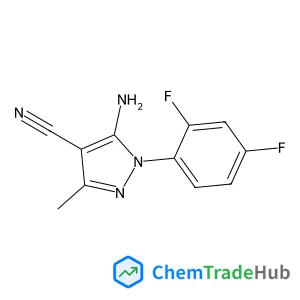
5-Amino-1-(2,4-difluorophenyl)-3-methyl-1H-pyrazole-4-carbonitrile
CAS Number:
1020057-92-4
Molecular Formula:
C11H8F2N4
![9,9'-Spirobi[fluoren]-2-amine structure](https://static.chemtradehub.com/structs/118/118951-68-1-0d14.webp "9,9'-Spirobi[fluoren]-2-amine structure")
Recommended Suppliers






Disclaimer
This page provides academic journal information for reference and research purposes only. We are not affiliated with any journal publishers and do not handle publication submissions. For publication-related inquiries, please contact the respective journal publishers directly.
If you notice any inaccuracies in the information displayed, please contact us at support@chemtradehub.com. We will promptly review and address your concerns.