












Stability of intermediates in the glycerol hydrogenolysis on transition metal catalysts from first principles
Literature Information
Publication Date
2010-11-25
DOI
10.1039/C0CP00858C
Impact Factor
3.676
Authors
Françoise Delbecq, Yosslen Aray, Philippe Sautet
View Original
Abstract
The hydrogenolysis reaction catalyzed by a transition metal solid catalyst is a potential way to transform glycerol to 1,2-propylene glycol or 1,3-propylene glycol, two important chemicals. We explore the thermodynamic profile of this reaction from first principle simulation, comparing Ni, Rh and Pd catalysts modeled by (111) surfaces. The stability of adsorbed reactants, dehydrated intermediates, and hydrogenated propylene glycol is compared, with a special focus on the factors controlling the selectivity of the reaction. From a global thermodynamic view point, the formation of 1,2-propylene glycol is favored, and in addition the most stable intermediates in the gas phase (acetol and 1,2-aldol) lead to the formation of this product. The metal catalyst has three roles. First it stabilizes the dehydrated intermediates and renders the dehydration more exothermic. Second, the adsorption on the surface modifies the relative stability of the dehydrated intermediates, with implications on the reaction selectivity. Third it catalyses the hydrogenation step, leading to propylene glycol.
Recommended Journals
Related Literature
(Hetero)arylboration of alkynes: a strategy for the synthesis of α,α-bis(hetero)arylketones
Yuan Huang, Allison M. Bergmann, M. Kevin Brown
2019-06-05
Communication
DOI: 10.1039/C9OB00961B
Chemical composition of DNA-encoded libraries, past present and future
Paige Dickson, Thomas Kodadek
2019-04-15
Review Article
DOI: 10.1039/C9OB00581A
Direct access to bis-S-heterocycles via copper-catalyzed three component tandem cyclization using S8 as a sulfur source
Peiqi Zhou, Yubing Huang, Wanqing Wu, Wentao Yu, Jianxiao Li, Zhongzhi Zhu, Huanfeng Jiang
2019-03-04
Paper
DOI: 10.1039/C9OB00377K
New geldanamycin derivatives with anti Hsp properties by mutasynthesis
Jekaterina Hermane, Simone Eichner, Lena Mancuso, Benjamin Schröder, Florenz Sasse, Carsten Zeilinger, Andreas Kirschning
2019-05-07
Paper
DOI: 10.1039/C9OB00892F
A computational study on the identity of the active catalyst structure for Ru(ii) carboxylate assisted C–H activation in acetonitrile
Claire L. McMullin, Nasir A. Rajabi, James S. Hammerton
2019-06-25
Paper
DOI: 10.1039/C9OB01092K
Late stage functionalization of heterocycles using hypervalent iodine(iii) reagents
Rajnish Budhwan, Suman Yadav, Sandip Murarka
2019-06-10
Review Article
DOI: 10.1039/C9OB00694J
A highly selective H/D exchange reaction of 1,4-dihydropyridines
Kaiqian Wang, Xiao Peng, Ping Wang, Feng Liang
2019-03-25
Paper
DOI: 10.1039/C9OB00575G
The cubane paradigm in bioactive molecule discovery: further scope, limitations and the cyclooctatetraene complement‡
Sevan D. Houston, Tyler Fahrenhorst-Jones, Hui Xing, Benjamin A. Chalmers, Melissa L. Sykes, Jeanette E. Stok, Clementina Farfan Soto, Jed M. Burns, Paul V. Bernhardt, James J. De Voss, Glen M. Boyle, Maree T. Smith, John Tsanaktsidis, G. Paul Savage, Vicky M. Avery, Craig M. Williams
2019-06-26
Paper
DOI: 10.1039/C9OB01238A
You might also like
Compound Q&A
What is 1-(2,4,6-Trifluorophenyl)ethanol (CAS: 1250113-83-7)?
1-(2,4,6-Trifluorophenyl)ethanol is an organic compound with the CAS number 1250...
1250113-83-71-(2,4,6-Trifluoroph...
Compound Q&A
Is 1-(2,4-Dimethoxybenzyl)-4-(hydroxymethyl)-2-pyrrolidinone (CAS: 919111-34-5) safe?
1-(2,4-Dimethoxybenzyl)-4-(hydroxymethyl)-2-pyrrolidinone (CAS: 919111-34-5) is ...
919111-34-51-(2,4-Dimethoxybenz...
Compound Q&A
What are the physical and chemical properties of (7S,15R)-6β,15-Diacetoxy-7α,20-epoxy-7-hydroxykaura-2,16-dien-1-one (CAS: 51419-51-3)?
(7S,15R)-6β,15-Diacetoxy-7α,20-epoxy-7-hydroxykaura-2,16-dien-1-one is a crystal...
51419-51-3(7S,15R)-6β,15-Diace...
Compound Q&A
What regulatory guidelines apply to rac-ethyl (1r,4r)-4-hydroxycyclohexane-1-carboxylate, trans (CAS: 3618-04-0)?
The compound rac-ethyl (1r,4r)-4-hydroxycyclohexane-1-carboxylate, trans (CAS: 3...
3618-04-0rac-ethyl (1r,4r)-4-...
Compound Q&A
What is the market or research trend for 2-(2,4-Difluorophenoxy)-3-nitropyridine (CAS: 175135-62-3)?
The market for 2-(2,4-Difluorophenoxy)-3-nitropyridine (CAS: 175135-62-3) is cur...
175135-62-32-(2,4-Difluoropheno...
Compound Q&A
What are the main uses of 6-Diazo-5-oxo-L-norleucine (CAS: 157-03-9)?
The main uses of 6-Diazo-5-oxo-L-norleucine (CAS: 157-03-9) include research in ...
157-03-96-Diazo-5-oxo-L-norl...
Compound Q&A
What precautions should be taken when handling 2-Aminoethyl-mono-amide-DOTA-tris(tBu ester) (CAS: 173308-19-5)?
When handling 2-Aminoethyl-mono-amide-DOTA-tris(tBu ester) (CAS: 173308-19-5), i...
173308-19-52-Aminoethyl-mono-am...
Compound Q&A
How is 5-Methylimidazo[1,2-a]pyridine-3-carbaldehyde (CAS: 178488-37-4) typically synthesized?
5-Methylimidazo[1,2-a]pyridine-3-carbaldehyde (CAS: 178488-37-4) can be synthesi...
178488-37-45-Methylimidazo[1,2-...
Compound Q&A
Are there alternatives to 2,4,6-Trihydroxyisophthalaldehyde (CAS: 4396-13-8) in synthesis?
There are alternative reagents that can be used in the synthesis of 2,4,6-Trihyd...
4396-13-82,4,6-Trihydroxyisop...
Compound Q&A
What is (2Z)-3-(5-Fluoro-1H-indol-3-yl)-2-sulfanylacrylic acid (CAS: 179461-52-0)?
(2Z)-3-(5-Fluoro-1H-indol-3-yl)-2-sulfanylacrylic acid is a chemical compound wi...
179461-52-0(2Z)-3-(5-Fluoro-1H-...
Source Journal
Physical Chemistry Chemical Physics

CiteScore:
5.5
Self-citation Rate:
10.3%
Articles per Year:
3036
Physical Chemistry Chemical Physics (PCCP) is an international journal co-owned by 19 physical chemistry and physics societies from around the world. This journal publishes original, cutting-edge research in physical chemistry, chemical physics and biophysical chemistry. To be suitable for publication in PCCP, articles must include significant innovation and/or insight into physical chemistry; this is the most important criterion that reviewers and Editors will judge against when evaluating submissions. The journal has a broad scope and welcomes contributions spanning experiment, theory, computation and data science. Topical coverage includes spectroscopy, dynamics, kinetics, statistical mechanics, thermodynamics, electrochemistry, catalysis, surface science, quantum mechanics, quantum computing and machine learning. Interdisciplinary research areas such as polymers and soft matter, materials, nanoscience, energy, surfaces/interfaces, and biophysical chemistry are welcomed if they demonstrate significant innovation and/or insight into physical chemistry. Joined experimental/theoretical studies are particularly appreciated when complementary and based on up-to-date approaches.
Recommended Compounds
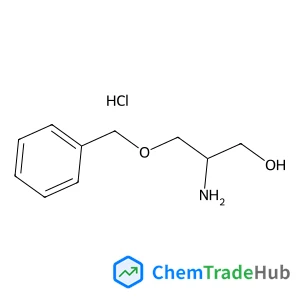
(R)-2-amino-3-(benzyloxy)propan-1-ol hydrochloride
CAS Number:
58577-95-0
Molecular Formula:
C10H16ClNO2
![2-Methyl-2-propanyl 1,6-diazaspiro[3.4]octane-6-carboxylate structure](https://static.chemtradehub.com/structs/115/1158749-79-1-81ee.webp "2-Methyl-2-propanyl 1,6-diazaspiro[3.4]octane-6-carboxylate structure")
2-Methyl-2-propanyl 1,6-diazaspiro[3.4]octane-6-carboxylate
CAS Number:
1158749-79-1
Molecular Formula:
C11H20N2O2
![Imidazo[1,5-a]pyrazine structure](https://static.chemtradehub.com/structs/274/274-49-7-d749.webp "Imidazo[1,5-a]pyrazine structure")
Recommended Suppliers





Disclaimer
This page provides academic journal information for reference and research purposes only. We are not affiliated with any journal publishers and do not handle publication submissions. For publication-related inquiries, please contact the respective journal publishers directly.
If you notice any inaccuracies in the information displayed, please contact us at support@chemtradehub.com. We will promptly review and address your concerns.