












Weak intramolecular and intermolecular hydrogen bonding of benzyl alcohol, 2-phenylethanol and 2-phenylethylamine in the adsorption on graphitized thermal carbon black
Literature Information
Publication Date
2015-08-24
DOI
10.1039/C5CP04295J
Impact Factor
3.676
Authors
View Original
Abstract
The paper discusses the role of weak intra- and intermolecular hydrogen bonds in the adsorption of benzyl alcohol, 2-phenylethanol and 2-phenylethylamine on graphitized thermal carbon black (GTCB). Using the B3LYP/aug-cc-pVDZ, B3LYP/aug-cc-pVTZ methods and the molecular-statistical theory of adsorption we found the structural and energetic parameters of the conformers to be stable in the gas phase and in the adsorbed state. The contribution of weak OH⋯π, NH⋯π, CH⋯O hydrogen bonds to the stabilization of the conformers was defined by the method of non-covalent interactions (NCI). Based on the difference in the experimental and calculated values of the Henry constant Δ ln K1 < 0.25 (K1, cm3 m−2) a high predictive power of molecular-statistical calculation of the thermodynamic characteristics of adsorption (TCA) has been shown. To obtain a high predictive power of molecular-statistical calculation it was necessary to take due account of the structural features of flexible molecules in the adsorbed state. A significant impact of the weak OH⋯πGTCB intermolecular hydrogen bond of benzyl alcohol on the TCA values has been established.
Related Literature
Measurements of the wavelength dependent extinction of aerosols by cavity ring down spectroscopy
Rachael E. H. Miles, Svemir Rudić, Andrew J. Orr-Ewing, Jonathan P. Reid
2010-02-23
Paper
DOI: 10.1039/B923758E
Theoretical investigation of the complexation of crown ethers and crown ethers of fulleropyrrolidine with (CH3)xNH +4−x, x = 0–4‡
Demeter Tzeli, Ioannis D. Petsalakis, Giannoula Theodorakopoulos
2010-11-09
Paper
DOI: 10.1039/C0CP00180E
Protein adsorption onto CF3-terminated oligo(ethylene glycol) containing self-assembled monolayers (SAMs): the influence of ionic strength and electrostatic forces
Nelly Bonnet, David O'Hagan, Georg Hähner
2010-02-16
Paper
DOI: 10.1039/B923065N
Insulin dimer dissociation and unfolding revealed by amide I two-dimensional infrared spectroscopy
Ziad Ganim, Kevin C. Jones, Andrei Tokmakoff
2010-03-05
Paper
DOI: 10.1039/B923515A
Modelling the influence of hydrogen bond network on chemical shielding tensors description. GIAO-DFT study of WALP23 transmembrane α-helix as a test case
2010-05-12
Paper
DOI: 10.1039/B923883B
Characterization and mechanism study of micrometer-sized secondary assembly of β-cyclodextrin
Yifeng He, Xinghai Shen, Qingde Chen, Hongcheng Gao
2010-10-29
Paper
DOI: 10.1039/C0CP00899K
Controlling the directionality of charge transfer in phthalocyaninato zinc sensitizer for a dye-sensitized solar cell: density functional theory studies
Liang Wan, Dongdong Qi, Yuexing Zhang, Jianzhuang Jiang
2010-11-22
Paper
DOI: 10.1039/C0CP01572E
Analysis of parity violation in chiral molecules
Radovan Bast, Anton Koers, André Severo Pereira Gomes, Miroslav Iliaš, Lucas Visscher, Peter Schwerdtfeger, Trond Saue
2010-12-08
Paper
DOI: 10.1039/C0CP01483D
Drainage of the air–water–quartz film: experiments and theory
Rogerio Manica
2010-12-09
Paper
DOI: 10.1039/C0CP00677G
Spectroscopic and computational study of β-ethynylphenylene substituted zinc and free-base porphyrins
John C. Earles, Keith C. Gordon, Adam W. I. Stephenson, Ashton C. Partridge, David L. Officer
2010-12-02
Paper
DOI: 10.1039/C0CP01113D
You might also like
Compound Q&A
What is 1-(2,4,6-Trifluorophenyl)ethanol (CAS: 1250113-83-7)?
1-(2,4,6-Trifluorophenyl)ethanol is an organic compound with the CAS number 1250...
1250113-83-71-(2,4,6-Trifluoroph...
Compound Q&A
Is 1-(2,4-Dimethoxybenzyl)-4-(hydroxymethyl)-2-pyrrolidinone (CAS: 919111-34-5) safe?
1-(2,4-Dimethoxybenzyl)-4-(hydroxymethyl)-2-pyrrolidinone (CAS: 919111-34-5) is ...
919111-34-51-(2,4-Dimethoxybenz...
Compound Q&A
What are the physical and chemical properties of (7S,15R)-6β,15-Diacetoxy-7α,20-epoxy-7-hydroxykaura-2,16-dien-1-one (CAS: 51419-51-3)?
(7S,15R)-6β,15-Diacetoxy-7α,20-epoxy-7-hydroxykaura-2,16-dien-1-one is a crystal...
51419-51-3(7S,15R)-6β,15-Diace...
Compound Q&A
What regulatory guidelines apply to rac-ethyl (1r,4r)-4-hydroxycyclohexane-1-carboxylate, trans (CAS: 3618-04-0)?
The compound rac-ethyl (1r,4r)-4-hydroxycyclohexane-1-carboxylate, trans (CAS: 3...
3618-04-0rac-ethyl (1r,4r)-4-...
Compound Q&A
What is the market or research trend for 2-(2,4-Difluorophenoxy)-3-nitropyridine (CAS: 175135-62-3)?
The market for 2-(2,4-Difluorophenoxy)-3-nitropyridine (CAS: 175135-62-3) is cur...
175135-62-32-(2,4-Difluoropheno...
Compound Q&A
What are the main uses of 6-Diazo-5-oxo-L-norleucine (CAS: 157-03-9)?
The main uses of 6-Diazo-5-oxo-L-norleucine (CAS: 157-03-9) include research in ...
157-03-96-Diazo-5-oxo-L-norl...
Compound Q&A
What precautions should be taken when handling 2-Aminoethyl-mono-amide-DOTA-tris(tBu ester) (CAS: 173308-19-5)?
When handling 2-Aminoethyl-mono-amide-DOTA-tris(tBu ester) (CAS: 173308-19-5), i...
173308-19-52-Aminoethyl-mono-am...
Compound Q&A
How is 5-Methylimidazo[1,2-a]pyridine-3-carbaldehyde (CAS: 178488-37-4) typically synthesized?
5-Methylimidazo[1,2-a]pyridine-3-carbaldehyde (CAS: 178488-37-4) can be synthesi...
178488-37-45-Methylimidazo[1,2-...
Compound Q&A
Are there alternatives to 2,4,6-Trihydroxyisophthalaldehyde (CAS: 4396-13-8) in synthesis?
There are alternative reagents that can be used in the synthesis of 2,4,6-Trihyd...
4396-13-82,4,6-Trihydroxyisop...
Compound Q&A
What is (2Z)-3-(5-Fluoro-1H-indol-3-yl)-2-sulfanylacrylic acid (CAS: 179461-52-0)?
(2Z)-3-(5-Fluoro-1H-indol-3-yl)-2-sulfanylacrylic acid is a chemical compound wi...
179461-52-0(2Z)-3-(5-Fluoro-1H-...
Source Journal
Physical Chemistry Chemical Physics

CiteScore:
5.5
Self-citation Rate:
10.3%
Articles per Year:
3036
Physical Chemistry Chemical Physics (PCCP) is an international journal co-owned by 19 physical chemistry and physics societies from around the world. This journal publishes original, cutting-edge research in physical chemistry, chemical physics and biophysical chemistry. To be suitable for publication in PCCP, articles must include significant innovation and/or insight into physical chemistry; this is the most important criterion that reviewers and Editors will judge against when evaluating submissions. The journal has a broad scope and welcomes contributions spanning experiment, theory, computation and data science. Topical coverage includes spectroscopy, dynamics, kinetics, statistical mechanics, thermodynamics, electrochemistry, catalysis, surface science, quantum mechanics, quantum computing and machine learning. Interdisciplinary research areas such as polymers and soft matter, materials, nanoscience, energy, surfaces/interfaces, and biophysical chemistry are welcomed if they demonstrate significant innovation and/or insight into physical chemistry. Joined experimental/theoretical studies are particularly appreciated when complementary and based on up-to-date approaches.
Recommended Compounds
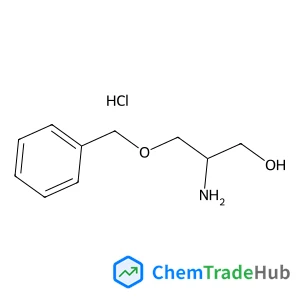
(R)-2-amino-3-(benzyloxy)propan-1-ol hydrochloride
CAS Number:
58577-95-0
Molecular Formula:
C10H16ClNO2
Recommended Suppliers







Disclaimer
This page provides academic journal information for reference and research purposes only. We are not affiliated with any journal publishers and do not handle publication submissions. For publication-related inquiries, please contact the respective journal publishers directly.
If you notice any inaccuracies in the information displayed, please contact us at support@chemtradehub.com. We will promptly review and address your concerns.