












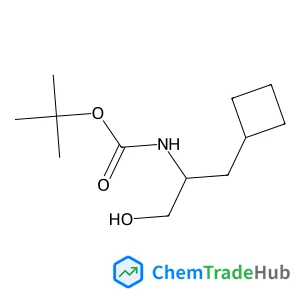
2-Methyl-2-propanyl (1-cyclobutyl-3-hydroxy-2-propanyl)carbamate
CAS Number:
816429-99-9
Molecular Formula:
C12H23NO3
Butian Zhang, Yucheng Wang, Chengbin Yang, Siyi Hu, Yuan Gao, Yiping Zhang, Yue Wang, Hilmi Volkan Demir, Liwei Liu, Ken-Tye Yong
Multiternary quantum dots (QDs), because of the large degree of freedom in their structure and composition, have a wide tunability in their bandgap but also exhibit an increased uncertainty and complexity in their optical properties. In this work, we synthesized the ternary Cu–In–S (CIS) and quaternary Zn–Cu–In–S (ZCIS) QDs with different composition ratios via a facile aqueous route. The CIS QDs show multi-peak photoluminescence with their peak intensity dependent on the Cu : In ratio, which was illustrated using a donor–acceptor pair recombination process. Upon incorporation of Zn into the CIS QDs under similar conditions, the acquired ZCIS QDs exhibit blue-shifted photoluminescence (PL) spectra with an enhanced emission intensity and a narrowed spectral width (∼100 nm). A comparative study reveals that, reducing the Cu : In ratio in the CIS QDs and increasing the Zn content in the alloyed ZCIS QDs are both feasible strategies for bandgap engineering, although the influences on optical properties of the QDs were different. The XRD and EDX spectra revealed that the widening of the bandgap of the ZCIS QDs was correlated with the alloyed nanostructures and the preferential substitution of Cu by Zn. Compared to the Cu : In ratio variation, incorporation of Zn into CIS QDs is an effective strategy to achieve a more homogeneous absorption band and a wide range of emission wavelength tunability. After ZnS shell coating, the ZCIS/ZnS QDs show a further enhanced PL intensity with a prolonged fluorescence lifetime. Unlike CIS QDs, the blue shift in PL upon the shell growth was not pronounced for ZCIS QDs, for which a surface reconstruction mechanism was proposed and discussed. Finally, the as-prepared ZCIS/ZnS QDs were employed for in vitro cell imaging and exhibited good biocompatibility to macrophage cells.
Yilin Liu, Jincai Su, Fei Duan, Xin Cui, Weichao Yan, Liwen Jin
DOI: 10.1039/D2CP01411D
Shifan Cui, Haoxiang Chen, Zhengpu Zhao
DOI: 10.1039/D2CP00412G
DOI: 10.1039/D2CP01846B
Xiaoyu Zhao, Danyang Xiong, Song Luo, Lili Duan
DOI: 10.1039/D2CP01780F
Vladislav Kochetov, Sergey I. Bokarev, Iain Wilkinson
DOI: 10.1039/D1CP05840A
Jonas Feldt, Antoine Bienvenu, Roland Assaraf
DOI: 10.1039/D2CP01357F
H. J. Yashwanth, Robert L. Z. Hoye, Ram J. Choudhary, Deodatta M. Phase, Sanjay D. Dhole
DOI: 10.1039/D2CP01405J
Kohei Yamagami, Hirona Yamagishi, Hiroyuki Setoyama, Arata Tanaka, Ryo Ohtani, Masaaki Ohba
DOI: 10.1039/D2CP01415G
When handling 2-Methyl-2-propanyl 5-amino-2-thiophenecarboxylate (CAS: 1498311-5...
5-Bromo-1,2-dichloro-3-fluorobenzene (CAS: 1000572-93-9) is a crystalline solid ...
(2R)-2-Amino-2-(4-bromophenyl)ethanol (CAS: 354153-64-3) should be stored in a c...
Methyl 4-(aminomethyl)tetrahydro-2H-pyran-4-carboxylate hydrochloride (CAS: 3627...
1,4-Dimethyl-1H-pyrazole-5-sulfonyl chloride is primarily used as an intermediat...
Dinaphtho[1,2-b:2',1'-d]furan is generally safe when handled with appropriate pe...
The market for 7-Methyl-7,9-dihydro-1H-purine-2,6,8(3H)-trione (CAS: 612-37-3) i...
2-(4-Chlorophenyl)malonaldehyde (CAS: 205676-17-1) is a colorless or light yello...
2-Methylchrysene (CAS: 3351-32-4) is typically synthesized via the reaction of c...
N-(6-aminopyrimidin-4-yl)acetamide (CAS: 89533-23-3) is generally considered saf...

Physical Chemistry Chemical Physics (PCCP) is an international journal co-owned by 19 physical chemistry and physics societies from around the world. This journal publishes original, cutting-edge research in physical chemistry, chemical physics and biophysical chemistry. To be suitable for publication in PCCP, articles must include significant innovation and/or insight into physical chemistry; this is the most important criterion that reviewers and Editors will judge against when evaluating submissions. The journal has a broad scope and welcomes contributions spanning experiment, theory, computation and data science. Topical coverage includes spectroscopy, dynamics, kinetics, statistical mechanics, thermodynamics, electrochemistry, catalysis, surface science, quantum mechanics, quantum computing and machine learning. Interdisciplinary research areas such as polymers and soft matter, materials, nanoscience, energy, surfaces/interfaces, and biophysical chemistry are welcomed if they demonstrate significant innovation and/or insight into physical chemistry. Joined experimental/theoretical studies are particularly appreciated when complementary and based on up-to-date approaches.

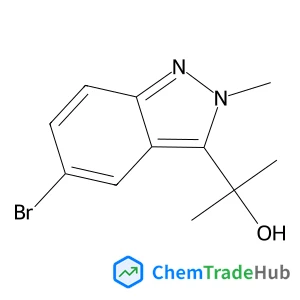
![1-{[5-(4,4,5,5-Tetramethyl-1,3,2-dioxaborolan-2-yl)-2-thienyl]methyl}piperidine structure](https://static.chemtradehub.com/structs/121/1218790-44-3-baef.webp "1-{[5-(4,4,5,5-Tetramethyl-1,3,2-dioxaborolan-2-yl)-2-thienyl]methyl}piperidine structure")
![L-Lysine,N6-[2-[[(1,1-dimethylethoxy)carbonyl]amino]benzoyl]-N2-[(9H-fluoren-9-ylmethoxy)carbonyl]- structure](https://static.chemtradehub.com/structs/159/159322-59-5-c046.webp "L-Lysine,N6-[2-[[(1,1-dimethylethoxy)carbonyl]amino]benzoyl]-N2-[(9H-fluoren-9-ylmethoxy)carbonyl]- structure")




