













Position and orientational preferences of drug-like compounds in lipid membranes: a computational and NMR approach
Literature Information
Publication Date
2015-06-30
DOI
10.1039/C5CP03218K
Impact Factor
3.676
Authors
Jerome Ma, Laura Domicevica, Jason R. Schnell, Philip C. Biggin
View Original
Abstract
Permeation of drugs across lipid bilayers is a key factor in dictating how effective they will be. In vivo, the issue is compounded by the presence of drug–exporter proteins such as P-glycoprotein. However, despite intense effort, exactly what controls permeation and susceptibility to export is still poorly understood. In this work we examine two well-studied drugs for which interaction with P-glycoprotein has been studied before: amitriptyline, a known substrate and clozapine, which is not a substrate. Extensive MD simulations, including potential of mean force (PMF) profiles of the compounds in all possible protonation states, reveal that the preferred location of the compounds in different bilayers in different protonation states is remarkably similar. For both molecules in charged states, there is a substantial barrier to crossing the bilayer. Clozapine however, shows an energetic barrier to movement across the bilayer even in a protonation state that results in an uncharged molecule. For amitriptyline there is only a very small barrier of approximately 1.3 kcal mol−1. Further analysis revealed that the conformational and orientational behavior of the two compounds was also similar, with the sidechain interacting with the lipid headgroups. This effect was much stronger if the sidechain was charged (protonated). These interactions with lipid bilayers were confirmed by NMR ROESY experiments. The results are discussed in terms of their potential interactions with export proteins like P-glycoprotein.
Related Literature
A high-temperature dielectric process as a probe of large-scale silica filler structure in simplified industrial nanocomposites
Angel Alegria, Marc Couty
2014-11-20
Paper
DOI: 10.1039/C4CP04597A
Go natural and smarter: fenugreek as a hydration designer of collagen based biomaterials
Ivy Kanungo, Nishter Nishad Fathima, Raghava Rao Jonnalagadda, Balachandran Unni Nair
2014-12-11
Paper
DOI: 10.1039/C4CP04363D
Predicting the voltage dependence of interfacial electrochemical processes at lithium-intercalated graphite edge planes
2014-11-21
Paper
DOI: 10.1039/C4CP04494K
Strain effects on oxygen migration in perovskites
Tam Mayeshiba, Dane Morgan
2014-12-05
Paper
DOI: 10.1039/C4CP05554C
Origins of improved carrier multiplication efficiency in elongated semiconductor nanostructures
Andrew Sills, Marco Califano
2014-12-10
Paper
DOI: 10.1039/C4CP03706E
Elastic strain effects on catalysis of a PdCuSi metallic glass thin film
Yiyi Yang, Tuhina Adit Maark, Andrew Peterson, Sharvan Kumar
2014-12-02
Paper
DOI: 10.1039/C4CP04924A
Oxygen adsorption onto pure and doped Al surfaces – the role of surface dopants
Cláudio M. Lousada, Pavel A. Korzhavyi
2014-12-02
Paper
DOI: 10.1039/C4CP04277H
The properties of Irn (n = 2–10) clusters and their nucleation on γ-Al2O3 and MgO surfaces: from ab initio studies
Yongchang Chen, Miao Huo, Qiang Li, Zhaolin Sun, Lijuan Song
2014-12-02
Paper
DOI: 10.1039/C4CP04881D
Identifying the distinct features of geometric structures for hole trapping to generate radicals on rutile TiO2(110) in photooxidation using density functional theory calculations with hybrid functional
Haifeng Wang
2014-11-05
Communication
DOI: 10.1039/C4CP04159C
Mass analyzed threshold ionization detected infrared spectroscopy: isomerization activity of the phenol–Ar cluster near the ionization threshold
Mitsuhiko Miyazaki, Shunpei Yoshikawa, François Michels, Kentaro Misawa, Shun-ichi Ishiuchi, Makoto Sakai, Otto Dopfer, Klaus Müller-Dethlefs, Masaaki Fujii
2014-11-27
Paper
DOI: 10.1039/C4CP04584J
You might also like
Compound Q&A
What are the main uses of (5-Sulfamoyl-3-pyridinyl)boronic acid (CAS: 951233-61-7)?
(5-Sulfamoyl-3-pyridinyl)boronic acid is primarily used in chemical synthesis, p...
951233-61-7(5-Sulfamoyl-3-pyrid...
Compound Q&A
How is Benzyl 2-methyl-2-(methylsulfonyl)-4-pentenoate (CAS: 1942858-50-5) typically synthesized?
Benzyl 2-methyl-2-(methylsulfonyl)-4-pentenoate is typically synthesized via est...
1942858-50-5Benzyl 2-methyl-2-(m...
Compound Q&A
What precautions should be taken when handling 8-Fluoroquinolin-6-ol (CAS: 209353-22-0)?
When handling 8-Fluoroquinolin-6-ol (CAS: 209353-22-0), it is important to use p...
209353-22-08-Fluoroquinolin-6-o...
Compound Q&A
What are the physical and chemical properties of 1,3-Dibromo-5-(2-methyl-2-propanyl)benzene (CAS: 129316-09-2)?
1,3-Dibromo-5-(2-methyl-2-propanyl)benzene (CAS: 129316-09-2) is a crystalline c...
129316-09-21,3-Dibromo-5-(2-met...
Compound Q&A
What industries use Ethyl 7-chloro-4-oxo-1-(1,3-thiazol-2-yl)-1,4-dihydro-1,8-naphthyridine-3-carboxylate (CAS: 174726-87-5)?
Ethyl 7-chloro-4-oxo-1-(1,3-thiazol-2-yl)-1,4-dihydro-1,8-naphthyridine-3-carbox...
174726-87-5Ethyl 7-chloro-4-oxo...
Compound Q&A
What precautions should be taken when handling Delta-7-Avenasterol (CAS: 23290-26-8)?
When handling Delta-7-Avenasterol (CAS: 23290-26-8), it is important to wear app...
23290-26-8Delta-7-Avenasterol
Compound Q&A
What precautions should be taken when handling N-({(5R)-3-[3-Fluoro-4-(4-morpholinyl)phenyl]-2-oxo-1,3-oxazolidin-5-yl}methyl)acetamide (CAS: 872992-20-6)?
Proper handling involves the use of personal protective equipment such as gloves...
872992-20-6N-({(5R)-3-[3-Fluoro...
Compound Q&A
What precautions should be taken when handling 2-Methyl-2-proanyl 4-[(2-aminophenyl)amino]-1-piperidinecarboxylate (CAS: 79099-00-6)?
When handling 2-Methyl-2-proanyl 4-[(2-aminophenyl)amino]-1-piperidinecarboxylat...
79099-00-62-Methyl-2-propanyl ...
Compound Q&A
What is N-Methyl-4-chlorobenzylamine hydrochloride (CAS: 65542-24-7)?
N-Methyl-4-chlorobenzylamine hydrochloride (CAS: 65542-24-7) is a organic compou...
65542-24-7N-Methyl-4-chloroben...
Compound Q&A
Is [2-(Dodecyloxy)ethoxy]acetic acid (CAS: 27306-90-7) safe?
[2-(Dodecyloxy)ethoxy]acetic acid (CAS: 27306-90-7) is generally considered safe...
27306-90-7[2-(Dodecyloxy)ethox...
Source Journal
Physical Chemistry Chemical Physics

CiteScore:
5.5
Self-citation Rate:
10.3%
Articles per Year:
3036
Physical Chemistry Chemical Physics (PCCP) is an international journal co-owned by 19 physical chemistry and physics societies from around the world. This journal publishes original, cutting-edge research in physical chemistry, chemical physics and biophysical chemistry. To be suitable for publication in PCCP, articles must include significant innovation and/or insight into physical chemistry; this is the most important criterion that reviewers and Editors will judge against when evaluating submissions. The journal has a broad scope and welcomes contributions spanning experiment, theory, computation and data science. Topical coverage includes spectroscopy, dynamics, kinetics, statistical mechanics, thermodynamics, electrochemistry, catalysis, surface science, quantum mechanics, quantum computing and machine learning. Interdisciplinary research areas such as polymers and soft matter, materials, nanoscience, energy, surfaces/interfaces, and biophysical chemistry are welcomed if they demonstrate significant innovation and/or insight into physical chemistry. Joined experimental/theoretical studies are particularly appreciated when complementary and based on up-to-date approaches.
Recommended Compounds
![(4-Methyl-1H-benzo[d]imidazol-2-yl)methanamine structure](https://static.chemtradehub.com/structs/933/933756-31-1-7b0b.webp "(4-Methyl-1H-benzo[d]imidazol-2-yl)methanamine structure")
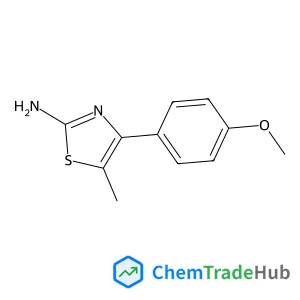
4-(4-Methoxyphenyl)-5-methyl-1,3-thiazol-2-amine
CAS Number:
105512-88-7
Molecular Formula:
C11H12N2OS
Recommended Suppliers




Disclaimer
This page provides academic journal information for reference and research purposes only. We are not affiliated with any journal publishers and do not handle publication submissions. For publication-related inquiries, please contact the respective journal publishers directly.
If you notice any inaccuracies in the information displayed, please contact us at support@chemtradehub.com. We will promptly review and address your concerns.