












Adatom bond-induced geometric and electronic properties of passivated armchair graphene nanoribbons
Literature Information
Publication Date
2015-06-08
DOI
10.1039/C5CP02226F
Impact Factor
3.676
Authors
Yu-Tsung Lin, Hsien-Ching Chung, Po-Hua Yang, Shih-Yang Lin, Ming-Fa Lin
View Original
Abstract
The geometric and electronic properties of passivated armchair graphene nanoribbons, enriched by strong chemical bonding between edge-carbons and various adatoms, are investigated by first-principle calculations. Adatom arrangements, bond lengths, charge distributions, and energy dispersions are dramatically changed by edge passivation. Elements with an atomic number of less than 20 are classified into three types depending on the optimal geometric structures: planar and non-planar structures, the latter of which are associated with specific arrangements and stacked configurations of adatoms. Especially, the nitrogen passivated nanoribbon is the most stable one with a heptagon–pentagon structure at the edges. The low-lying band structures are drastically varied, exhibiting non-monotonous energy dispersions and adatom-dominated bands. A relationship between energy gaps and ribbon widths no longer exists, and some adatoms further induce a semiconductor–metal transition. All the main characteristics are directly reflected in the density of states, revealing dip structures, plateaus, symmetric peaks, and square-root divergent asymmetric peaks.
Related Literature
Strategies to engineer various nanocarrier-based hybrid catalysts for enhanced chemodynamic cancer therapy
Ji-Na Hao, Kaiming Ge, Guoli Chen, Bin Dai
2023-10-24
Tutorial Review
DOI: 10.1039/D3CS00356F
%VBur index and steric maps: from predictive catalysis to machine learning
Albert Poater
2023-12-19
Review Article
DOI: 10.1039/D3CS00725A
An efficient and mild oxidative approach from thiols to sulfonyl derivatives with DMSO/HBr
Hongye Wang, Zhaoting Li, Rongheng Dai, Ning Jiao, Song Song
2023-11-01
Edge Article
DOI: 10.1039/D3SC04945K
Pursuing excitonic energy transfer with programmable DNA-based optical breadboards
Divita Mathur, Sebastián A. Díaz, Ryan D. Pensack, Bernard Yurke, Austin Biaggne, Joseph S. Melinger, William B. Knowlton, Igor L. Medintz
2023-10-24
Review Article
DOI: 10.1039/D0CS00936A
Cyclic voltammetry and chronoamperometry: mechanistic tools for organic electrosynthesis
Mohammad Rafiee, Dylan J. Abrams, Luana Cardinale, Zachary Goss, Shannon S. Stahl
2023-12-05
Tutorial Review
DOI: 10.1039/D2CS00706A
Enantioselective and collective total synthesis of pentacyclic 19-nor-clerodanes
Zhi-Mao Zhang, Junliang Zhang, Quan Cai
2023-10-23
Edge Article
DOI: 10.1039/D3SC04335E
Stimulus-responsive polymer materials toward multi-mode and multi-level information anti-counterfeiting: recent advances and future challenges
2023-12-15
Tutorial Review
DOI: 10.1039/D3CS00753G
Benzoyldiisopropylchlorosilane: a visible light photocleavable alcohol protecting group
Florian Lind, Kirill Markelov, Armido Studer
2023-10-25
Edge Article
DOI: 10.1039/D3SC04975B
Reactivity of metal–oxo clusters towards biomolecules: from discrete polyoxometalates to metal–organic frameworks
David E. Salazar Marcano, Nada D. Savić, Kilian Declerck, Shorok A. M. Abdelhameed, Tatjana N. Parac-Vogt
2023-11-28
Review Article
DOI: 10.1039/D3CS00195D
You might also like
Compound Q&A
How should waste containing 6-Chloro-5-(2'-hydroxy-3'-methoxy-4-biphenylyl)-3-(3-methoxyphenyl)-1H-pyrrolo[3,2-d]pyrimidine-2,4(3H,5H)-dione (CAS: 1346607-05-3) be handled?
Waste containing 6-Chloro-5-(2'-hydroxy-3'-methoxy-4-biphenylyl)-3-(3-methoxyphe...
1346607-05-36-Chloro-5-(2'-hydro...
Compound Q&A
What are the main uses of (3alpha,5alpha)-3-Hydroxypregnane-11,20-dione (CAS: 23930-19-0)?
(3alpha,5alpha)-3-Hydroxypregnane-11,20-dione is primarily used in the pharmaceu...
23930-19-0(3alpha,5alpha)-3-Hy...
Compound Q&A
What is the market or research trend for 4-Amino-6-chloro-2-pyridinecarboxylic acid (CAS: 546141-56-4)?
The market for 4-Amino-6-chloro-2-pyridinecarboxylic acid (CAS: 546141-56-4) is ...
546141-56-44-Amino-6-chloro-2-p...
Compound Q&A
Are there alternatives to (2-Benzoylethyl)trimethylammonium chloride (CAS: 24472-88-6) in synthesis?
Alternatives to (2-Benzoylethyl)trimethylammonium chloride (CAS: 24472-88-6) in ...
24472-88-6(2-Benzoylethyl)trim...
Compound Q&A
Is N-[4-Nitro-3-(trifluoromethyl)phenyl]acetamide (CAS: 393-12-4) safe?
N-[4-Nitro-3-(trifluoromethyl)phenyl]acetamide (CAS: 393-12-4) is generally safe...
393-12-4N-[4-Nitro-3-(triflu...
Compound Q&A
Are there alternatives to [(4R,5R,6S)-5-hydroxy-10-imino-3,7-dioxa-1,9-diazatricyclo[6.4.0.02,6]dodeca-8,11-dien-4-yl]methyl dihydrogen phosphate (CAS: 39679-56-6) in synthesis?
Alternative reagents such as other phosphates or similar functional groups can b...
39679-56-6[(4R,5R,6S)-5-hydrox...
Compound Q&A
Are there alternatives to N,N'-Bis(3-aminopropyl)-1,3-propanediamine (CAS: 4605-14-5) in synthesis?
There are alternatives to N,N'-Bis(3-aminopropyl)-1,3-propanediamine (CAS: 4605-...
4605-14-5N,N'-Bis(3-aminoprop...
Compound Q&A
What precautions should be taken when handling Aluminium trihexadecanoate (CAS: 555-35-1)?
When handling Aluminium trihexadecanoate, it is important to use appropriate per...
555-35-1Aluminium trihexadec...
Compound Q&A
What is (1,1-Dioxido-3-oxo-1,2-benzothiazol-2(3H)-yl)acetic acid (CAS: 52188-11-1)?
(1,1-Dioxido-3-oxo-1,2-benzothiazol-2(3H)-yl)acetic acid is a chemical compound ...
52188-11-1(1,1-Dioxido-3-oxo-1...
Compound Q&A
Are there alternatives to 5,5-dimethyloxolan-2-one (CAS: 3123-97-5) in synthesis?
Several alternatives to 5,5-dimethyloxolan-2-one (CAS: 3123-97-5) can be used in...
3123-97-55,5-dimethyloxolan-2...
Source Journal
Physical Chemistry Chemical Physics

CiteScore:
5.5
Self-citation Rate:
10.3%
Articles per Year:
3036
Physical Chemistry Chemical Physics (PCCP) is an international journal co-owned by 19 physical chemistry and physics societies from around the world. This journal publishes original, cutting-edge research in physical chemistry, chemical physics and biophysical chemistry. To be suitable for publication in PCCP, articles must include significant innovation and/or insight into physical chemistry; this is the most important criterion that reviewers and Editors will judge against when evaluating submissions. The journal has a broad scope and welcomes contributions spanning experiment, theory, computation and data science. Topical coverage includes spectroscopy, dynamics, kinetics, statistical mechanics, thermodynamics, electrochemistry, catalysis, surface science, quantum mechanics, quantum computing and machine learning. Interdisciplinary research areas such as polymers and soft matter, materials, nanoscience, energy, surfaces/interfaces, and biophysical chemistry are welcomed if they demonstrate significant innovation and/or insight into physical chemistry. Joined experimental/theoretical studies are particularly appreciated when complementary and based on up-to-date approaches.
Recommended Compounds
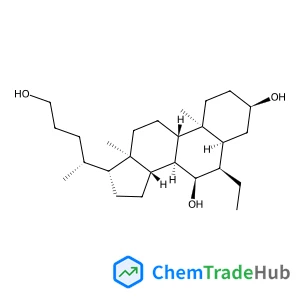
(3alpha,5beta,6alpha,7alpha)-6-Ethylcholane-3,7,24-triol
CAS Number:
1537866-49-1
Molecular Formula:
C26H46O3
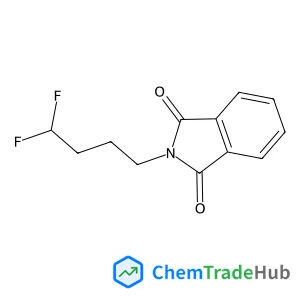
2-(4,4-Difluorobutyl)-1H-isoindole-1,3(2H)-dione
CAS Number:
1265341-14-7
Molecular Formula:
C12H11F2NO2
Recommended Suppliers






Disclaimer
This page provides academic journal information for reference and research purposes only. We are not affiliated with any journal publishers and do not handle publication submissions. For publication-related inquiries, please contact the respective journal publishers directly.
If you notice any inaccuracies in the information displayed, please contact us at support@chemtradehub.com. We will promptly review and address your concerns.