












![Pyrazolo[1,5-a]pyridine-3-carbothioamide structure](https://static.chemtradehub.com/structs/885/885275-44-5-aae0.webp "Pyrazolo[1,5-a]pyridine-3-carbothioamide structure")
5-Thiocyanato-2′-deoxyuridine as a possible radiosensitizer: electron-induced formation of uracil-C5-thiyl radical and its dimerization
Literature Information
Publication Date
2015-05-27
DOI
10.1039/C5CP02081F
Impact Factor
3.676
Authors
Magdalena Zdrowowicz, Lidia Chomicz, Michał Żyndul, Paweł Wityk, Janusz Rak, Tyler J. Wiegand, Cameron G. Hanson, Amitava Adhikary, Michael D. Sevilla
View Original
Abstract
In this work, we have synthesized 5-thiocyanato-2′-deoxyuridine (SCNdU) along with the C6-deuterated nucleobase 5-thiocyanatouracil (6-D-SCNU) and studied their reactions with radiation-produced electrons. ESR spectra in γ-irradiated nitrogen-saturated frozen homogeneous solutions (7.5 M LiCl in H2O or D2O) of these compounds show that electron-induced S–CN bond cleavage occurs to form a thiyl radical (dU-5-S˙ or 6-D-U-5-S˙) and CN−via the initial π-anion radical (SCNdU˙−) intermediate in which the excess electron is on the uracil base. HPLC and LC-MS/MS studies of γ-irradiated N2-saturated aqueous solutions of SCNdU in the presence of sodium formate as a OH-radical scavenger at ambient temperature show the formation of the dU-5S-5S-dU dimer in preference to dU by about 10 to 1 ratio. This shows that both possible routes of electron-induced bond cleavage (dUC5–SCN and S–CN) in SCNdU˙− and dU-5-S˙ formation are preferred for the production of the σ-type uracilyl radical (dU˙) by 10 fold. DFT/M06-2x/6-31++G(d,p) calculations employing the polarizable continuum model (PCM) for aqueous solutions show that dU-5-S˙ and CN− formation was thermodynamically favored by over 15 kcal mol−1 (ΔG) compared to dU˙ and SCN− production. The activation barriers for C5–S and S–CN bond cleavage in SCNdU˙− amount to 8.7 and 4.0 kcal mol−1, respectively, favoring dU-5-S˙ and CN− formation. These results support the experimental observation of S–CN bond cleavage by electron addition to SCNdU that results in the formation of dU-5-S˙ and the subsequent dU-5S-5S-dU dimer. This establishes SCNdU as a potential radiosensitizer that could cause intra- and inter-strand crosslinking as well as DNA–protein crosslinking via S–S dimer formation.
Recommended Journals
Related Literature
Hydrophobic cargo loading at the core–corona interface of uniform, length-tunable aqueous diblock copolymer nanofibers with a crystalline polycarbonate core
Yangyang Ren
2022-06-02
Paper
DOI: 10.1039/D2PY00395C
Increased block copolymer length improves intracellular availability of protein cargo
Christopher R. Hango, Hazel C. Davis, Esha A. Uddin
2022-03-15
Paper
DOI: 10.1039/D2PY00017B
Synthesis of an amphiphilic copolymer using biopolymer-dextran via a combination of ROP and RAFT techniques
Puja Das Karmakar, Sagar Pal
2022-02-02
Paper
DOI: 10.1039/D1PY01596F
Poly(sulfur ylides): a new class of zwitterionic polymers with distinct thermal and solution behaviour
Georgia Poulladofonou, Kevin Neumann
2022-07-06
Paper
DOI: 10.1039/D2PY00851C
Structurally analogous trehalose and sucrose glycopolymers – comparative characterization and evaluation of their effects on insulin fibrillation
Andrzej Milewski, Martina H. Stenzel
2022-03-07
Paper
DOI: 10.1039/D1PY01517F
Ruthenium-catalyzed diazoacetate/cyclooctene metathesis copolymerization
Minghang Ji, Shengquan Zheng, Chen Zou, Min Chen
2022-07-30
Paper
DOI: 10.1039/D2PY00886F
Chromium complexes supported by NNO-tridentate ligands: an unprecedented activity with the requirement of a small amount of MAO
Jiliang Tian, Xingwang Zhang, Shaofeng Liu
2022-03-04
Paper
DOI: 10.1039/D2PY00125J
You might also like
Compound Q&A
What are the main uses of 1-(3-Aminophenyl)-3-[(3R)-1-(3,3-dimethyl-2-oxobutyl)-2-oxo-5-(2-pyridinyl)-2,3-dihydro-1H-1,4-benzodiazepin-3-yl]urea (CAS: 155412-88-7)?
This compound is mainly used as an intermediate in the synthesis of antipsychoti...
155412-88-71-(3-Aminophenyl)-3-...
Compound Q&A
How should waste containing 1-(D-Ribofuranosyl)-1,4-dihydro-3-pyridinecarboxamide (CAS: 19132-12-8) be handled?
Waste containing 1-(D-Ribofuranosyl)-1,4-dihydro-3-pyridinecarboxamide (CAS: 191...
19132-12-81-(D-Ribofuranosyl)-...
Compound Q&A
What regulatory guidelines apply to 2-Methyl-2-propanyl 3-bromo-3-(hydroxymethyl)-1-azetidinecarboxylate (CAS: 2007919-81-3)?
2-Methyl-2-propanyl 3-bromo-3-(hydroxymethyl)-1-azetidinecarboxylate (CAS: 20079...
2007919-81-32-Methyl-2-propanyl ...
Compound Q&A
What is N-(4-Chloro-2-pyridinyl)acetamide (CAS: 245056-66-0)?
N-(4-Chloro-2-pyridinyl)acetamide (CAS: 245056-66-0) is a chemical compound with...
245056-66-0N-(4-Chloro-2-pyridi...
Compound Q&A
What is 5-Chloro-2-hydroxybenzoic acid (CAS: 321-14-2)?
5-Chloro-2-hydroxybenzoic acid, also known as 5-chlorosalicylic acid, is an arom...
321-14-25-Chloro-2-hydroxybe...
Compound Q&A
What precautions should be taken when handling 1,1-Dichloro-1-fluoroethane (CAS: 1717-00-6)?
When handling 1,1-Dichloro-1-fluoroethane (CAS: 1717-00-6), it is important to u...
1717-00-61,1-Dichloro-1-fluor...
Compound Q&A
What are the physical and chemical properties of Fmoc-(2S,3R)-3-phenylpyrrolidine-2-carboxylic acid (CAS: 281655-32-1)?
Fmoc-(2S,3R)-3-phenylpyrrolidine-2-carboxylic acid is a white crystalline solid ...
281655-32-1Fmoc-(2S,3R)-3-pheny...
Compound Q&A
What are the main uses of 4-Amino-5-bromo-2-pyridinecarboxylic acid (CAS: 1363381-01-4)?
4-Amino-5-bromo-2-pyridinecarboxylic acid is primarily used as a precursor in th...
1363381-01-44-Amino-5-bromo-2-py...
Compound Q&A
What precautions should be taken when handling (S)-tert-butyl 2-((2-(4-bromophenyl)-2-oxoethyl)carbamoyl)pyrrolidine-1-carboxylate (CAS: 1007881-98-2)?
Handling this compound should be done with personal protective equipment (PPE) i...
1007881-98-2(S)-tert-butyl 2-((2...
Compound Q&A
What precautions should be taken when handling 8-bromo-2,2-dimethyl-3,4-dihydro-2H-1,4-benzoxazin-3-one (CAS: 688363-73-7)?
When handling 8-bromo-2,2-dimethyl-3,4-dihydro-2H-1,4-benzoxazin-3-one, use prop...
688363-73-78-bromo-2,2-dimethyl...
Source Journal
Physical Chemistry Chemical Physics

CiteScore:
5.5
Self-citation Rate:
10.3%
Articles per Year:
3036
Physical Chemistry Chemical Physics (PCCP) is an international journal co-owned by 19 physical chemistry and physics societies from around the world. This journal publishes original, cutting-edge research in physical chemistry, chemical physics and biophysical chemistry. To be suitable for publication in PCCP, articles must include significant innovation and/or insight into physical chemistry; this is the most important criterion that reviewers and Editors will judge against when evaluating submissions. The journal has a broad scope and welcomes contributions spanning experiment, theory, computation and data science. Topical coverage includes spectroscopy, dynamics, kinetics, statistical mechanics, thermodynamics, electrochemistry, catalysis, surface science, quantum mechanics, quantum computing and machine learning. Interdisciplinary research areas such as polymers and soft matter, materials, nanoscience, energy, surfaces/interfaces, and biophysical chemistry are welcomed if they demonstrate significant innovation and/or insight into physical chemistry. Joined experimental/theoretical studies are particularly appreciated when complementary and based on up-to-date approaches.
Recommended Compounds
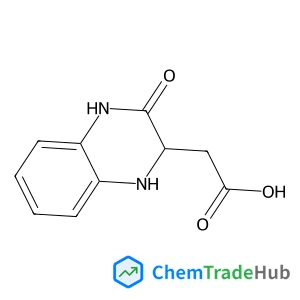
(3-Oxo-1,2,3,4-tetrahydro-2-quinoxalinyl)acetic acid
CAS Number:
136584-14-0
Molecular Formula:
C10H10N2O3
![Methyl 4-({[(2-methyl-2-propanyl)oxy]carbonyl}amino)bicyclo[2.2.2]octane-1-carboxylate structure](https://static.chemtradehub.com/structs/943/943845-74-7-b7e5.webp "Methyl 4-({[(2-methyl-2-propanyl)oxy]carbonyl}amino)bicyclo[2.2.2]octane-1-carboxylate structure")
Methyl 4-({[(2-methyl-2-propanyl)oxy]carbonyl}amino)bicyclo[2.2.2]octane-1-carboxylate
CAS Number:
943845-74-7
Molecular Formula:
C15H25NO4
Recommended Suppliers





Disclaimer
This page provides academic journal information for reference and research purposes only. We are not affiliated with any journal publishers and do not handle publication submissions. For publication-related inquiries, please contact the respective journal publishers directly.
If you notice any inaccuracies in the information displayed, please contact us at support@chemtradehub.com. We will promptly review and address your concerns.