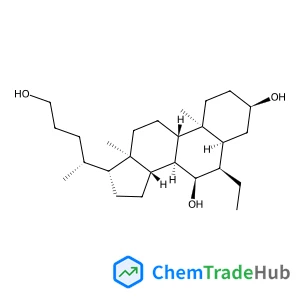
(2R)-2-(3-Bromophenyl)pyrrolidine hydrochloride (1:1)
CAS Number:
1391550-13-2
Molecular Formula:
C10H13BrClN
Hao Min Chen, Chen Maohua, Stefan Adams
In the search for fast lithium-ion conducting solids for the development of safe rechargeable all-solid-state batteries with high energy density, thiophosphates and related compounds have been demonstrated to be particularly promising both because of their record ionic conductivities and their typically low charge transfer resistances. In this work we explore a wide range of known and predicted thiophosphates with a particular focus on the cubic argyrodite phase with a robust three-dimensional network of ion migration pathways. Structural and hydrolysis stability are calculated employing density functional method in combination with a generally applicable method of predicting the relevant critical reaction. The activation energy for ion migration in these argyrodites is then calculated using the empirical bond valence pathway method developed in our group, while bandgaps of selected argyrodites are calculated as a basis for assessing the electrochemical window. Findings for the lithium compounds are also compared to those of previously known copper argyrodites and hypothetical sodium argyrodites. Therefrom, guidelines for experimental work are derived to yield phases with the optimum balance between chemical stability and ionic conductivity in the search for practical lithium and sodium solid electrolyte materials.

Cement and Concrete Research

Australian Journal of Chemistry

Bulletin of the Chemical Society of Japan

Chemistry of Natural Compounds

Ferroelectrics

Chemical & Pharmaceutical Bulletin

Anti-Corrosion Methods and Materials

Advances in Colloid and Interface Science

AIAA Journal

Journal of the American Chemical Society
Ziqi Yang, Chaoran Xu, Xianxian Zhou, Choon Wee Kee, Choon-Hong Tan
DOI: 10.1039/D3SC04397E
Jinmin Miao, Jiajun Dong, Yiming Miao, Yunpeng Bai, Zihan Qu, Brenson A. Jassim, Bo Huang, Quyen Nguyen, Yuan Ma, Allison A. Murray, Jinyue Li
DOI: 10.1039/D3SC04541B
Jiang Li, Dan Li, Yunke Ma, Shucun Zhou, Yu Wang, Daohong Zhang
DOI: 10.1039/D3CS00713H
Qilong Wu, Fangfang Zhu, Gordon Wallace, Xiangdong Yao, Jun Chen
DOI: 10.1039/D3CS00714F
Moritz Thürlemann, Sereina Riniker
DOI: 10.1039/D3SC04317G
Govindasamy Sekar, Vysakh Venugopalan Nair, Jieping Zhu
DOI: 10.1039/D3CS00503H
Ping Zhou, Maryam Nazari Haghighi Pashaki, Hans-Martin Frey, Andreas Hauser, Silvio Decurtins, Andrea Cannizzo, Thomas Feurer, Robert Häner, Shi-Xia Liu
DOI: 10.1039/D3SC03184E
Hao-Yang Liu, Xiao Li, Zhi-Gang Wang
DOI: 10.1039/D3CS00138E
Fuqiang Hu, Cefei Zhang, Zhihao Liu, Xinyu Xie, Xiaohu Zhao, Yanju Luo, Jielin Fu, Baolin Li, Changwei Hu, Zhishan Su, Zhipeng Yu
DOI: 10.1039/D3SC03675H
Waste containing 6-Chloro-5-(2'-hydroxy-3'-methoxy-4-biphenylyl)-3-(3-methoxyphe...
(3alpha,5alpha)-3-Hydroxypregnane-11,20-dione is primarily used in the pharmaceu...
The market for 4-Amino-6-chloro-2-pyridinecarboxylic acid (CAS: 546141-56-4) is ...
Alternatives to (2-Benzoylethyl)trimethylammonium chloride (CAS: 24472-88-6) in ...
N-[4-Nitro-3-(trifluoromethyl)phenyl]acetamide (CAS: 393-12-4) is generally safe...
Alternative reagents such as other phosphates or similar functional groups can b...
There are alternatives to N,N'-Bis(3-aminopropyl)-1,3-propanediamine (CAS: 4605-...
When handling Aluminium trihexadecanoate, it is important to use appropriate per...
(1,1-Dioxido-3-oxo-1,2-benzothiazol-2(3H)-yl)acetic acid is a chemical compound ...
Several alternatives to 5,5-dimethyloxolan-2-one (CAS: 3123-97-5) can be used in...

Physical Chemistry Chemical Physics (PCCP) is an international journal co-owned by 19 physical chemistry and physics societies from around the world. This journal publishes original, cutting-edge research in physical chemistry, chemical physics and biophysical chemistry. To be suitable for publication in PCCP, articles must include significant innovation and/or insight into physical chemistry; this is the most important criterion that reviewers and Editors will judge against when evaluating submissions. The journal has a broad scope and welcomes contributions spanning experiment, theory, computation and data science. Topical coverage includes spectroscopy, dynamics, kinetics, statistical mechanics, thermodynamics, electrochemistry, catalysis, surface science, quantum mechanics, quantum computing and machine learning. Interdisciplinary research areas such as polymers and soft matter, materials, nanoscience, energy, surfaces/interfaces, and biophysical chemistry are welcomed if they demonstrate significant innovation and/or insight into physical chemistry. Joined experimental/theoretical studies are particularly appreciated when complementary and based on up-to-date approaches.
![(2R,6S)-6-[(Benzyloxy)methyl]-4-{[(2-methyl-2-propanyl)oxy]carbonyl}-2-morpholinecarboxylic acid structure](https://static.chemtradehub.com/structs/109/1093085-91-6-3382.webp "(2R,6S)-6-[(Benzyloxy)methyl]-4-{[(2-methyl-2-propanyl)oxy]carbonyl}-2-morpholinecarboxylic acid structure")
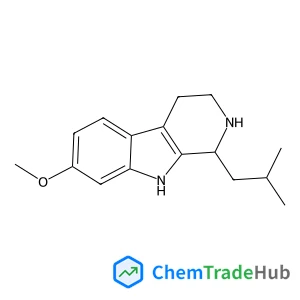
![N-{15-[(2,5-Dioxo-1-pyrrolidinyl)oxy]-15-oxo-3,6,9,12-tetraoxapentadec-1-yl}-2-(2-propyn-1-yloxy)acetamide structure](https://static.chemtradehub.com/structs/210/2101206-92-0-2eb5.webp "N-{15-[(2,5-Dioxo-1-pyrrolidinyl)oxy]-15-oxo-3,6,9,12-tetraoxapentadec-1-yl}-2-(2-propyn-1-yloxy)acetamide structure")