












Stable p-type properties of single walled carbon nanotubes by electrochemical doping
Literature Information
Publication Date
2015-05-27
DOI
10.1039/C5CP01667C
Impact Factor
3.676
Authors
Chang-Soo Park, Cheol Jin Lee, Eun Kyu Kim
View Original
Abstract
We report a highly stable p-type doping for single walled carbon nanotubes using an electrochemical method. The Raman spectroscopy showed the upshift of the G-band when the applied potential increased. Furthermore, the carbon core level shifted as much as 0.14 eV in binding energy of XPS measurement, which is an evidence of p-type doping with a Fermi level change. The highly doped SWCNTs at an applied potential of 1.5 V during the electrochemical doping process showed long time stability, as long as 28 days.
Related Literature
Stepwise deprotonation of truxene: structures, metal complexation, and charge-dependent optical properties
Yumeng Guo, Herdya S. Torchon, Yikun Zhu, Zheng Wei, Zhenyi Zhang, Haixiang Han, Marina A. Petrukhina, Zheng Zhou
2023-10-31
Edge Article
DOI: 10.1039/D3SC04885C
Chemical technology principles for selective bioconjugation of proteins and antibodies
Preeti Chauhan, Ragendu V., Mohan Kumar, Rajib Molla, Surya Dev Mishra, Sneha Basa, Vishal Rai
2023-12-14
Review Article
DOI: 10.1039/D3CS00715D
Visible light-mediated halogenation of organic compounds
Alexey A. Festa, Olga A. Storozhenko, Leonid G. Voskressensky
2023-11-17
Review Article
DOI: 10.1039/D3CS00366C
Virus-mimicking nanosystems: from design to biomedical applications
Hao-Yang Liu, Xiao Li, Zhi-Gang Wang
2023-11-06
Tutorial Review
DOI: 10.1039/D3CS00138E
Pursuing excitonic energy transfer with programmable DNA-based optical breadboards
Divita Mathur, Sebastián A. Díaz, Ryan D. Pensack, Bernard Yurke, Austin Biaggne, Joseph S. Melinger, William B. Knowlton, Igor L. Medintz
2023-10-24
Review Article
DOI: 10.1039/D0CS00936A
Designing drugs and chemical probes with the dualsteric approach
Jixiao He, Chengwei Wu, Mingyang Zhang
2023-11-22
Review Article
DOI: 10.1039/D3CS00650F
Recent advances in point-of-care testing of COVID-19
Sungwoon Lee, Liyan Bi, Hao Chen, Dong Lin, Rongchao Mei, Yixuan Wu, Sang-Woo Joo, Jaebum Choo
2023-11-24
Review Article
DOI: 10.1039/D3CS00709J
Stereoselective RNA reaction with chiral 2′-OH acylating agents
Ryuta Shioi, Lu Xiao, Sayantan Chatterjee
2023-11-07
Edge Article
DOI: 10.1039/D3SC03067A
Photoinduced asymmetric charge trapping in a symmetric tetraazapyrene-fused bis(tetrathiafulvalene) conjugate
Ping Zhou, Maryam Nazari Haghighi Pashaki, Hans-Martin Frey, Andreas Hauser, Silvio Decurtins, Andrea Cannizzo, Thomas Feurer, Robert Häner, Shi-Xia Liu
2023-10-25
Edge Article
DOI: 10.1039/D3SC03184E
You might also like
Compound Q&A
How should waste containing 6-Chloro-5-(2'-hydroxy-3'-methoxy-4-biphenylyl)-3-(3-methoxyphenyl)-1H-pyrrolo[3,2-d]pyrimidine-2,4(3H,5H)-dione (CAS: 1346607-05-3) be handled?
Waste containing 6-Chloro-5-(2'-hydroxy-3'-methoxy-4-biphenylyl)-3-(3-methoxyphe...
1346607-05-36-Chloro-5-(2'-hydro...
Compound Q&A
What are the main uses of (3alpha,5alpha)-3-Hydroxypregnane-11,20-dione (CAS: 23930-19-0)?
(3alpha,5alpha)-3-Hydroxypregnane-11,20-dione is primarily used in the pharmaceu...
23930-19-0(3alpha,5alpha)-3-Hy...
Compound Q&A
What is the market or research trend for 4-Amino-6-chloro-2-pyridinecarboxylic acid (CAS: 546141-56-4)?
The market for 4-Amino-6-chloro-2-pyridinecarboxylic acid (CAS: 546141-56-4) is ...
546141-56-44-Amino-6-chloro-2-p...
Compound Q&A
Are there alternatives to (2-Benzoylethyl)trimethylammonium chloride (CAS: 24472-88-6) in synthesis?
Alternatives to (2-Benzoylethyl)trimethylammonium chloride (CAS: 24472-88-6) in ...
24472-88-6(2-Benzoylethyl)trim...
Compound Q&A
Is N-[4-Nitro-3-(trifluoromethyl)phenyl]acetamide (CAS: 393-12-4) safe?
N-[4-Nitro-3-(trifluoromethyl)phenyl]acetamide (CAS: 393-12-4) is generally safe...
393-12-4N-[4-Nitro-3-(triflu...
Compound Q&A
Are there alternatives to [(4R,5R,6S)-5-hydroxy-10-imino-3,7-dioxa-1,9-diazatricyclo[6.4.0.02,6]dodeca-8,11-dien-4-yl]methyl dihydrogen phosphate (CAS: 39679-56-6) in synthesis?
Alternative reagents such as other phosphates or similar functional groups can b...
39679-56-6[(4R,5R,6S)-5-hydrox...
Compound Q&A
Are there alternatives to N,N'-Bis(3-aminopropyl)-1,3-propanediamine (CAS: 4605-14-5) in synthesis?
There are alternatives to N,N'-Bis(3-aminopropyl)-1,3-propanediamine (CAS: 4605-...
4605-14-5N,N'-Bis(3-aminoprop...
Compound Q&A
What precautions should be taken when handling Aluminium trihexadecanoate (CAS: 555-35-1)?
When handling Aluminium trihexadecanoate, it is important to use appropriate per...
555-35-1Aluminium trihexadec...
Compound Q&A
What is (1,1-Dioxido-3-oxo-1,2-benzothiazol-2(3H)-yl)acetic acid (CAS: 52188-11-1)?
(1,1-Dioxido-3-oxo-1,2-benzothiazol-2(3H)-yl)acetic acid is a chemical compound ...
52188-11-1(1,1-Dioxido-3-oxo-1...
Compound Q&A
Are there alternatives to 5,5-dimethyloxolan-2-one (CAS: 3123-97-5) in synthesis?
Several alternatives to 5,5-dimethyloxolan-2-one (CAS: 3123-97-5) can be used in...
3123-97-55,5-dimethyloxolan-2...
Source Journal
Physical Chemistry Chemical Physics

CiteScore:
5.5
Self-citation Rate:
10.3%
Articles per Year:
3036
Physical Chemistry Chemical Physics (PCCP) is an international journal co-owned by 19 physical chemistry and physics societies from around the world. This journal publishes original, cutting-edge research in physical chemistry, chemical physics and biophysical chemistry. To be suitable for publication in PCCP, articles must include significant innovation and/or insight into physical chemistry; this is the most important criterion that reviewers and Editors will judge against when evaluating submissions. The journal has a broad scope and welcomes contributions spanning experiment, theory, computation and data science. Topical coverage includes spectroscopy, dynamics, kinetics, statistical mechanics, thermodynamics, electrochemistry, catalysis, surface science, quantum mechanics, quantum computing and machine learning. Interdisciplinary research areas such as polymers and soft matter, materials, nanoscience, energy, surfaces/interfaces, and biophysical chemistry are welcomed if they demonstrate significant innovation and/or insight into physical chemistry. Joined experimental/theoretical studies are particularly appreciated when complementary and based on up-to-date approaches.
Recommended Compounds
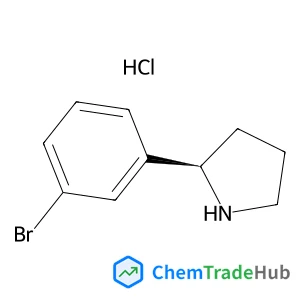
(2R)-2-(3-Bromophenyl)pyrrolidine hydrochloride (1:1)
CAS Number:
1391550-13-2
Molecular Formula:
C10H13BrClN

(3alpha,5beta,6alpha,7alpha)-6-Ethylcholane-3,7,24-triol
CAS Number:
1537866-49-1
Molecular Formula:
C26H46O3

Recommended Suppliers






Disclaimer
This page provides academic journal information for reference and research purposes only. We are not affiliated with any journal publishers and do not handle publication submissions. For publication-related inquiries, please contact the respective journal publishers directly.
If you notice any inaccuracies in the information displayed, please contact us at support@chemtradehub.com. We will promptly review and address your concerns.