












![1-[3-(4-Morpholinylsulfonyl)phenyl]methanamine structure](https://static.chemtradehub.com/structs/933/933989-32-3-51af.webp "1-[3-(4-Morpholinylsulfonyl)phenyl]methanamine structure")
Modulating the magnetic behavior of Fe(ii)–MOF-74 by the high electron affinity of the guest molecule
Literature Information
Publication Date
2015-05-27
DOI
10.1039/C5CP01441G
Impact Factor
3.676
Authors
Sungmin Han, Jaehoon Kim, Yousung Jung
View Original
Abstract
As a new class of magnetic materials, metal–organic framework (MOF) has received a significant attention due to their functionality and porosity that can provide diverse magnetic phenomena by utilizing host–guest chemistry. For Fe–MOF-74, we here find using density functional calculations that the O2 and C2H4 adsorptions result in the ferromagnetic (FM) and antiferromagnetic (AFM) orderings along the 1D chain of an hexagonal MOF framework, respectively, while their adsorption energies, pi-complexation, and geometrical changes are all similar upon binding. We reveal that this different magnetism behavior is attributed to the different electronic effects, where the adsorbed O2 greatly withdraws a minor spin electron from the Fe centers. The latter significant back donation opens a new channel for superexchange interactions that can enhance the FM coupling between Fe centers, where the strength of calculated intrachain FM coupling constrant (Jin) in O2 adsorbed Fe–MOF-74 is more than 10 times enhanced compared to bare Fe-MOF-74. This prediction suggests a possibility for the conceptual usage of Fe–MOF-74 as a gas sensor based on its magnetic changes caused by the adsorbed gases. Furthermore, the suggested mechanism might be used to control the magnetic properties of MOFs using the guest molecules, although concrete strategies to enhance such magnetic interactions to be used in practical applications would require further significant investigation.
Related Literature
Correction: pH sensitive water-in-water emulsions based on the pullulan and poly(N,N-dimethylacrylamide) aqueous two-phase system
Alexander Plucinski, Bernhard V. K. J. Schmidt
2022-07-18
Correction
DOI: 10.1039/D2PY90095E
Nano-dimensional spheres and worms as fillers in polymer nanocomposites: effect of filler morphology
Fumi Ishizuka, Hyun Jin Kim, Rhiannon P. Kuchel, Yin Yao, Shunsuke Chatani, Hiroshi Niino, Per B. Zetterlund
2022-03-10
Communication
DOI: 10.1039/D1PY01661J
Customizable nano-sized colloidal tetrahedra by polymerization-induced particle self-assembly (PIPA)
Nan Liu, Min Zeng, Jinzhao Ji, Jinying Yuan
2022-05-19
Paper
DOI: 10.1039/D2PY00407K
One-pot synthesis of structure-controlled temperature-responsive polymer gels
Tomoki Sakai, Nagisa Ito, Mitsuo Hara, Takahiro Seki, Mineto Uchiyama, Masami Kamigaito, Kotaro Satoh, Taiki Hoshino, Yukikazu Takeoka
2022-06-17
Paper
DOI: 10.1039/D2PY00554A
Thermoresponsive metalloprotein-based hybrid hydrogels for the reversible and highly selective removal of lead(ii) from water
Tianbiao Wei, Shanqing Huang, Qingyuan Hu, Jue Wang, Zhongzhong Huo, Tongyang Zhu, Chi Wu, Hao Chen
2022-02-07
Paper
DOI: 10.1039/D1PY01574E
Thioanhydride/isothiocyanate/epoxide ring-opening terpolymerisation: sequence selective enchainment of monomer mixtures and switchable catalysis
Dorothee Silbernagl, Heinz Sturm, Alex J. Plajer
2022-06-20
Communication
DOI: 10.1039/D2PY00629D
You might also like
Compound Q&A
What are the main uses of 1-(3-Aminophenyl)-3-[(3R)-1-(3,3-dimethyl-2-oxobutyl)-2-oxo-5-(2-pyridinyl)-2,3-dihydro-1H-1,4-benzodiazepin-3-yl]urea (CAS: 155412-88-7)?
This compound is mainly used as an intermediate in the synthesis of antipsychoti...
155412-88-71-(3-Aminophenyl)-3-...
Compound Q&A
How should waste containing 1-(D-Ribofuranosyl)-1,4-dihydro-3-pyridinecarboxamide (CAS: 19132-12-8) be handled?
Waste containing 1-(D-Ribofuranosyl)-1,4-dihydro-3-pyridinecarboxamide (CAS: 191...
19132-12-81-(D-Ribofuranosyl)-...
Compound Q&A
What regulatory guidelines apply to 2-Methyl-2-propanyl 3-bromo-3-(hydroxymethyl)-1-azetidinecarboxylate (CAS: 2007919-81-3)?
2-Methyl-2-propanyl 3-bromo-3-(hydroxymethyl)-1-azetidinecarboxylate (CAS: 20079...
2007919-81-32-Methyl-2-propanyl ...
Compound Q&A
What is N-(4-Chloro-2-pyridinyl)acetamide (CAS: 245056-66-0)?
N-(4-Chloro-2-pyridinyl)acetamide (CAS: 245056-66-0) is a chemical compound with...
245056-66-0N-(4-Chloro-2-pyridi...
Compound Q&A
What is 5-Chloro-2-hydroxybenzoic acid (CAS: 321-14-2)?
5-Chloro-2-hydroxybenzoic acid, also known as 5-chlorosalicylic acid, is an arom...
321-14-25-Chloro-2-hydroxybe...
Compound Q&A
What precautions should be taken when handling 1,1-Dichloro-1-fluoroethane (CAS: 1717-00-6)?
When handling 1,1-Dichloro-1-fluoroethane (CAS: 1717-00-6), it is important to u...
1717-00-61,1-Dichloro-1-fluor...
Compound Q&A
What are the physical and chemical properties of Fmoc-(2S,3R)-3-phenylpyrrolidine-2-carboxylic acid (CAS: 281655-32-1)?
Fmoc-(2S,3R)-3-phenylpyrrolidine-2-carboxylic acid is a white crystalline solid ...
281655-32-1Fmoc-(2S,3R)-3-pheny...
Compound Q&A
What are the main uses of 4-Amino-5-bromo-2-pyridinecarboxylic acid (CAS: 1363381-01-4)?
4-Amino-5-bromo-2-pyridinecarboxylic acid is primarily used as a precursor in th...
1363381-01-44-Amino-5-bromo-2-py...
Compound Q&A
What precautions should be taken when handling (S)-tert-butyl 2-((2-(4-bromophenyl)-2-oxoethyl)carbamoyl)pyrrolidine-1-carboxylate (CAS: 1007881-98-2)?
Handling this compound should be done with personal protective equipment (PPE) i...
1007881-98-2(S)-tert-butyl 2-((2...
Compound Q&A
What precautions should be taken when handling 8-bromo-2,2-dimethyl-3,4-dihydro-2H-1,4-benzoxazin-3-one (CAS: 688363-73-7)?
When handling 8-bromo-2,2-dimethyl-3,4-dihydro-2H-1,4-benzoxazin-3-one, use prop...
688363-73-78-bromo-2,2-dimethyl...
Source Journal
Physical Chemistry Chemical Physics

CiteScore:
5.5
Self-citation Rate:
10.3%
Articles per Year:
3036
Physical Chemistry Chemical Physics (PCCP) is an international journal co-owned by 19 physical chemistry and physics societies from around the world. This journal publishes original, cutting-edge research in physical chemistry, chemical physics and biophysical chemistry. To be suitable for publication in PCCP, articles must include significant innovation and/or insight into physical chemistry; this is the most important criterion that reviewers and Editors will judge against when evaluating submissions. The journal has a broad scope and welcomes contributions spanning experiment, theory, computation and data science. Topical coverage includes spectroscopy, dynamics, kinetics, statistical mechanics, thermodynamics, electrochemistry, catalysis, surface science, quantum mechanics, quantum computing and machine learning. Interdisciplinary research areas such as polymers and soft matter, materials, nanoscience, energy, surfaces/interfaces, and biophysical chemistry are welcomed if they demonstrate significant innovation and/or insight into physical chemistry. Joined experimental/theoretical studies are particularly appreciated when complementary and based on up-to-date approaches.
Recommended Compounds
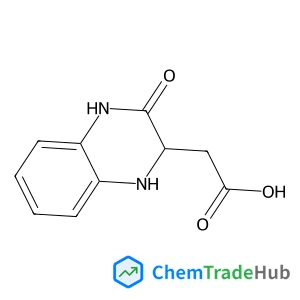
(3-Oxo-1,2,3,4-tetrahydro-2-quinoxalinyl)acetic acid
CAS Number:
136584-14-0
Molecular Formula:
C10H10N2O3
![6-Benzyl-4,5,6,7-tetrahydro-1H-pyrazolo[3,4-c]pyridin-3(2H)-one structure](https://static.chemtradehub.com/structs/909/909187-64-0-f54f.webp "6-Benzyl-4,5,6,7-tetrahydro-1H-pyrazolo[3,4-c]pyridin-3(2H)-one structure")
6-Benzyl-4,5,6,7-tetrahydro-1H-pyrazolo[3,4-c]pyridin-3(2H)-one
CAS Number:
909187-64-0
Molecular Formula:
C13H15N3O
Recommended Suppliers


Disclaimer
This page provides academic journal information for reference and research purposes only. We are not affiliated with any journal publishers and do not handle publication submissions. For publication-related inquiries, please contact the respective journal publishers directly.
If you notice any inaccuracies in the information displayed, please contact us at support@chemtradehub.com. We will promptly review and address your concerns.