


Semi-crystalline diblock copolymer nano-objects prepared via RAFT alcoholic dispersion polymerization of stearyl methacrylate
Literature Information
Publication Date
2014-12-19
DOI
10.1039/C4PY01664E
Impact Factor
5.582
Authors
Mona Semsarilar, Nicholas J. W. Penfold, Elizabeth R. Jones, Steven P. Armes
View Original
Abstract
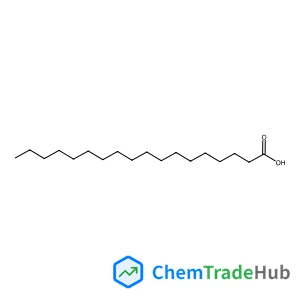
The RAFT dispersion polymerization of stearyl methacrylate (SMA) is conducted in ethanol at 70 °C using a poly(2-(dimethylamino)ethyl methacrylate) [PDMA] chain transfer agent. The growing PSMA block becomes insoluble in ethanol, which leads to polymerization-induced self-assembly (PISA) and hence produces a range of copolymer morphologies depending on the precise PDMAy–PSMAx formulation. More specifically, pure phases corresponding to either spherical nanoparticles, worm-like nanoparticles or vesicles can be prepared as judged by transmission electron microscopy. However, the worm phase space is relatively narrow, so construction of a detailed phase diagram is required for reproducible syntheses of this morphology. Inter-digitation of the stearyl (C18) side-groups leads to a semi-crystalline PSMA core block and the effect of systematically varying the mean degree of polymerization of both the PDMA and PSMA blocks on the Tm and Tc is investigated using differential scanning calorimetry. Finally, it is demonstrated that these cationic nanoparticles can be employed as colloidal templates for the in situ deposition of silica from aqueous solution.
Recommended Journals

Electroanalysis

Journal of Chemical Sciences

Journal of Asian Natural Products Research

Acta Metallurgica Sinica-English Letters

Journal of the Indian Institute of Science

Cellulose

Critical Reviews in Solid State and Materials Sciences

Polycyclic Aromatic Compounds

Chinese Journal of Chemistry

NDT & E International
Related Literature
Small angle X-ray scattering measurements probe water nanodroplet evolution under highly non-equilibrium conditions
Barbara E. Wyslouzil, Gerald Wilemski, Reinhard Strey, Soenke Seifert, Randall E. Winans
2007-08-14
Paper
DOI: 10.1039/B709363B
Kinetic analysis of supported Ni-catalyzed CO2/CH4 reactions using photoacoustic spectroscopy
Ji-Woong Kim, Jae-Au Ha, Hun Jung, Byung-II Ahn, Sung-Han Lee, Joong-Gill Choi
2007-09-25
Paper
DOI: 10.1039/B709102H
Molecular dynamics study of dicarbollide anions in nitrobenzene solution and at its aqueous interface. Synergistic effect in the Eu(iii) assisted extraction
G. Chevrot, R. Schurhammer, G. Wipff
2007-09-28
Paper
DOI: 10.1039/B711284J
Probing the evaporation of ternary ethanol–methanol–water droplets by cavity enhanced Raman scattering
Chris R. Howle, Chris J. Homer, Rebecca J. Hopkins, Jonathan P. Reid
2007-08-06
Paper
DOI: 10.1039/B706211G
Dissociative electron attachment to gas phase glycine: Exploring the decomposition pathways by mass separation of isobaric fragment anions
A. Mauracher, S. Denifl, A. Aleem, N. Wendt, F. Zappa, P. Cicman, M. Probst, T. D. Märk, P. Scheier, H. D. Flosadóttir, O. Ingólfsson, E. Illenberger
2007-09-07
Paper
DOI: 10.1039/B709140K
Titanium oxidefullerenes: electronic structure and basic trends in their stability
2007-09-24
Paper
DOI: 10.1039/B712094J
How realistic is the pore size distribution calculated from adsorption isotherms if activated carbon is composed of fullerene-like fragments?
Artur P. Terzyk, Sylwester Furmaniak, Peter J. F. Harris, Piotr A. Gauden, Jerzy Włoch, Piotr Kowalczyk, Gerhard Rychlicki
2007-10-02
Paper
DOI: 10.1039/B710552E
Acid/base equilibria in clusters and their role in proton exchange membranes: computational insight
Vassiliki-Alexandra Glezakou, Michel Dupuis, Christopher J. Mundy
2007-09-13
Paper
DOI: 10.1039/B709752B
Intracule functional models: I. Angle-corrected correlation kernels
Elise E. Dumont, Deborah L. Crittenden, Peter M. W. Gill
2007-08-13
Paper
DOI: 10.1039/B709513A
You might also like
Compound Q&A
What is 1-(2,4,6-Trifluorophenyl)ethanol (CAS: 1250113-83-7)?
1-(2,4,6-Trifluorophenyl)ethanol is an organic compound with the CAS number 1250...
1250113-83-71-(2,4,6-Trifluoroph...
Compound Q&A
Is 1-(2,4-Dimethoxybenzyl)-4-(hydroxymethyl)-2-pyrrolidinone (CAS: 919111-34-5) safe?
1-(2,4-Dimethoxybenzyl)-4-(hydroxymethyl)-2-pyrrolidinone (CAS: 919111-34-5) is ...
919111-34-51-(2,4-Dimethoxybenz...
Compound Q&A
What are the physical and chemical properties of (7S,15R)-6β,15-Diacetoxy-7α,20-epoxy-7-hydroxykaura-2,16-dien-1-one (CAS: 51419-51-3)?
(7S,15R)-6β,15-Diacetoxy-7α,20-epoxy-7-hydroxykaura-2,16-dien-1-one is a crystal...
51419-51-3(7S,15R)-6β,15-Diace...
Compound Q&A
What regulatory guidelines apply to rac-ethyl (1r,4r)-4-hydroxycyclohexane-1-carboxylate, trans (CAS: 3618-04-0)?
The compound rac-ethyl (1r,4r)-4-hydroxycyclohexane-1-carboxylate, trans (CAS: 3...
3618-04-0rac-ethyl (1r,4r)-4-...
Compound Q&A
What is the market or research trend for 2-(2,4-Difluorophenoxy)-3-nitropyridine (CAS: 175135-62-3)?
The market for 2-(2,4-Difluorophenoxy)-3-nitropyridine (CAS: 175135-62-3) is cur...
175135-62-32-(2,4-Difluoropheno...
Compound Q&A
What are the main uses of 6-Diazo-5-oxo-L-norleucine (CAS: 157-03-9)?
The main uses of 6-Diazo-5-oxo-L-norleucine (CAS: 157-03-9) include research in ...
157-03-96-Diazo-5-oxo-L-norl...
Compound Q&A
What precautions should be taken when handling 2-Aminoethyl-mono-amide-DOTA-tris(tBu ester) (CAS: 173308-19-5)?
When handling 2-Aminoethyl-mono-amide-DOTA-tris(tBu ester) (CAS: 173308-19-5), i...
173308-19-52-Aminoethyl-mono-am...
Compound Q&A
How is 5-Methylimidazo[1,2-a]pyridine-3-carbaldehyde (CAS: 178488-37-4) typically synthesized?
5-Methylimidazo[1,2-a]pyridine-3-carbaldehyde (CAS: 178488-37-4) can be synthesi...
178488-37-45-Methylimidazo[1,2-...
Compound Q&A
Are there alternatives to 2,4,6-Trihydroxyisophthalaldehyde (CAS: 4396-13-8) in synthesis?
There are alternative reagents that can be used in the synthesis of 2,4,6-Trihyd...
4396-13-82,4,6-Trihydroxyisop...
Compound Q&A
What is (2Z)-3-(5-Fluoro-1H-indol-3-yl)-2-sulfanylacrylic acid (CAS: 179461-52-0)?
(2Z)-3-(5-Fluoro-1H-indol-3-yl)-2-sulfanylacrylic acid is a chemical compound wi...
179461-52-0(2Z)-3-(5-Fluoro-1H-...
Source Journal
Polymer Chemistry

CiteScore:
8.6
Self-citation Rate:
7.3%
Articles per Year:
457
Polymer Chemistry welcomes submissions in all areas of polymer science that have a strong focus on macromolecular chemistry. Manuscripts may cover a broad range of fields, yet no direct application focus is required.
Recommended Compounds
Recommended Suppliers






Disclaimer
This page provides academic journal information for reference and research purposes only. We are not affiliated with any journal publishers and do not handle publication submissions. For publication-related inquiries, please contact the respective journal publishers directly.
If you notice any inaccuracies in the information displayed, please contact us at support@chemtradehub.com. We will promptly review and address your concerns.