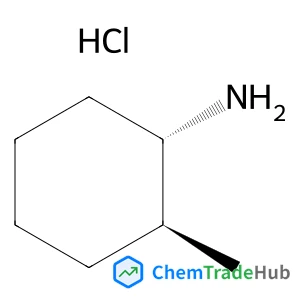
(1R,2R)-2-Methylcyclohexanamine hydrochloride (1:1)
CAS Number:
39558-31-1
Molecular Formula:
C7H16ClN
Wayne D. Cook, Fei Chen
Photo-DSC and UV-visible spectroscopy were used to study the photo-curing kinetics and mechanism of the photopolymerization of dimethacrylates using three-component initiation systems consisting of 1-chloro-4-propoxy-9H-thioxanthen-9-one (CPXTO), diphenyl iodonium hexafluorophosphate (Ph2IPF6), and the aromatic N,N,3,5-tetramethyl aniline (TMA) or the aromatic-like N,N-dimethylbenzylamine or aliphatic triethylamine. The effect of monomers with different backbone flexibilities on the curing kinetics were also investigated, using aliphatic triethylene glycol dimethacrylate (TEGDMA), aliphatic nona-ethylene glycol dimethacrylate and aromatic diethoxylated bisphenol-A dimethacrylate. Photo-DSC cure kinetics studies showed that the fastest polymerization occurred when all three components were present for CPTXO/amine/Ph2IPF6 systems, and the maximum polymerization rate followed the trend: CPTXO/amine/Ph2IPF6 ≫ CPTXO/Ph2IPF6 ≥ CPTXO/amine, irrespective of the monomer or amine used. UV-visible spectroscopy studies revealed that for the TEGDMA/CPTXO/TMA, TEGDMA/CPTXO/Ph2IPF6, and TEGDMA/CPTXO/TMA/Ph2IPF6 systems, the CPTXO was rapidly photobleached at its absorption maximum (near 385 nm) during the photo-DSC timescale with photobleaching rates which followed the trend: CPTXO/TMA ≫ CPTXO/Ph2IPF6 ≈ CPTXO/TMA/Ph2IPF6. At the same time, a new absorption at 500 nm appeared for the systems containing CPTXO and Ph2IPF6, and the rate of this photodarkening behavior was greater for the CPTXO/Ph2IPF6 system compared with CPTXO/TMA/Ph2IPF6, – no photodarkening at 500 nm was found for the CPTXO/TMA system. Based on the curing kinetics, photobleaching studies and the thermodynamic feasibility it is proposed that for the three-component CPTXO/amine/Ph2IPF6 system, the reaction involves two main pathways. The first is the irreversible oxidation of the excited CPTXO molecule by Ph2IPF6 with the formation of a thioxanthone radical cation and a phenyl radical by an electron-transfer mechanism, followed by H-transfer between a thioxanthone radical cation and amine (or monomer) to form an aminoalkyl radical and to also regenerate CPTXO. The second pathway involves the reduction of the excited CPTXO molecule by the amine to form ketyl and aminoalkyl radicals, followed by the irreversible oxidation of the amine and the ketyl radicals by the iodonium salt, to form an initiating radical and also to regenerate CPTXO. Due to the non-reversible oxidation of the CPTXO and amine radicals by the iodonium salt (which prevents the back-electron transfer of amine to the excited CPTXO), due to the CPTXO regeneration reactions and due to the removal of the potentially terminating CPTXO radical, the efficiency of the CPTXO/TMA/Ph2IPF6 photoinitiating system is dramatically enhanced.
Guoqiang Hao, Xiaojun Ye, Shangpeng Gao, Hongbo Li
DOI: 10.1039/D0CP04160B
Wenyi Ding, Zhizhong Jiang, Jingping Xin, Min Zhang, Mingjie Zheng
DOI: 10.1039/C9CP05626B
DOI: 10.1039/C9CP02601K
Hisako Sato, Kazuyoshi Takimoto, Jun Yoshida, Akihiko Yamagishi
DOI: 10.1039/D0CP04827E
Andrew D. Buettner, Benjamin J. Dilday, Rachel A. Craigmile, Matthew C. Drummer, Jean M. Standard, Robert W. Quandt
DOI: 10.1039/D0CP03698F
Małgorzata Jasiurkowska-Delaporte, Maria Massalska-Arodź, Yasuhisa Yamamura, Kazuya Saito
DOI: 10.1039/D0CP04002A
Minh Tho Nguyen
DOI: 10.1039/D0CP03154B
Minsu Kim, Phil Woong Kang, Sunjoong Park, Duk Young Jeon, Hyunjoo Lee
DOI: 10.1039/C9CP05241K
Miguel Rivera-Torrente, Matthias Filez, Christian Schneider, Ewout C. van der Feltz, Konrad Wolkersdörfer, Dereje H. Taffa, Michael Wark, Roland A. Fischer, Bert M. Weckhuysen
DOI: 10.1039/C9CP05082E
Sushant Kumar Behera, Mayuri Bora, Sapta Sindhu Paul Chowdhury, Pritam Deb
DOI: 10.1039/C9CP05252F
(5-Sulfamoyl-3-pyridinyl)boronic acid is primarily used in chemical synthesis, p...
Benzyl 2-methyl-2-(methylsulfonyl)-4-pentenoate is typically synthesized via est...
When handling 8-Fluoroquinolin-6-ol (CAS: 209353-22-0), it is important to use p...
1,3-Dibromo-5-(2-methyl-2-propanyl)benzene (CAS: 129316-09-2) is a crystalline c...
Ethyl 7-chloro-4-oxo-1-(1,3-thiazol-2-yl)-1,4-dihydro-1,8-naphthyridine-3-carbox...
When handling Delta-7-Avenasterol (CAS: 23290-26-8), it is important to wear app...
Proper handling involves the use of personal protective equipment such as gloves...
When handling 2-Methyl-2-proanyl 4-[(2-aminophenyl)amino]-1-piperidinecarboxylat...
N-Methyl-4-chlorobenzylamine hydrochloride (CAS: 65542-24-7) is a organic compou...
[2-(Dodecyloxy)ethoxy]acetic acid (CAS: 27306-90-7) is generally considered safe...

Polymer Chemistry welcomes submissions in all areas of polymer science that have a strong focus on macromolecular chemistry. Manuscripts may cover a broad range of fields, yet no direct application focus is required.