












Comprehensive mass analysis for chemical processes, a case study on l-Dopa manufacture
Literature Information
Publication Date
2014-07-02
DOI
10.1039/C4GC00565A
Impact Factor
10.182
Authors
Tao Li, Xuan Li
View Original
Abstract
To evaluate the “greenness” of chemical processes in route selection and process development, we propose a comprehensive mass analysis to inform the stakeholders from different fields. This is carried out by characterizing the mass intensity for each contributing chemical or waste component with a new algorithm. The analysis is demonstrated with the evaluation of commercial processes for L-Dopa. The plan-wide impacts on inputs are estimated for design features such as the choice of starting material, the use of one-pot synthesis for multiple reactions, recycling of the wrong enantiomer, methods for intermediate isolation, and volumetric productivity. The waste effluent profile is generated to project waste management needs. It has been found that the current biocatalytic process (Ajinomoto) has the best process efficiency and minimal waste treatment needs. The mass efficiency has been improved by at least 6.5 fold through biocatalyst optimization, and reaction intensification employing the crystallization-induced equilibrium shift.
Recommended Journals
Related Literature
Fluorescence studies on phenylene moieties embedded in a framework of periodic mesoporous organosilica
Tadashi Okada, Yoshiharu Hirose
2011-03-24
Paper
DOI: 10.1039/C0CP02714F
Evaluation of a quantitative structure–property relationship (QSPR) for predicting mid-visible refractive index of secondary organic aerosol (SOA)
Haley Redmond, Jonathan E. Thompson
2011-03-11
Paper
DOI: 10.1039/C0CP02270E
Competitive reaction pathways for functionalization and volatilization in the heterogeneous oxidation of coronene thin films by hydroxyl radicals and ozone
E. R. Mysak, J. D. Smith, P. D. Ashby, J. T. Newberg, K. R. Wilson, H. Bluhm
2011-03-22
Paper
DOI: 10.1039/C0CP02323J
A complete look at the multi-channel dissociation of propenal photoexcited at 193 nm: branching ratios and distributions of kinetic energy
Chanchal Chaudhuri, Shih-Huang Lee
2011-03-21
Paper
DOI: 10.1039/C0CP01641A
Catalysis by metal–organic frameworks: fundamentals and opportunities
Marco Ranocchiari
2011-01-14
Perspective
DOI: 10.1039/C0CP02394A
Ground and excited state communication within a ruthenium containing benzimidazole metallopolymer
Emmet J. O'Reilly, Lynn Dennany, Darren Griffith, Francois Moser, Tia E. Keyes, Robert J. Forster
2011-03-14
Paper
DOI: 10.1039/C0CP02638G
The C–Cl⋯π interactions inside supramolecular nanotubes of hexaethynylhexamethoxy[6]pericyclyne
Roman I. Zubatyuk, Viktoriya V. Dyakonenko
2011-03-14
Paper
DOI: 10.1039/C0CP02666B
Ab initio and DFT studies of the spin–orbit and spin–spin contributions to the zero-field splitting tensors of triplet nitrenes with aryl scaffolds
Kenji Sugisaki, Kazuo Toyota, Kazunobu Sato, Daisuke Shiomi, Masahiro Kitagawa, Takeji Takui
2011-03-10
Paper
DOI: 10.1039/C0CP02809F
Electronic and magnetic properties of substituted BN sheets: A density functional theory study
P. Yang, Z. G. Wang, X. T. Zu, H. Y. Xiao, X. Sun, M. A. Khaleel, F. Gao
2011-03-21
Paper
DOI: 10.1039/C0CP02001J
Facile solid-phase synthesis of the diammoniate of diborane and its thermal decomposition behavior
Zhanzhao Fang, Junhong Luo, Xiangdong Kang, Haijie Xia, Sisheng Wang, Wen Wen, Xingtai Zhou, Ping Wang
2011-03-22
Paper
DOI: 10.1039/C1CP00018G
You might also like
Compound Q&A
How should 2-Methylbenzene-1,4-diamine dihydrochloride (CAS: 615-45-2) be stored?
2-Methylbenzene-1,4-diamine dihydrochloride (CAS: 615-45-2) should be stored in ...
615-45-22-Methylbenzene-1,4-...
Compound Q&A
Is (1S,4S)-2,5-Diazabicyclo[2.2.1]heptane dihydrobromide (CAS: 132747-20-7) safe?
(1S,4S)-2,5-Diazabicyclo[2.2.1]heptane dihydrobromide is generally considered sa...
132747-20-7(1S,4S)-2,5-Diazabic...
Compound Q&A
What industries use (6-Chloropyridazin-3-YL)methanamine (CAS: 871826-15-2)?
(6-Chloropyridazin-3-YL)methanamine finds applications in the pharmaceutical ind...
871826-15-2(6-Chloropyridazin-3...
Compound Q&A
What are the main uses of 2-Fluoro-3-methylphenol (CAS: 77772-72-6)?
2-Fluoro-3-methylphenol is primarily used in the synthesis of pharmaceuticals, p...
77772-72-62-Fluoro-3-methylphe...
Compound Q&A
What precautions should be taken when handling 3-Methoxy-4-nitrobenzonitrile (CAS: 177476-75-4)?
When handling 3-Methoxy-4-nitrobenzonitrile, it is important to wear appropriate...
177476-75-43-Methoxy-4-nitroben...
Compound Q&A
What precautions should be taken when handling 1,3-Oxazolo[4,5-b]pyridine-2(3H)-thione (CAS: 211949-57-4)?
When handling 1,3-Oxazolo[4,5-b]pyridine-2(3H)-thione (CAS: 211949-57-4), it is ...
211949-57-4[1,3]Oxazolo[4,5-b]p...
Compound Q&A
What regulatory guidelines apply to 4-Ethynylbenzamide (CAS: 90347-86-7)?
4-Ethynylbenzamide (CAS: 90347-86-7) falls under various regulatory guidelines i...
90347-86-74-Ethynylbenzamide
Compound Q&A
What are the main uses of 3-(2-Ethylphenyl)-2-thioxo-4-imidazolidinone (CAS: 186822-57-1)?
3-(2-Ethylphenyl)-2-thioxo-4-imidazolidinone is primarily used as an intermediat...
186822-57-13-(2-Ethylphenyl)-2-...
Compound Q&A
What is (2-Fluoro-6-methoxyphenyl)acetic acid (CAS: 500912-19-6)?
(2-Fluoro-6-methoxyphenyl)acetic acid, also known as 4-fluoro-3-methoxybenzoic a...
500912-19-6(2-Fluoro-6-methoxyp...
Compound Q&A
What is the market or research trend for 2-[4-(Hydroxymethyl)phenoxy]ethanol (CAS: 102196-18-9)?
Market trends for 2-[4-(Hydroxymethyl)phenoxy]ethanol (CAS: 102196-18-9) indicat...
102196-18-92-[4-(Hydroxymethyl)...
Source Journal
Green Chemistry

CiteScore:
16.1
Self-citation Rate:
7.5%
Articles per Year:
944
Green Chemistry provides a unique forum for the publication of innovative research on the development of alternative green and sustainable technologies. The scope of Green Chemistry is based on, but not limited to, the definition proposed by Anastas and Warner (Green Chemistry: Theory and Practice, P T Anastas and J C Warner, Oxford University Press, Oxford, 1998). Green chemistry is the utilisation of a set of principles that reduces or eliminates the use or generation of hazardous substances in the design, manufacture and application of chemical products. Green Chemistry is at the frontiers of this continuously-evolving interdisciplinary science and publishes research that attempts to reduce the environmental impact of the chemical enterprise by developing a technology base that is inherently non-toxic to living things and the environment. Submissions on all aspects of research relating to the endeavour are welcome. The journal publishes original and significant cutting-edge research that is likely to be of wide general appeal. To be published, work must present a significant advance in green chemistry. Papers must contain a comparison with existing methods and demonstrate advantages over those methods before publication can be considered. For more information please see this Editorial. Coverage includes the following, but is not limited to: Design (e.g. biomimicry, design for degradation/recycling/reduced toxicity…) Reagents & Feedstocks (e.g. renewables, CO2, solvents, auxiliary agents, waste utilization…) Synthesis (e.g. organic, inorganic, synthetic biology…) Catalysis (e.g. homogeneous, heterogeneous, enzyme, whole cell…) Process (e.g. process design, intensification, separations, recycling, efficiency…) Energy (e.g. renewable energy, fuels, photovoltaics, fuel cells, energy storage, energy carriers…) Applications (e.g. electronics, dyes, consumer products, coatings, pharmaceuticals, preservatives, building materials, chemicals for industry/agriculture/mining…) Impact (e.g. safety, metrics, LCA, sustainability, (eco)toxicology…) Green chemistry is, by definition, a continuously-evolving frontier. Therefore, the inclusion of a particular material or technology does not, of itself, guarantee that a paper is suitable for the journal. To be suitable, the novel advance should have the potential for reduced environmental impact relative to the state of the art. Green Chemistry does not normally deal with research associated with 'end-of-pipe' or remediation issues.
Recommended Compounds
![5-Bromo-3-isopropyl-1H-pyrrolo[2,3-b]pyridine structure](https://static.chemtradehub.com/structs/125/1256819-54-1-8620.webp "5-Bromo-3-isopropyl-1H-pyrrolo[2,3-b]pyridine structure")
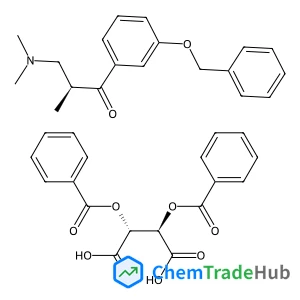
(S)-1-(3-(Benzyloxy)phenyl)-3-(dimethylamino)-2-methylpropan-1-one (2r,3r)-2,3-bis(benzoyloxy)succinate
CAS Number:
1004315-81-4
Molecular Formula:
C37H37NO10
Recommended Suppliers






Disclaimer
This page provides academic journal information for reference and research purposes only. We are not affiliated with any journal publishers and do not handle publication submissions. For publication-related inquiries, please contact the respective journal publishers directly.
If you notice any inaccuracies in the information displayed, please contact us at support@chemtradehub.com. We will promptly review and address your concerns.