












![[4-Amino-2-(methylsulfanyl)-5-pyrimidinyl]methanol structure](https://static.chemtradehub.com/structs/588/588-36-3-fc73.webp "[4-Amino-2-(methylsulfanyl)-5-pyrimidinyl]methanol structure")
A QCT study of the role of the symmetric and antisymmetric stretch mode excitations of methane in the O(3P) + CH4 (νi = 0, 1; i = 1, 3) reaction
Literature Information
Publication Date
2015-01-23
DOI
10.1039/C4CP05516K
Impact Factor
3.676
Authors
J. Espinosa-Garcia, C. Rangel, J. C. Garcia-Bernaldez
View Original
Abstract
Quasi-classical trajectory calculations based on a full-dimensional analytical potential energy surface have been performed at different collision energies to analyze the role of symmetric (ν1 = 1) and antisymmetric (ν3 = 1) stretch modes of methane in reactivity and dynamics of the O(3P) + CH4 (νi = 0, 1; i = 1, 3) gas-phase reactions. Both CH stretch modes increase reactivity with respect to the methane vibrational ground-state by factors between 1.5 and 3. Additionally, the ν1 = 1 mode is slightly more reactive than the ν3 = 1 mode by factors between 1.4 and 1.1 depending on the collision energy. Both stretch modes give similar pictures of OH product vibrational and angular distributions. The former finding shows inverted OH (0, 1) vibrational population, discarding mode selectivity, and the latter shows a shift of the scattering angle from backward to sideways with the vibrational excitation and therefore a change in the mechanism. For the dynamic properties analyzed, the theoretical results for the ν3 = 1 mode reproduce the experimental evidence, while those for the ν1 = 1 mode await confirmation.
Recommended Journals
Related Literature
Modeling DNA oxidation in water
Amedeo Capobianco, Alessandro Landi, Andrea Peluso
2017-05-03
Paper
DOI: 10.1039/C7CP02029E
Effect of ion–ligand binding on ion pairing dynamics studied by two-dimensional infrared spectroscopy
YoungAh Kwon, Junho Lee, Sungnam Park
2017-03-24
Paper
DOI: 10.1039/C6CP08852J
An approximate full-dimensional quantum dynamics study of the mode specificity in the dissociative chemisorption of D2O on rigid Cu(111)
Tianhui Liu, Bina Fu, Dong H. Zhang
2017-04-11
Paper
DOI: 10.1039/C7CP01770G
Ultrathin CoOx-modified hematite with low onset potential for solar water oxidation
Chun Du, Jun Wang, Xiao Liu, Jie Yang, Kun Cao, Yanwei Wen
2017-05-22
Paper
DOI: 10.1039/C7CP01588G
The role of sulfur oxidation in controlling the electronic properties of sulfur-containing host molecules for phosphorescent organic light-emitting diodes
2017-04-07
Paper
DOI: 10.1039/C7CP00828G
Molecular organization in the twist–bend nematic phase by resonant X-ray scattering at the Se K-edge and by SAXS, WAXS and GIXRD
W. D. Stevenson, Z. Ahmed, X. B. Zeng, C. Welch, G. H. Mehl
2017-05-03
Communication
DOI: 10.1039/C7CP01404J
Local pH and effective pKA of weak polyelectrolytes – insights from computer simulations
Lucie Nová, Filip Uhlík, Peter Košovan
2017-02-28
Paper
DOI: 10.1039/C7CP00265C
Multichromophoric hybrid species made of perylene bisimide derivatives and Ru(ii) and Os(ii) polypyridine subunits
Francesco Nastasi, Giuseppina La Ganga, Sebastiano Campagna, Zois Syrgiannis, Francesco Rigodanza, Stefania Vitale, Antonino Licciardello
2017-05-03
Paper
DOI: 10.1039/C7CP01597F
Understanding doping strategies in the design of organic electrode materials for Li and Na ion batteries: an electronic structure perspective
Johann Lüder, Mun Ho Cheow, Sergei Manzhos
2017-05-10
Paper
DOI: 10.1039/C7CP01554B
Tunable photoluminescence and room temperature ferromagnetism of In2S3:Dy3+,Tb3+ nanoparticles
Zhifang Li, Tianye Yang, Qi Zhao, Mingzhe Zhang
2017-06-19
Paper
DOI: 10.1039/C7CP02481A
You might also like
Compound Q&A
How should waste containing N-Methoxy-N-methyl-1,3-thiazole-5-carboxamide (CAS: 898825-89-3) be handled?
Waste containing N-Methoxy-N-methyl-1,3-thiazole-5-carboxamide (CAS: 898825-89-3...
898825-89-3N-Methoxy-N-methyl-1...
Compound Q&A
How should N-(4-Biphenylyl)dibenzo[b,d]furan-4-amine (CAS: 1318338-47-4) be stored?
N-(4-Biphenylyl)dibenzo[b,d]furan-4-amine should be stored in a tightly sealed c...
1318338-47-4N-(4-Biphenylyl)dibe...
Compound Q&A
What is the market or research trend for 3-Acetamido-5-amino-2,4,6-triiodobenzoic acid (CAS: 1713-07-1)?
The market for 3-Acetamido-5-amino-2,4,6-triiodobenzoic acid (CAS: 1713-07-1) is...
1713-07-13-Acetamido-5-amino-...
Compound Q&A
How should Benzyl 2-O-acetyl-3,4,6-tri-O-benzyl-beta-D-galactopyranoside (CAS: 61820-03-9) be stored?
Benzyl 2-O-acetyl-3,4,6-tri-O-benzyl-beta-D-galactopyranoside (CAS: 61820-03-9) ...
61820-03-9Benzyl 2-O-acetyl-3,...
Compound Q&A
What regulatory guidelines apply to 2-Ethylpiperazine dihydrochloride (CAS: 438050-52-3)?
2-Ethylpiperazine dihydrochloride (CAS: 438050-52-3) is regulated under the Glob...
438050-52-32-Ethylpiperazine di...
Compound Q&A
What regulatory guidelines apply to 1,1'-[1,3-Phenylenebis(methylene)]bis(3-methyl-1H-pyrrole-2,5-dione) (CAS: 119462-56-5)?
1,1'-[1,3-Phenylenebis(methylene)]bis(3-methyl-1H-pyrrole-2,5-dione) (CAS: 11946...
119462-56-51,1'-[1,3-Phenyleneb...
Compound Q&A
Are there alternatives to 5-Fluoro-2-(1-pyrrolidinyl)pyridine (CAS: 1287217-79-1) in synthesis?
Several alternatives can be used in the synthesis of 5-Fluoro-2-(1-pyrrolidinyl)...
1287217-79-15-Fluoro-2-(1-pyrrol...
Compound Q&A
What precautions should be taken when handling 1-((2R,3R,4R,5R)-5-((bis(4-methoxyphenyl)(phenyl)methoxy)methyl)-4-hydroxy-3-methoxytetrahydrofuran-2-yl)-5-methylpyrimidine-2,4(1H,3H)-dione (CAS: 153631-19-7)?
Proper personal protective equipment (PPE) must be worn when handling this compo...
153631-19-71-((2R,3R,4R,5R)-5-(...
Compound Q&A
What precautions should be taken when handling 6-Bromoimidazo[1,2-a]pyridin-8-amine (CAS: 676371-00-9)?
When handling 6-Bromoimidazo[1,2-a]pyridin-8-amine, it is important to wear appr...
676371-00-96-Bromoimidazo[1,2-a...
Compound Q&A
Are there alternatives to (2S,4R)-4-(4-Nitrobenzyl)pyrrolidine-2-carboxylic acid hydrochloride (CAS: 1049740-22-8) in synthesis?
Alternatives to (2S,4R)-4-(4-Nitrobenzyl)pyrrolidine-2-carboxylic acid hydrochlo...
1049740-22-8(2S,4R)-4-(4-Nitrobe...
Source Journal
Physical Chemistry Chemical Physics

CiteScore:
5.5
Self-citation Rate:
10.3%
Articles per Year:
3036
Physical Chemistry Chemical Physics (PCCP) is an international journal co-owned by 19 physical chemistry and physics societies from around the world. This journal publishes original, cutting-edge research in physical chemistry, chemical physics and biophysical chemistry. To be suitable for publication in PCCP, articles must include significant innovation and/or insight into physical chemistry; this is the most important criterion that reviewers and Editors will judge against when evaluating submissions. The journal has a broad scope and welcomes contributions spanning experiment, theory, computation and data science. Topical coverage includes spectroscopy, dynamics, kinetics, statistical mechanics, thermodynamics, electrochemistry, catalysis, surface science, quantum mechanics, quantum computing and machine learning. Interdisciplinary research areas such as polymers and soft matter, materials, nanoscience, energy, surfaces/interfaces, and biophysical chemistry are welcomed if they demonstrate significant innovation and/or insight into physical chemistry. Joined experimental/theoretical studies are particularly appreciated when complementary and based on up-to-date approaches.
Recommended Compounds
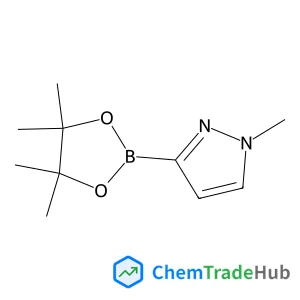
1-Methyl-3-(4,4,5,5-tetramethyl-1,3,2-dioxaborolan-2-yl)-1H-pyrazole
CAS Number:
1020174-04-2
Molecular Formula:
C10H17BN2O2

Methyl 2-cyano-3,12-dioxooleana-1,9(11)-dien-28-oate
CAS Number:
218600-53-4
Molecular Formula:
C32H43NO4
Recommended Suppliers




Disclaimer
This page provides academic journal information for reference and research purposes only. We are not affiliated with any journal publishers and do not handle publication submissions. For publication-related inquiries, please contact the respective journal publishers directly.
If you notice any inaccuracies in the information displayed, please contact us at support@chemtradehub.com. We will promptly review and address your concerns.