












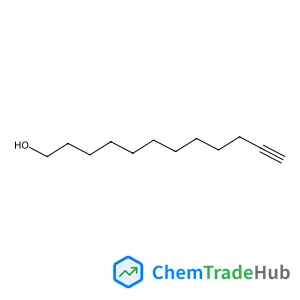
From charge transfer to electron transfer in halogen-bonded complexes of electrophilic bromocarbons with halide anions
Literature Information
Publication Date
2015-01-08
DOI
10.1039/C4CP05220J
Impact Factor
3.676
Authors
Sergiy V. Rosokha, Alfredo Traversa
View Original
Abstract
Experimental and computational studies of the halogen-bonded complexes, [R–Br, X−], of bromosubstituted electrophiles, R–Br, and halide anions, X−, revealed that decrease of a gap between the frontier orbitals of interacting species led to reduction of the energy of the optical charge-transfer transition and to increase in the ground-state charge transfer (X− → R–Br) in their associates. These variations were accompanied by weakening of the intramolecular, C–Br, and strengthening of the intermolecular, Br⋯X−, bonds. In the limit of the strongest electron donor–acceptor pairs, formation of the halogen-bonded complexes was followed by the oxidation of iodide to triiodide, which took place despite the fact that the I− → R–Br electron-transfer step was highly endergonic and the calculated outer-sphere rate constant was negligibly small. However, the calculated barrier for the inner-sphere electron transfer accompanied by the halogen transfer, R–Br⋯I− → R˙⋯Br–I−˙, was nearly 24 kcal mol−1 lower as compared to that calculated for the outer-sphere process and the rate constant of such reaction was consistent with the experimental kinetics. A dramatic decrease of the electron-transfer barriers (leading to 18-orders of magnitude increase of the rate constant) was related to the strong electronic coupling of the donor and acceptor within the halogen-bonded precursor complex, as well as to the lower solvent reorganization energy and the successor-complex stabilization.
Related Literature
Dendritic carbon architectures formed by nanotube core-directed diffusion-limited aggregation of nanoparticles
Zhenyu Liu
2010-07-06
Paper
DOI: 10.1039/C000363H
Chiral oxorhenium(v) complexes as candidates for the experimental observation of molecular parity violation: a structural, synthetic and theoretical study
Frederic De Montigny, Radovan Bast, Andre Severo Pereira Gomes, Guillaume Pilet, Nicolas Vanthuyne, Christian Roussel, Laure Guy, Peter Schwerdtfeger, Trond Saue, Jeanne Crassous
2010-06-07
Paper
DOI: 10.1039/B925050F
Effects of the nature and charge of the topmost layer in layer by layer self assembled amperometric enzymeelectrodes
E. J. Calvo, V. Flexer, M. Tagliazucchi, P. Scodeller
2010-08-04
Paper
DOI: 10.1039/C0CP00449A
Hydrothermal synthesis of new wolframite type trimetallic materials and their use in oxidative dehydrogenation of propane
Maurin Salamanca, Yordy E. Licea, Adriana Echavarría, Arnaldo C. Faro Jr., Luz A. Palacio
2009-08-25
Paper
DOI: 10.1039/B907679D
Surface and interstitial Ti diffusion at the rutile TiO2(110) surface
P. A. Mulheran, M. Nolan, C. S. Browne, M. Basham, E. Sanville, R. A. Bennett
2010-06-17
Paper
DOI: 10.1039/C002698K
Fluorescence and solvent-dependent phosphorescence studies of o-nitrobenzaldehyde: A combined experimental and theoretical investigation
Hongming Yin, Keli Han
2010-06-07
Paper
DOI: 10.1039/C002270E
The origin of the large bending enhancement of the reaction of C2H2+ with methane: the effects of bending momentum, ruling out the precursor mechanism, and steps toward “Polanyi rules” for polyatomic reactions
Jianbo Liu, Scott L. Anderson
2009-07-28
Paper
DOI: 10.1039/B908328F
You might also like
Compound Q&A
How should waste containing N-Methoxy-N-methyl-1,3-thiazole-5-carboxamide (CAS: 898825-89-3) be handled?
Waste containing N-Methoxy-N-methyl-1,3-thiazole-5-carboxamide (CAS: 898825-89-3...
898825-89-3N-Methoxy-N-methyl-1...
Compound Q&A
How should N-(4-Biphenylyl)dibenzo[b,d]furan-4-amine (CAS: 1318338-47-4) be stored?
N-(4-Biphenylyl)dibenzo[b,d]furan-4-amine should be stored in a tightly sealed c...
1318338-47-4N-(4-Biphenylyl)dibe...
Compound Q&A
What is the market or research trend for 3-Acetamido-5-amino-2,4,6-triiodobenzoic acid (CAS: 1713-07-1)?
The market for 3-Acetamido-5-amino-2,4,6-triiodobenzoic acid (CAS: 1713-07-1) is...
1713-07-13-Acetamido-5-amino-...
Compound Q&A
How should Benzyl 2-O-acetyl-3,4,6-tri-O-benzyl-beta-D-galactopyranoside (CAS: 61820-03-9) be stored?
Benzyl 2-O-acetyl-3,4,6-tri-O-benzyl-beta-D-galactopyranoside (CAS: 61820-03-9) ...
61820-03-9Benzyl 2-O-acetyl-3,...
Compound Q&A
What regulatory guidelines apply to 2-Ethylpiperazine dihydrochloride (CAS: 438050-52-3)?
2-Ethylpiperazine dihydrochloride (CAS: 438050-52-3) is regulated under the Glob...
438050-52-32-Ethylpiperazine di...
Compound Q&A
What regulatory guidelines apply to 1,1'-[1,3-Phenylenebis(methylene)]bis(3-methyl-1H-pyrrole-2,5-dione) (CAS: 119462-56-5)?
1,1'-[1,3-Phenylenebis(methylene)]bis(3-methyl-1H-pyrrole-2,5-dione) (CAS: 11946...
119462-56-51,1'-[1,3-Phenyleneb...
Compound Q&A
Are there alternatives to 5-Fluoro-2-(1-pyrrolidinyl)pyridine (CAS: 1287217-79-1) in synthesis?
Several alternatives can be used in the synthesis of 5-Fluoro-2-(1-pyrrolidinyl)...
1287217-79-15-Fluoro-2-(1-pyrrol...
Compound Q&A
What precautions should be taken when handling 1-((2R,3R,4R,5R)-5-((bis(4-methoxyphenyl)(phenyl)methoxy)methyl)-4-hydroxy-3-methoxytetrahydrofuran-2-yl)-5-methylpyrimidine-2,4(1H,3H)-dione (CAS: 153631-19-7)?
Proper personal protective equipment (PPE) must be worn when handling this compo...
153631-19-71-((2R,3R,4R,5R)-5-(...
Compound Q&A
What precautions should be taken when handling 6-Bromoimidazo[1,2-a]pyridin-8-amine (CAS: 676371-00-9)?
When handling 6-Bromoimidazo[1,2-a]pyridin-8-amine, it is important to wear appr...
676371-00-96-Bromoimidazo[1,2-a...
Compound Q&A
Are there alternatives to (2S,4R)-4-(4-Nitrobenzyl)pyrrolidine-2-carboxylic acid hydrochloride (CAS: 1049740-22-8) in synthesis?
Alternatives to (2S,4R)-4-(4-Nitrobenzyl)pyrrolidine-2-carboxylic acid hydrochlo...
1049740-22-8(2S,4R)-4-(4-Nitrobe...
Source Journal
Physical Chemistry Chemical Physics

CiteScore:
5.5
Self-citation Rate:
10.3%
Articles per Year:
3036
Physical Chemistry Chemical Physics (PCCP) is an international journal co-owned by 19 physical chemistry and physics societies from around the world. This journal publishes original, cutting-edge research in physical chemistry, chemical physics and biophysical chemistry. To be suitable for publication in PCCP, articles must include significant innovation and/or insight into physical chemistry; this is the most important criterion that reviewers and Editors will judge against when evaluating submissions. The journal has a broad scope and welcomes contributions spanning experiment, theory, computation and data science. Topical coverage includes spectroscopy, dynamics, kinetics, statistical mechanics, thermodynamics, electrochemistry, catalysis, surface science, quantum mechanics, quantum computing and machine learning. Interdisciplinary research areas such as polymers and soft matter, materials, nanoscience, energy, surfaces/interfaces, and biophysical chemistry are welcomed if they demonstrate significant innovation and/or insight into physical chemistry. Joined experimental/theoretical studies are particularly appreciated when complementary and based on up-to-date approaches.
Recommended Compounds
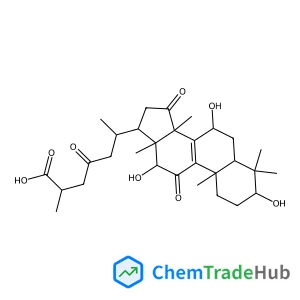
(3beta,7beta,12beta)-3,7,12-Trihydroxy-11,15,23-trioxolanost-8-en-26-oic acid
CAS Number:
98665-22-6
Molecular Formula:
C30H44O8

Recommended Suppliers







Disclaimer
This page provides academic journal information for reference and research purposes only. We are not affiliated with any journal publishers and do not handle publication submissions. For publication-related inquiries, please contact the respective journal publishers directly.
If you notice any inaccuracies in the information displayed, please contact us at support@chemtradehub.com. We will promptly review and address your concerns.