













Revealing the interactions between pentagon–octagon–pentagon defect graphene and organic donor/acceptor molecules: a theoretical study
Literature Information
Publication Date
2014-12-19
DOI
10.1039/C4CP04900D
Impact Factor
3.676
Authors
Yu-Yu Liu, Jing-Zhi Shang, Yan Qian, Ming-Dong Yi
View Original
Abstract
Defect engineering and the non-covalent interaction strategy allow for dramatically tuning the optoelectronic features of graphene. Herein, we theoretically investigated the intrinsic mechanism of non-covalent interactions between pentagon–octagon–pentagon (5–8–5) defect graphene (DG) and absorbed molecules, tetrathiafulvalene (TTF), perfluoronaphthalene (FNa), tetracyanoquinodimethane (TCNQ) and 2,3,5,6-tetrafluoro-7,7,8,8-tetracyanoquinodimethane (F4TCNQ), through geometry, distance, interaction energy, Mulliken charge distribution, terahertz frequency vibration, visualization of the interactions, charge density difference, electronic transition behaviour, band structure and density of state. All the calculations were performed using density functional theory including a dispersion correction (DFT-D). The calculated results indicate that the cyano- (CN) group (electron withdraw group) in TCNQ and F4TCNQ, rather than the F group, gain the electron from DG effectively and exhibit much stronger interactions via wavefunction overlap with DG, leading to a short non-covalent interaction distance, a large interaction energy and a red-shift of out-of-plane terahertz frequency vibration, changing the bands near the Fermi level and enhancing the infrared (IR) light absorption significantly. The enhancement of such IR absorbance offering a broader absorption (from 300 to 1200 nm) will benefit light harvesting in potential applications of solar energy conversion.
Related Literature
Calculation of the surface tension of cyclic and aromatic hydrocarbons from Monte Carlo simulations using an anisotropic united atom model (AUA)
A. Ghoufi, V. Lachet
2009-05-20
Paper
DOI: 10.1039/B823295D
Understanding underlying processes in formic acidfuelcells
Sunghyun Uhm, Hye Jin Lee
2009-08-04
Perspective
DOI: 10.1039/B909525J
Role of the substrate in electronic structure, molecular orientation, and morphology of organic thin films: diindenoperylene on rutile TiO2(110)
Britt-Elfriede Schuster, M. Benedetta Casu, Indro Biswas, Alexander Hinderhofer, Alexander Gerlach, Frank Schreiber, Thomas Chassé
2009-08-18
Communication
DOI: 10.1039/B912790A
Influence of surfactants and viscosity in the preparation process of battery electrodes containing nanoparticles
A. Hintennach, P. Novák
2009-08-18
Paper
DOI: 10.1039/B911674E
Effect of comonomer content on the crystallization kinetics and morphology of biodegradable poly(3-hydroxybutyrate-co-3-hydroxyhexanoate)
Haoyuan Cai, Zhaobin Qiu
2009-08-26
Paper
DOI: 10.1039/B907677H
Theoretical investigation of germane and germylenedecomposition kinetics
Daniela Polino, Alessandro Barbato, Carlo Cavallotti
2010-07-07
Paper
DOI: 10.1039/C002221G
Experimental and theoretical investigations of CB8−: towards rational design of hypercoordinated planar chemical species
Boris B. Averkiev, Alexander I. Boldyrev
2009-09-09
Paper
DOI: 10.1039/B908973J
Effects of the nature and charge of the topmost layer in layer by layer self assembled amperometric enzymeelectrodes
E. J. Calvo, V. Flexer, M. Tagliazucchi, P. Scodeller
2010-08-04
Paper
DOI: 10.1039/C0CP00449A
Diffusion of water into SU-8 microcantilevers
Ying Liu, Daniela Fell, Stephan Keller, Anja Boisen, Hans-Jürgen Butt, Günter K. Auernhammer
2010-07-07
Paper
DOI: 10.1039/C002478C
Zinc-doping in TiO2 films to enhance electron transport in dye-sensitized solar cells under low-intensity illumination
Kai-Ping Wang, Hsisheng Teng
2009-08-18
Paper
DOI: 10.1039/B912672D
You might also like
Compound Q&A
How should waste containing N-Methoxy-N-methyl-1,3-thiazole-5-carboxamide (CAS: 898825-89-3) be handled?
Waste containing N-Methoxy-N-methyl-1,3-thiazole-5-carboxamide (CAS: 898825-89-3...
898825-89-3N-Methoxy-N-methyl-1...
Compound Q&A
How should N-(4-Biphenylyl)dibenzo[b,d]furan-4-amine (CAS: 1318338-47-4) be stored?
N-(4-Biphenylyl)dibenzo[b,d]furan-4-amine should be stored in a tightly sealed c...
1318338-47-4N-(4-Biphenylyl)dibe...
Compound Q&A
What is the market or research trend for 3-Acetamido-5-amino-2,4,6-triiodobenzoic acid (CAS: 1713-07-1)?
The market for 3-Acetamido-5-amino-2,4,6-triiodobenzoic acid (CAS: 1713-07-1) is...
1713-07-13-Acetamido-5-amino-...
Compound Q&A
How should Benzyl 2-O-acetyl-3,4,6-tri-O-benzyl-beta-D-galactopyranoside (CAS: 61820-03-9) be stored?
Benzyl 2-O-acetyl-3,4,6-tri-O-benzyl-beta-D-galactopyranoside (CAS: 61820-03-9) ...
61820-03-9Benzyl 2-O-acetyl-3,...
Compound Q&A
What regulatory guidelines apply to 2-Ethylpiperazine dihydrochloride (CAS: 438050-52-3)?
2-Ethylpiperazine dihydrochloride (CAS: 438050-52-3) is regulated under the Glob...
438050-52-32-Ethylpiperazine di...
Compound Q&A
What regulatory guidelines apply to 1,1'-[1,3-Phenylenebis(methylene)]bis(3-methyl-1H-pyrrole-2,5-dione) (CAS: 119462-56-5)?
1,1'-[1,3-Phenylenebis(methylene)]bis(3-methyl-1H-pyrrole-2,5-dione) (CAS: 11946...
119462-56-51,1'-[1,3-Phenyleneb...
Compound Q&A
Are there alternatives to 5-Fluoro-2-(1-pyrrolidinyl)pyridine (CAS: 1287217-79-1) in synthesis?
Several alternatives can be used in the synthesis of 5-Fluoro-2-(1-pyrrolidinyl)...
1287217-79-15-Fluoro-2-(1-pyrrol...
Compound Q&A
What precautions should be taken when handling 1-((2R,3R,4R,5R)-5-((bis(4-methoxyphenyl)(phenyl)methoxy)methyl)-4-hydroxy-3-methoxytetrahydrofuran-2-yl)-5-methylpyrimidine-2,4(1H,3H)-dione (CAS: 153631-19-7)?
Proper personal protective equipment (PPE) must be worn when handling this compo...
153631-19-71-((2R,3R,4R,5R)-5-(...
Compound Q&A
What precautions should be taken when handling 6-Bromoimidazo[1,2-a]pyridin-8-amine (CAS: 676371-00-9)?
When handling 6-Bromoimidazo[1,2-a]pyridin-8-amine, it is important to wear appr...
676371-00-96-Bromoimidazo[1,2-a...
Compound Q&A
Are there alternatives to (2S,4R)-4-(4-Nitrobenzyl)pyrrolidine-2-carboxylic acid hydrochloride (CAS: 1049740-22-8) in synthesis?
Alternatives to (2S,4R)-4-(4-Nitrobenzyl)pyrrolidine-2-carboxylic acid hydrochlo...
1049740-22-8(2S,4R)-4-(4-Nitrobe...
Source Journal
Physical Chemistry Chemical Physics

CiteScore:
5.5
Self-citation Rate:
10.3%
Articles per Year:
3036
Physical Chemistry Chemical Physics (PCCP) is an international journal co-owned by 19 physical chemistry and physics societies from around the world. This journal publishes original, cutting-edge research in physical chemistry, chemical physics and biophysical chemistry. To be suitable for publication in PCCP, articles must include significant innovation and/or insight into physical chemistry; this is the most important criterion that reviewers and Editors will judge against when evaluating submissions. The journal has a broad scope and welcomes contributions spanning experiment, theory, computation and data science. Topical coverage includes spectroscopy, dynamics, kinetics, statistical mechanics, thermodynamics, electrochemistry, catalysis, surface science, quantum mechanics, quantum computing and machine learning. Interdisciplinary research areas such as polymers and soft matter, materials, nanoscience, energy, surfaces/interfaces, and biophysical chemistry are welcomed if they demonstrate significant innovation and/or insight into physical chemistry. Joined experimental/theoretical studies are particularly appreciated when complementary and based on up-to-date approaches.
Recommended Compounds

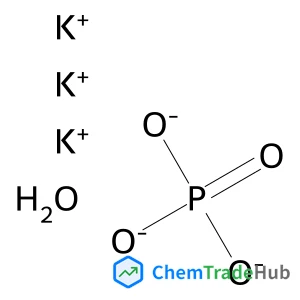

(3beta,7beta,12beta)-3,7,12-Trihydroxy-11,15,23-trioxolanost-8-en-26-oic acid
CAS Number:
98665-22-6
Molecular Formula:
C30H44O8
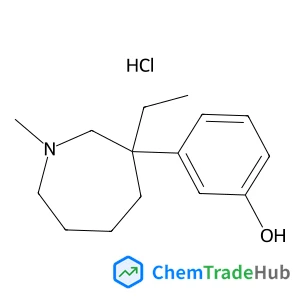
3-(3-Ethyl-1-methyl-3-azepanyl)phenol hydrochloride (1:1)
CAS Number:
59263-76-2
Molecular Formula:
C15H24ClNO
Recommended Suppliers




Disclaimer
This page provides academic journal information for reference and research purposes only. We are not affiliated with any journal publishers and do not handle publication submissions. For publication-related inquiries, please contact the respective journal publishers directly.
If you notice any inaccuracies in the information displayed, please contact us at support@chemtradehub.com. We will promptly review and address your concerns.