












A femtosecond study of the anomaly in electron injection for dye-sensitized solar cells: the influence of isomerization employing Ru(ii) sensitizers with anthracene and phenanthrene ancillary ligands
Literature Information
Publication Date
2014-12-01
DOI
10.1039/C4CP04741A
Impact Factor
3.676
Authors
Hammad Cheema, Robert Younts, Louis Ogbose, Bhoj Gautam, Kenan Gundogdu, Ahmed El-Shafei
View Original
Abstract
In this study, an intriguing difference caused by structural isomerization based on anthracene and phenanthrene stilbazole type ancillary ligands in Ru(II) sensitizers for dye sensitized solar cells (DSCs) has been investigated using femtosecond transient absorption spectroscopy. Both anthracene and phenanthrene based sensitizers HD-7 and HD-8, respectively, resulted in a similar extinction coefficient, photophysical and thermodynamic free energy of electron injection and dye regeneration as measured by UV-Vis, excited state lifetime and cyclic voltammetry measurements, respectively. However, TiO2 adsorbed HD-7 resulted in up to 45% less photocurrent density than HD-8 although photovoltage was similar owing to comparable thermodynamic characteristics. It was obvious from the measurement of incident photon to current conversion efficiency (IPCE) that excited electrons in HD-7 are prone to internal energy loss before injection into the TiO2 conduction band. Analysis of photo-induced spectral features measured by femtosecond transient absorption spectroscopy showed that excited electrons in HD-7 are prone to ISC (intersystem crossing) much more than HD-8 and those triplet electrons are not injected into TiO2 efficiently. Interestingly, from impedance measurements, HD-7 showed higher recombination resistance than HD-8 and N719, but a shorter lifetime for electrons injected into the TiO2 conduction band.
Related Literature
Phycocyanobilin in solution – a solvent triggered molecular switch
Tobias Watermann, Hossam Elgabarty, Daniel Sebastiani
2014-02-06
Paper
DOI: 10.1039/C3CP54307B
Photophysical evaluation of a new functional terbium complex in FRET-based time-resolved homogenous fluoroassays
Katia Nchimi Nono, Loïc J. Charbonnière, Hans-Gerd Löhmannsröben
2014-01-10
Paper
DOI: 10.1039/C3CP54883J
The effects of polydimethylsiloxane on transparent and hydrophobic waterborne polyurethane coatings containing polydimethylsiloxane
Zhaofeng Wu, Hua Wang, Xingyou Tian, Ping Cui, Xin Ding, Xianzhu Ye
2014-01-28
Paper
DOI: 10.1039/C3CP54429J
Molecular motors pulling cargos in the viscoelastic cytosol: how power strokes beat subdiffusion
Igor Goychuk, Vasyl O. Kharchenko
2014-06-26
Paper
DOI: 10.1039/C4CP01234H
Diffusive and rotational dynamics of condensed n-H2 confined in MCM-41
T. R. Prisk, M. S. Bryan, P. E. Sokol
2014-07-10
Paper
DOI: 10.1039/C4CP02281E
Hematite photoelectrodes for water splitting: evaluation of the role of film thickness by impedance spectroscopy
Tânia Lopes, Luísa Andrade, Florian Le Formal, Michael Gratzel, Kevin Sivula, Adélio Mendes
2014-07-02
Paper
DOI: 10.1039/C3CP55473B
Photophysical, amplified spontaneous emission and charge transport properties of oligofluorene derivatives in thin films
E. Y. Choi, L. Mager, M. Gwon, D. Pitrat, J. C. Mulatier, C. Monnereau, A. Fort, A. J. Attias, K. Dorkenoo, J. E. Kwon, Y. Xiao, K. Matczyszyn, M. Samoc, D.-W. Kim, A. Nakao, B. Heinrich, D. Hashizume, S. Y. Park, F. Mathevet, T. Aoyama, C. Andraud, J. W. Wu, A. Barsella, J. C. Ribierre
2014-07-04
Paper
DOI: 10.1039/C4CP01134A
Proton dynamics of two-dimensional oxalate-bridged coordination polymers
Satoshi Miyatsu, Maiko Kofu, Teppei Yamada, Madhusudan Tyagi, Victoria García Sakai
2014-07-03
Paper
DOI: 10.1039/C4CP01432D
An interatomic potential for saturated hydrocarbons based on the modified embedded-atom method
S. Nouranian, S. R. Gwaltney, M. I. Baskes
2014-02-12
Paper
DOI: 10.1039/C4CP00027G
You might also like
Compound Q&A
What are the main uses of (5-Sulfamoyl-3-pyridinyl)boronic acid (CAS: 951233-61-7)?
(5-Sulfamoyl-3-pyridinyl)boronic acid is primarily used in chemical synthesis, p...
951233-61-7(5-Sulfamoyl-3-pyrid...
Compound Q&A
How is Benzyl 2-methyl-2-(methylsulfonyl)-4-pentenoate (CAS: 1942858-50-5) typically synthesized?
Benzyl 2-methyl-2-(methylsulfonyl)-4-pentenoate is typically synthesized via est...
1942858-50-5Benzyl 2-methyl-2-(m...
Compound Q&A
What precautions should be taken when handling 8-Fluoroquinolin-6-ol (CAS: 209353-22-0)?
When handling 8-Fluoroquinolin-6-ol (CAS: 209353-22-0), it is important to use p...
209353-22-08-Fluoroquinolin-6-o...
Compound Q&A
What are the physical and chemical properties of 1,3-Dibromo-5-(2-methyl-2-propanyl)benzene (CAS: 129316-09-2)?
1,3-Dibromo-5-(2-methyl-2-propanyl)benzene (CAS: 129316-09-2) is a crystalline c...
129316-09-21,3-Dibromo-5-(2-met...
Compound Q&A
What industries use Ethyl 7-chloro-4-oxo-1-(1,3-thiazol-2-yl)-1,4-dihydro-1,8-naphthyridine-3-carboxylate (CAS: 174726-87-5)?
Ethyl 7-chloro-4-oxo-1-(1,3-thiazol-2-yl)-1,4-dihydro-1,8-naphthyridine-3-carbox...
174726-87-5Ethyl 7-chloro-4-oxo...
Compound Q&A
What precautions should be taken when handling Delta-7-Avenasterol (CAS: 23290-26-8)?
When handling Delta-7-Avenasterol (CAS: 23290-26-8), it is important to wear app...
23290-26-8Delta-7-Avenasterol
Compound Q&A
What precautions should be taken when handling N-({(5R)-3-[3-Fluoro-4-(4-morpholinyl)phenyl]-2-oxo-1,3-oxazolidin-5-yl}methyl)acetamide (CAS: 872992-20-6)?
Proper handling involves the use of personal protective equipment such as gloves...
872992-20-6N-({(5R)-3-[3-Fluoro...
Compound Q&A
What precautions should be taken when handling 2-Methyl-2-proanyl 4-[(2-aminophenyl)amino]-1-piperidinecarboxylate (CAS: 79099-00-6)?
When handling 2-Methyl-2-proanyl 4-[(2-aminophenyl)amino]-1-piperidinecarboxylat...
79099-00-62-Methyl-2-propanyl ...
Compound Q&A
What is N-Methyl-4-chlorobenzylamine hydrochloride (CAS: 65542-24-7)?
N-Methyl-4-chlorobenzylamine hydrochloride (CAS: 65542-24-7) is a organic compou...
65542-24-7N-Methyl-4-chloroben...
Compound Q&A
Is [2-(Dodecyloxy)ethoxy]acetic acid (CAS: 27306-90-7) safe?
[2-(Dodecyloxy)ethoxy]acetic acid (CAS: 27306-90-7) is generally considered safe...
27306-90-7[2-(Dodecyloxy)ethox...
Source Journal
Physical Chemistry Chemical Physics

CiteScore:
5.5
Self-citation Rate:
10.3%
Articles per Year:
3036
Physical Chemistry Chemical Physics (PCCP) is an international journal co-owned by 19 physical chemistry and physics societies from around the world. This journal publishes original, cutting-edge research in physical chemistry, chemical physics and biophysical chemistry. To be suitable for publication in PCCP, articles must include significant innovation and/or insight into physical chemistry; this is the most important criterion that reviewers and Editors will judge against when evaluating submissions. The journal has a broad scope and welcomes contributions spanning experiment, theory, computation and data science. Topical coverage includes spectroscopy, dynamics, kinetics, statistical mechanics, thermodynamics, electrochemistry, catalysis, surface science, quantum mechanics, quantum computing and machine learning. Interdisciplinary research areas such as polymers and soft matter, materials, nanoscience, energy, surfaces/interfaces, and biophysical chemistry are welcomed if they demonstrate significant innovation and/or insight into physical chemistry. Joined experimental/theoretical studies are particularly appreciated when complementary and based on up-to-date approaches.
Recommended Compounds
![2-Azaspiro[4.5]decane-3,8-dione structure](https://static.chemtradehub.com/structs/914/914780-96-4-e94b.webp "2-Azaspiro[4.5]decane-3,8-dione structure")
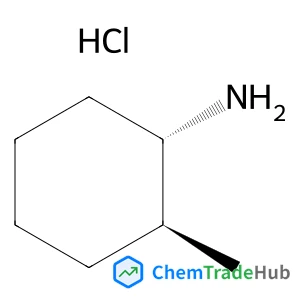
(1R,2R)-2-Methylcyclohexanamine hydrochloride (1:1)
CAS Number:
39558-31-1
Molecular Formula:
C7H16ClN
Recommended Suppliers





Disclaimer
This page provides academic journal information for reference and research purposes only. We are not affiliated with any journal publishers and do not handle publication submissions. For publication-related inquiries, please contact the respective journal publishers directly.
If you notice any inaccuracies in the information displayed, please contact us at support@chemtradehub.com. We will promptly review and address your concerns.