



ReaxFF molecular dynamics simulations on lithiated sulfur cathode materials
Literature Information
Publication Date
2014-12-16
DOI
10.1039/C4CP04532G
Impact Factor
3.676
Authors
Md Mahbubul Islam, Alireza Ostadhossein, Oleg Borodin, A. Todd Yeates, William W. Tipton, Richard G. Hennig, Nitin Kumar, Adri C. T. van Duin
View Original
Abstract
Sulfur is a very promising cathode material for rechargeable energy storage devices. However, sulfur cathodes undergo a noticeable volume variation upon cycling, which induces mechanical stress. In spite of intensive investigation of the electrochemical behavior of the lithiated sulfur compounds, their mechanical properties are not very well understood. In order to fill this gap, we developed a ReaxFF interatomic potential to describe Li–S interactions and performed molecular dynamics (MD) simulations to study the structural, mechanical, and kinetic behavior of the amorphous lithiated sulfur (a-LixS) compounds. We examined the effect of lithiation on material properties such as ultimate strength, yield strength, and Young's modulus. Our results suggest that with increasing lithium content, the strength of lithiated sulfur compounds improves, although this increment is not linear with lithiation. The diffusion coefficients of both lithium and sulfur were computed for the a-LixS system at various stages of Li-loading. A grand canonical Monte Carlo (GCMC) scheme was used to calculate the open circuit voltage profile during cell discharge. The Li–S binary phase diagram was constructed using genetic algorithm based tools. Overall, these simulation results provide insight into the behavior of sulfur based cathode materials that are needed for developing lithium–sulfur batteries.
Recommended Journals

Journal of Dispersion Science and Technology

Annual Review of Public Health

Bulletin of Materials Science

Pharmaceutical Chemistry Journal

Journal of Natural Products

Studies in Conservation

Crystal Research and Technology

Progress in Materials Science

Drug and Chemical Toxicology

Pharmacology & Therapeutics
Related Literature
Electric field tunable half-metallic characteristic at Fe3O4/BaTiO3 interfaces‡
Xueyao Hou, Xiaocha Wang, Guifeng Chen, Wenbo Mi
2017-01-06
Paper
DOI: 10.1039/C6CP07858C
Comparative study of the intermolecular dynamics of imidazolium-based ionic liquids with linear and branched alkyl chains: OHD-RIKES measurements
Lianjie Xue, Fehmi Bardak, George Tamas, Edward L. Quitevis
2017-01-19
Paper
DOI: 10.1039/C6CP08263G
The decomposition of benzenesulfonyl azide: a matrix isolation and computational study
Guohai Deng, Xuelin Dong, Qifan Liu, Dingqing Li, Hongmin Li, Qiao Sun, Xiaoqing Zeng
2017-01-11
Paper
DOI: 10.1039/C6CP08125H
Conceptual density functional theory for electron transfer and transport in mesoscopic systems
Paulo R. Bueno, David A. Miranda
2017-02-02
Paper
DOI: 10.1039/C6CP02504H
Charge transport in organic donor–acceptor mixed-stack crystals: the role of nonlocal electron–phonon couplings
Lingyun Zhu, Hua Geng, Yuanping Yi, Zhixiang Wei
2017-01-06
Paper
DOI: 10.1039/C6CP07417K
Free-energy patterns in inclusion complexes: the relevance of non-included moieties in the stability constants
Tânia F. G. G. Cova, Sandra C. C. Nunes, Alberto A. C. C. Pais
2017-01-10
Paper
DOI: 10.1039/C6CP08081B
Effect of Ag and Pd promotion on CH4 selectivity in Fe(100) Fischer–Tröpsch catalysis
Jennifer Wilcox, David W. Ball
2017-01-23
Paper
DOI: 10.1039/C6CP07116C
The shortest Th–Th distance from a new type of quadruple bond
Han-Shi Hu, Nikolas Kaltsoyannis
2017-01-10
Paper
DOI: 10.1039/C7CP00113D
Insights into the mechanism of electrochemical ozone production via water splitting on the Ni and Sb doped SnO2 catalyst
Ziyun Wang, Christopher Hardacre, Wen-Feng Lin
2017-01-11
Paper
DOI: 10.1039/C6CP06906A
You might also like
Compound Q&A
What precautions should be taken when handling 4-(2-Furylmethyl)thiomorpholine 1,1-dioxide (CAS: 79206-94-3)?
When handling 4-(2-Furylmethyl)thiomorpholine 1,1-dioxide (CAS: 79206-94-3), it ...
79206-94-34-(2-Furylmethyl)thi...
Compound Q&A
What precautions should be taken when handling 4-Chloro-N-[2-(4-morpholinyl)ethyl]benzamide (CAS: 71320-77-9)?
When handling 4-Chloro-N-[2-(4-morpholinyl)ethyl]benzamide (CAS: 71320-77-9), it...
71320-77-94-Chloro-N-[2-(4-mor...
Compound Q&A
How should waste containing 2-[2-(2-Methoxyethoxy)ethoxy]ethyl 4-methylbenzenesulfonate (CAS: 62921-74-8) be handled?
Waste containing this compound (CAS: 62921-74-8) should be handled according to ...
62921-74-82-[2-(2-Methoxyethox...
Compound Q&A
How should waste containing (S)-Methyl 2-amino-3-cyclohexylpropanoate be handled?
Waste containing (S)-Methyl 2-amino-3-cyclohexylpropanoate should be collected i...
40056-18-6(S)-Methyl 2-amino-3...
Compound Q&A
How is 5-({4-[(2S,4R)-4-Hydroxy-2-methyltetrahydro-2H-pyran-4-yl]-2-thienyl}sulfanyl)-1-methyl-1,3-dihydro-2H-indol-2-one (CAS: 166882-70-8) typically synthesized?
This compound can be synthesized using a multi-step process involving the conjug...
166882-70-85-({4-[(2S,4R)-4-Hyd...
Compound Q&A
Are there alternatives to (2E)-3-(3,4-Dichlorophenyl)acrylic acid (CAS: 7312-27-8) in synthesis?
There are several alternatives to (2E)-3-(3,4-Dichlorophenyl)acrylic acid in syn...
7312-27-8(2E)-3-(3,4-Dichloro...
Compound Q&A
How should Ethyl 6-(2-nitrophenyl)imidazo[2,1-b][1,3]thiazole-3-carboxylate (CAS: 925437-84-9) be stored?
Ethyl 6-(2-nitrophenyl)imidazo[2,1-b][1,3]thiazole-3-carboxylate (CAS: 925437-84...
925437-84-9Ethyl 6-(2-nitrophen...
Compound Q&A
How should waste containing 2-(1,3-Thiazol-2-yl)ethanamine (CAS: 18453-07-1) be handled?
Waste containing 2-(1,3-Thiazol-2-yl)ethanamine (CAS: 18453-07-1) should be coll...
18453-07-12-(1,3-Thiazol-2-yl)...
Compound Q&A
How is Methyl 5-iodo-2-methylbenzoate (CAS: 103440-54-6) typically synthesized?
Methyl 5-iodo-2-methylbenzoate can be synthesized through the iodination of meth...
103440-54-6Methyl 5-iodo-2-meth...
Compound Q&A
How is 5-Chloro[1,2,4]triazolo[1,5-a]pyridine (CAS: 1427399-34-5) typically synthesized?
5-Chloro[1,2,4]triazolo[1,5-a]pyridine is commonly synthesized via the condensat...
1427399-34-55-Chloro[1,2,4]triaz...
Source Journal
Physical Chemistry Chemical Physics

CiteScore:
5.5
Self-citation Rate:
10.3%
Articles per Year:
3036
Physical Chemistry Chemical Physics (PCCP) is an international journal co-owned by 19 physical chemistry and physics societies from around the world. This journal publishes original, cutting-edge research in physical chemistry, chemical physics and biophysical chemistry. To be suitable for publication in PCCP, articles must include significant innovation and/or insight into physical chemistry; this is the most important criterion that reviewers and Editors will judge against when evaluating submissions. The journal has a broad scope and welcomes contributions spanning experiment, theory, computation and data science. Topical coverage includes spectroscopy, dynamics, kinetics, statistical mechanics, thermodynamics, electrochemistry, catalysis, surface science, quantum mechanics, quantum computing and machine learning. Interdisciplinary research areas such as polymers and soft matter, materials, nanoscience, energy, surfaces/interfaces, and biophysical chemistry are welcomed if they demonstrate significant innovation and/or insight into physical chemistry. Joined experimental/theoretical studies are particularly appreciated when complementary and based on up-to-date approaches.
Recommended Compounds
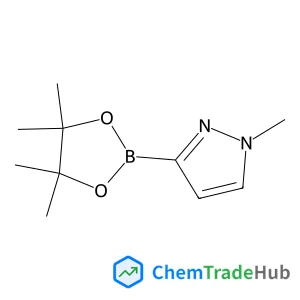
1-Methyl-3-(4,4,5,5-tetramethyl-1,3,2-dioxaborolan-2-yl)-1H-pyrazole
CAS Number:
1020174-04-2
Molecular Formula:
C10H17BN2O2
![N-[(Benzyloxy)carbonyl]serine structure](https://static.chemtradehub.com/structs/276/2768-56-1-77f7.webp "N-[(Benzyloxy)carbonyl]serine structure")
Recommended Suppliers




Disclaimer
This page provides academic journal information for reference and research purposes only. We are not affiliated with any journal publishers and do not handle publication submissions. For publication-related inquiries, please contact the respective journal publishers directly.
If you notice any inaccuracies in the information displayed, please contact us at support@chemtradehub.com. We will promptly review and address your concerns.