












A shock tube study of the branching ratios of propene + OH reaction
Literature Information
Publication Date
2014-12-01
DOI
10.1039/C4CP04322G
Impact Factor
3.676
Authors
Fethi Khaled, Binod Raj Giri, Aamir Farooq
View Original
Abstract
Absolute rate coefficients for the reaction of the OH radical with propene (C3H6) and five deuterated isotopes, propene-1-D1 (CDHCHCH3), propene-1,1-D2 (CD2CHCH3), propene-1,1,2-D3 (CD2CDCH3), propene-3,3,3-D3 (CH2CHCD3), and propene-D6 (C3D6), were measured behind reflected shock waves over the temperature range of 818–1460 K and pressures near 1 atm. The reaction progress was followed by monitoring the OH radical near 306.7 nm using UV laser absorption. Kinetic isotope effects in the measured rate coefficients are discussed and rationalized for the site-specific H-abstraction by the OH radical. The first experimental measurements for the branching ratio of the title reaction are reported and compared with transition state theory calculations. The allylic H-atom abstraction of propene by OH radicals was found to be the most dominant reaction pathway followed by propen-1-yl and propen-2-yl channels over the entire temperature range of this study. The derived Arrhenius expressions for various site-specific rate coefficients over 818–1442 K are (the subscript in the rate coefficient identifies the position of H or D atom according to the IUPAC nomenclature of alkenes):k3,H = 2.32 × 10⁻¹¹ exp(−2341 K/T) cm3 molecule−1 s−1k3,D = 1.96 × 10⁻¹¹ exp(−2420 K/T) cm3 molecule−1 s−1k1,H = 1.39 × 10⁻¹¹ exp(−2270 K/T) cm3 molecule−1 s−1k1,D = 1.95 × 10⁻¹¹ exp(−2868 K/T) cm3 molecule−1 s−1k2,H = 7.2 × 10⁻¹² exp(−2282 K/T) cm3 molecule−1 s−1k2,D = 7.69 × 10⁻¹² exp(−2575 K/T) cm3 molecule−1 s−1
Related Literature
Hematite photoelectrodes for water splitting: evaluation of the role of film thickness by impedance spectroscopy
Tânia Lopes, Luísa Andrade, Florian Le Formal, Michael Gratzel, Kevin Sivula, Adélio Mendes
2014-07-02
Paper
DOI: 10.1039/C3CP55473B
Molecules in the mirror: how SERS backgrounds arise from the quantum method of images
Stephen M. Barnett, Nadine Harris, Jeremy J. Baumberg
2014-02-20
Communication
DOI: 10.1039/C4CP00093E
Understanding composition–property relationships in Ti–Cr–V–Mo alloys for optimisation of hydrogen storage in pressurised tanks
Samantha K. Callear, Tatsuo Noritake, Stewart F. Parker, Martin O. Jones, Jun Sugiyama, Mamoru Ishikiriyama
2014-06-24
Paper
DOI: 10.1039/C4CP01666A
Visible light induced hydrogen generation using a hollow photocatalyst with two cocatalysts separated on two surface sides
Minh-Hao Pham, Cao-Thang Dinh, Gia-Thanh Vuong, Ngoc-Don Ta, Trong-On Do
2014-01-09
Communication
DOI: 10.1039/C3CP54629B
Molecular collisions coming into focus
Jolijn Onvlee, Sjoerd N. Vogels, Alexander von Zastrow, David H. Parker, Sebastiaan Y. T. van de Meerakker
2014-06-13
Perspective
DOI: 10.1039/C4CP01519C
Use of side-chain for rational design of n-type diketopyrrolopyrrole-based conjugated polymers: what did we find out?
Catherine Kanimozhi, Nir Yaacobi-Gross, Edmund K. Burnett, Alejandro L. Briseno, Thomas D. Anthopoulos, Ulrike Salzner, Satish Patil
2014-07-14
Paper
DOI: 10.1039/C4CP02322F
Structural distortions in molecular-based quantum cellular automata: a minimal model based study
Rafael Gutierrez, Daijiro Nozaki, Alessandro Paolo Bramanti
2014-07-11
Paper
DOI: 10.1039/C4CP02458C
Optical rotation calculations on large molecules using the approximate coupled cluster model CC2 and the resolution-of-the-identity approximation
Daniel H. Friese, Christof Hättig
2014-01-09
Paper
DOI: 10.1039/C3CP54338B
Shear induced crystallization in different polymorphic forms of PVDF induced by surface functionalized MWNTs in PVDF/PMMA blends
Maya Sharma, Giridhar Madras, Suryasarathi Bose
2014-06-25
Paper
DOI: 10.1039/C4CP01930J
You might also like
Compound Q&A
What are the main uses of (5-Sulfamoyl-3-pyridinyl)boronic acid (CAS: 951233-61-7)?
(5-Sulfamoyl-3-pyridinyl)boronic acid is primarily used in chemical synthesis, p...
951233-61-7(5-Sulfamoyl-3-pyrid...
Compound Q&A
How is Benzyl 2-methyl-2-(methylsulfonyl)-4-pentenoate (CAS: 1942858-50-5) typically synthesized?
Benzyl 2-methyl-2-(methylsulfonyl)-4-pentenoate is typically synthesized via est...
1942858-50-5Benzyl 2-methyl-2-(m...
Compound Q&A
What precautions should be taken when handling 8-Fluoroquinolin-6-ol (CAS: 209353-22-0)?
When handling 8-Fluoroquinolin-6-ol (CAS: 209353-22-0), it is important to use p...
209353-22-08-Fluoroquinolin-6-o...
Compound Q&A
What are the physical and chemical properties of 1,3-Dibromo-5-(2-methyl-2-propanyl)benzene (CAS: 129316-09-2)?
1,3-Dibromo-5-(2-methyl-2-propanyl)benzene (CAS: 129316-09-2) is a crystalline c...
129316-09-21,3-Dibromo-5-(2-met...
Compound Q&A
What industries use Ethyl 7-chloro-4-oxo-1-(1,3-thiazol-2-yl)-1,4-dihydro-1,8-naphthyridine-3-carboxylate (CAS: 174726-87-5)?
Ethyl 7-chloro-4-oxo-1-(1,3-thiazol-2-yl)-1,4-dihydro-1,8-naphthyridine-3-carbox...
174726-87-5Ethyl 7-chloro-4-oxo...
Compound Q&A
What precautions should be taken when handling Delta-7-Avenasterol (CAS: 23290-26-8)?
When handling Delta-7-Avenasterol (CAS: 23290-26-8), it is important to wear app...
23290-26-8Delta-7-Avenasterol
Compound Q&A
What precautions should be taken when handling N-({(5R)-3-[3-Fluoro-4-(4-morpholinyl)phenyl]-2-oxo-1,3-oxazolidin-5-yl}methyl)acetamide (CAS: 872992-20-6)?
Proper handling involves the use of personal protective equipment such as gloves...
872992-20-6N-({(5R)-3-[3-Fluoro...
Compound Q&A
What precautions should be taken when handling 2-Methyl-2-proanyl 4-[(2-aminophenyl)amino]-1-piperidinecarboxylate (CAS: 79099-00-6)?
When handling 2-Methyl-2-proanyl 4-[(2-aminophenyl)amino]-1-piperidinecarboxylat...
79099-00-62-Methyl-2-propanyl ...
Compound Q&A
What is N-Methyl-4-chlorobenzylamine hydrochloride (CAS: 65542-24-7)?
N-Methyl-4-chlorobenzylamine hydrochloride (CAS: 65542-24-7) is a organic compou...
65542-24-7N-Methyl-4-chloroben...
Compound Q&A
Is [2-(Dodecyloxy)ethoxy]acetic acid (CAS: 27306-90-7) safe?
[2-(Dodecyloxy)ethoxy]acetic acid (CAS: 27306-90-7) is generally considered safe...
27306-90-7[2-(Dodecyloxy)ethox...
Source Journal
Physical Chemistry Chemical Physics

CiteScore:
5.5
Self-citation Rate:
10.3%
Articles per Year:
3036
Physical Chemistry Chemical Physics (PCCP) is an international journal co-owned by 19 physical chemistry and physics societies from around the world. This journal publishes original, cutting-edge research in physical chemistry, chemical physics and biophysical chemistry. To be suitable for publication in PCCP, articles must include significant innovation and/or insight into physical chemistry; this is the most important criterion that reviewers and Editors will judge against when evaluating submissions. The journal has a broad scope and welcomes contributions spanning experiment, theory, computation and data science. Topical coverage includes spectroscopy, dynamics, kinetics, statistical mechanics, thermodynamics, electrochemistry, catalysis, surface science, quantum mechanics, quantum computing and machine learning. Interdisciplinary research areas such as polymers and soft matter, materials, nanoscience, energy, surfaces/interfaces, and biophysical chemistry are welcomed if they demonstrate significant innovation and/or insight into physical chemistry. Joined experimental/theoretical studies are particularly appreciated when complementary and based on up-to-date approaches.
Recommended Compounds
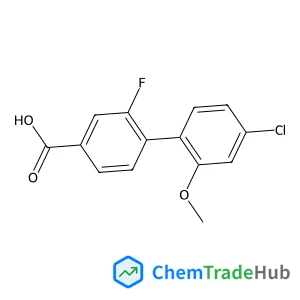
4-(4-Chloro-2-methoxyphenyl)-3-fluorobenzoic acid
CAS Number:
1261970-23-3
Molecular Formula:
C14H10ClFO3
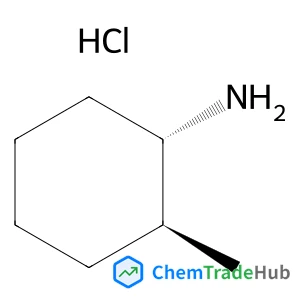
(1R,2R)-2-Methylcyclohexanamine hydrochloride (1:1)
CAS Number:
39558-31-1
Molecular Formula:
C7H16ClN
Recommended Suppliers






Disclaimer
This page provides academic journal information for reference and research purposes only. We are not affiliated with any journal publishers and do not handle publication submissions. For publication-related inquiries, please contact the respective journal publishers directly.
If you notice any inaccuracies in the information displayed, please contact us at support@chemtradehub.com. We will promptly review and address your concerns.