N1,N1-Bis(4-aminophenyl)benzene-1,4-diamine trihydrochloride
CAS Number:
114254-48-7
Molecular Formula:
C18H21Cl3N4
Umberto Marini Bettolo Marconi, Michele Monteferrante, Simone Melchionna
Motivated by recent experiments, we present a theoretical investigation of how the electro-osmotic flow occurring in a capillary is modified when its charged surfaces are coated with charged polymers. The theoretical treatment is based on a three-dimensional model consisting of a ternary fluid-mixture, representing the solvent and two species for the ions, confined between two parallel charged plates decorated with a fixed array of scatterers representing the polymer coating. The electro-osmotic flow, generated by a constant electric field applied in a direction parallel to the plates, is studied numerically by means of Lattice Boltzmann simulations. In order to gain further understanding we performed a simple theoretical analysis by extending the Stokes–Smoluchowski equation to take into account the porosity induced by the polymers in the region adjacent to the walls. We discuss the nature of the velocity profiles by focusing on the competing effects of the polymer charges and the frictional forces they exert. We show evidence of the flow reduction and of the flow inversion phenomenon when the polymer charge is opposite to the surface charge. By using the density of polymers and the surface charge as control variables, we propose a phase diagram that discriminates the direct and the reversed flow regimes and determines their dependence on the ionic concentration.
Y. Matsumura, S. Iuchi, S. Hiraoka
DOI: 10.1039/C7CP08237A
Yemin Wang, Jie Cheng
DOI: 10.1039/C8CP02974A
Aleksander P. Stupak, Thomas Blaudeck, Eduard I. Zenkevich, Stefan Krause, Christian von Borczyskowski
DOI: 10.1039/C8CP02846J
DOI: 10.1039/C7CP07730K
Chang Zhu, Qian Wang, Jiena Yun, Qiaoli Hu, Gang Yang
DOI: 10.1039/C8CP02286K
Diptarka Hait
DOI: 10.1039/C8CP03569E
DOI: 10.1039/C7CP06621J
Luke R. Anderson, Andrew M. Ediger
DOI: 10.1039/C8CP02829J
German L. Perlovich, Tatyana V. Volkova
DOI: 10.1039/C8CP03716G
Juan Li, Shuqi Zheng, Teng Fang, Luo Yue, Shuai Zhang, Guiwu Lu
DOI: 10.1039/C7CP08680F
Waste containing N-Methoxy-N-methyl-1,3-thiazole-5-carboxamide (CAS: 898825-89-3...
N-(4-Biphenylyl)dibenzo[b,d]furan-4-amine should be stored in a tightly sealed c...
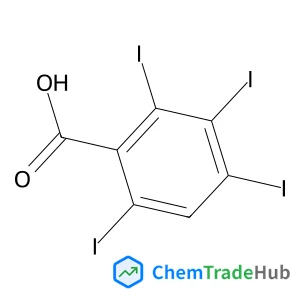
The market for 3-Acetamido-5-amino-2,4,6-triiodobenzoic acid (CAS: 1713-07-1) is...
Benzyl 2-O-acetyl-3,4,6-tri-O-benzyl-beta-D-galactopyranoside (CAS: 61820-03-9) ...
2-Ethylpiperazine dihydrochloride (CAS: 438050-52-3) is regulated under the Glob...
1,1'-[1,3-Phenylenebis(methylene)]bis(3-methyl-1H-pyrrole-2,5-dione) (CAS: 11946...
Several alternatives can be used in the synthesis of 5-Fluoro-2-(1-pyrrolidinyl)...
Proper personal protective equipment (PPE) must be worn when handling this compo...
When handling 6-Bromoimidazo[1,2-a]pyridin-8-amine, it is important to wear appr...
Alternatives to (2S,4R)-4-(4-Nitrobenzyl)pyrrolidine-2-carboxylic acid hydrochlo...

Physical Chemistry Chemical Physics (PCCP) is an international journal co-owned by 19 physical chemistry and physics societies from around the world. This journal publishes original, cutting-edge research in physical chemistry, chemical physics and biophysical chemistry. To be suitable for publication in PCCP, articles must include significant innovation and/or insight into physical chemistry; this is the most important criterion that reviewers and Editors will judge against when evaluating submissions. The journal has a broad scope and welcomes contributions spanning experiment, theory, computation and data science. Topical coverage includes spectroscopy, dynamics, kinetics, statistical mechanics, thermodynamics, electrochemistry, catalysis, surface science, quantum mechanics, quantum computing and machine learning. Interdisciplinary research areas such as polymers and soft matter, materials, nanoscience, energy, surfaces/interfaces, and biophysical chemistry are welcomed if they demonstrate significant innovation and/or insight into physical chemistry. Joined experimental/theoretical studies are particularly appreciated when complementary and based on up-to-date approaches.