












Thermodynamic insights into the self-assembly of capped nanoparticles using molecular dynamic simulations
Literature Information
Publication Date
2014-12-16
DOI
10.1039/C4CP03519D
Impact Factor
3.676
Authors
André F. de Moura, Kalil Bernardino, Cleocir J. Dalmaschio, Edson R. Leite, Nicholas A. Kotov
View Original
Abstract
Although the molecular modeling of self-assembling processes stands as a challenging research issue, there have been a number of breakthroughs in recent years. This report describes the use of large-scale molecular dynamics simulations with coarse grained models to study the spontaneous self-assembling of capped nanoparticles in chloroform suspension. A model system comprising 125 nanoparticles in chloroform evolved spontaneously from a regular array of independent nanoparticles to a single thread-like, ramified superstructure spanning the whole simulation box. The aggregation process proceeded by means of two complementary mechanisms, the first characterized by reactive collisions between monomers and oligomers, which were permanently trapped into the growing superstructure, and the second a slow structural reorganization of the nanoparticle packing. Altogether, these aggregation processes were over after ca. 0.6 μs and the system remained structurally and energetically stable until 1 μs. The thread-like structure closely resembles the TEM images of capped ZrO2, but a better comparison with experimental results was obtained by the deposition of the suspension over a graphene solid substrate, followed by the complete solvent evaporation. The agreement between the main structural features from this simulation and those from the TEM experiment was excellent and validated the model system. In order to shed further light on the origins of the stable aggregation of the nanoparticles, the Gibbs energy of aggregation was computed, along with its enthalpy and entropy contributions, both in chloroform and in a vacuum. The thermodynamic parameters arising from the modeling are consistent with larger nanoparticles in chloroform due to the solvent-swelled organic layer and the overall effect of the solvent was the partial destabilization of the aggregated state as compared to the vacuum system. The modeling strategy has been proved effective and reliable to describe the self-assembling of capped nanoparticles, but we must acknowledge the fact that larger model systems and longer timescales will be necessary in future investigations in order to assess structural and dynamical information approaching the behavior of macroscopic systems.
Related Literature
Covalent functionalization of polyhedral graphitic particles synthesized by arc discharge from graphite
E. Voss, B. Vigolo, G. Medjahdi, C. Hérold, J.-F. Marêché, J. Ghanbaja, F. Le Normand, V. Mamane
2017-01-26
Paper
DOI: 10.1039/C6CP08568G
Low intensity, continuous wave photodoping of ZnO quantum dots – photon energy and particle size effects
Matías E. Aguirre, S. Municoy, M. A. Grela, A. J. Colussi
2017-01-04
Paper
DOI: 10.1039/C6CP06829D
Graphene-modulated photo-absorption in adsorbed azobenzene monolayers
2017-01-30
Paper
DOI: 10.1039/C6CP06939H
Suitability of N-propanoic acid spiropyrans and spirooxazines for use as sensitizing dyes in dye-sensitized solar cells
Noah M. Johnson, Yuriy Y. Smolin, Daniel Hagaman, Masoud Soroush, Kenneth K. S. Lau, Hai-Feng Ji
2017-01-04
Paper
DOI: 10.1039/C6CP07853B
Enhanced selective oxidation of h-BN nanosheet through a substrate-mediated localized charge effect
Xiaojun Wu, Jinlong Yang
2017-01-12
Paper
DOI: 10.1039/C6CP07402B
Molecular dynamics simulations of the effect of waviness and agglomeration of CNTs on interface strength of thermoset nanocomposites
A. R. Alian, S. A. Meguid
2017-01-13
Paper
DOI: 10.1039/C6CP07464B
Electric field tunable half-metallic characteristic at Fe3O4/BaTiO3 interfaces‡
Xueyao Hou, Xiaocha Wang, Guifeng Chen, Wenbo Mi
2017-01-06
Paper
DOI: 10.1039/C6CP07858C
Prediction of a novel 10-fold gold coordinated structure in AuIn2 above 10 GPa
P. Modak, Ashok K. Verma
2017-01-06
Paper
DOI: 10.1039/C6CP07805B
Molecular interactions of organic molecules at the air/water interface investigated by sum frequency generation vibrational spectroscopy
2017-01-05
Paper
DOI: 10.1039/C6CP07827C
Single-molecule force spectroscopy of fast reversible bonds
Johanna Blass, Marcel Albrecht, Gerhard Wenz, Yan Nan Zang, Roland Bennewitz
2017-01-25
Paper
DOI: 10.1039/C6CP07532K
You might also like
Compound Q&A
What precautions should be taken when handling 4-(2-Furylmethyl)thiomorpholine 1,1-dioxide (CAS: 79206-94-3)?
When handling 4-(2-Furylmethyl)thiomorpholine 1,1-dioxide (CAS: 79206-94-3), it ...
79206-94-34-(2-Furylmethyl)thi...
Compound Q&A
What precautions should be taken when handling 4-Chloro-N-[2-(4-morpholinyl)ethyl]benzamide (CAS: 71320-77-9)?
When handling 4-Chloro-N-[2-(4-morpholinyl)ethyl]benzamide (CAS: 71320-77-9), it...
71320-77-94-Chloro-N-[2-(4-mor...
Compound Q&A
How should waste containing 2-[2-(2-Methoxyethoxy)ethoxy]ethyl 4-methylbenzenesulfonate (CAS: 62921-74-8) be handled?
Waste containing this compound (CAS: 62921-74-8) should be handled according to ...
62921-74-82-[2-(2-Methoxyethox...
Compound Q&A
How should waste containing (S)-Methyl 2-amino-3-cyclohexylpropanoate be handled?
Waste containing (S)-Methyl 2-amino-3-cyclohexylpropanoate should be collected i...
40056-18-6(S)-Methyl 2-amino-3...
Compound Q&A
How is 5-({4-[(2S,4R)-4-Hydroxy-2-methyltetrahydro-2H-pyran-4-yl]-2-thienyl}sulfanyl)-1-methyl-1,3-dihydro-2H-indol-2-one (CAS: 166882-70-8) typically synthesized?
This compound can be synthesized using a multi-step process involving the conjug...
166882-70-85-({4-[(2S,4R)-4-Hyd...
Compound Q&A
Are there alternatives to (2E)-3-(3,4-Dichlorophenyl)acrylic acid (CAS: 7312-27-8) in synthesis?
There are several alternatives to (2E)-3-(3,4-Dichlorophenyl)acrylic acid in syn...
7312-27-8(2E)-3-(3,4-Dichloro...
Compound Q&A
How should Ethyl 6-(2-nitrophenyl)imidazo[2,1-b][1,3]thiazole-3-carboxylate (CAS: 925437-84-9) be stored?
Ethyl 6-(2-nitrophenyl)imidazo[2,1-b][1,3]thiazole-3-carboxylate (CAS: 925437-84...
925437-84-9Ethyl 6-(2-nitrophen...
Compound Q&A
How should waste containing 2-(1,3-Thiazol-2-yl)ethanamine (CAS: 18453-07-1) be handled?
Waste containing 2-(1,3-Thiazol-2-yl)ethanamine (CAS: 18453-07-1) should be coll...
18453-07-12-(1,3-Thiazol-2-yl)...
Compound Q&A
How is Methyl 5-iodo-2-methylbenzoate (CAS: 103440-54-6) typically synthesized?
Methyl 5-iodo-2-methylbenzoate can be synthesized through the iodination of meth...
103440-54-6Methyl 5-iodo-2-meth...
Compound Q&A
How is 5-Chloro[1,2,4]triazolo[1,5-a]pyridine (CAS: 1427399-34-5) typically synthesized?
5-Chloro[1,2,4]triazolo[1,5-a]pyridine is commonly synthesized via the condensat...
1427399-34-55-Chloro[1,2,4]triaz...
Source Journal
Physical Chemistry Chemical Physics

CiteScore:
5.5
Self-citation Rate:
10.3%
Articles per Year:
3036
Physical Chemistry Chemical Physics (PCCP) is an international journal co-owned by 19 physical chemistry and physics societies from around the world. This journal publishes original, cutting-edge research in physical chemistry, chemical physics and biophysical chemistry. To be suitable for publication in PCCP, articles must include significant innovation and/or insight into physical chemistry; this is the most important criterion that reviewers and Editors will judge against when evaluating submissions. The journal has a broad scope and welcomes contributions spanning experiment, theory, computation and data science. Topical coverage includes spectroscopy, dynamics, kinetics, statistical mechanics, thermodynamics, electrochemistry, catalysis, surface science, quantum mechanics, quantum computing and machine learning. Interdisciplinary research areas such as polymers and soft matter, materials, nanoscience, energy, surfaces/interfaces, and biophysical chemistry are welcomed if they demonstrate significant innovation and/or insight into physical chemistry. Joined experimental/theoretical studies are particularly appreciated when complementary and based on up-to-date approaches.
Recommended Compounds

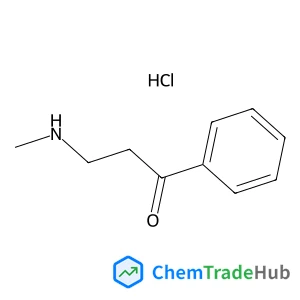
3-(Methylamino)-1-phenyl-1-propanone hydrochloride (1:1)
CAS Number:
2538-50-3
Molecular Formula:
C10H14ClNO
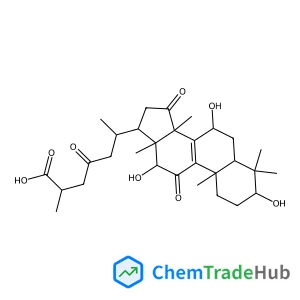
(3beta,7beta,12beta)-3,7,12-Trihydroxy-11,15,23-trioxolanost-8-en-26-oic acid
CAS Number:
98665-22-6
Molecular Formula:
C30H44O8
Recommended Suppliers



Disclaimer
This page provides academic journal information for reference and research purposes only. We are not affiliated with any journal publishers and do not handle publication submissions. For publication-related inquiries, please contact the respective journal publishers directly.
If you notice any inaccuracies in the information displayed, please contact us at support@chemtradehub.com. We will promptly review and address your concerns.